
Human Reviewed
Parent feedback
64 families found this review helpful
Christian Movie Review
Stardust Christian Movie Review
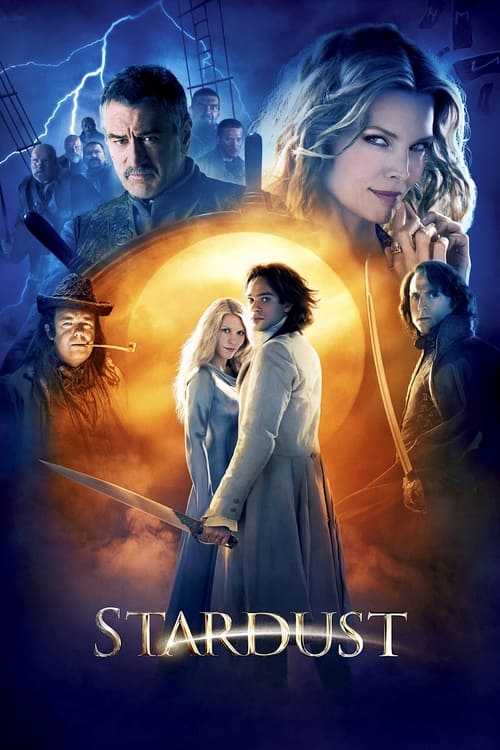
(2007)Stardust is a fantasy adventure about a young man who crosses into a magical kingdom to pursue love, fortune, and a larger destiny. The story mixes romance, swashbuckling danger, royal intrigue, and comic fantasy characters.
This is a lively, imaginative adventure with some romance and a fair amount of fantasy violence. Christian families will likely want to talk through its magical worldview, its treatment of love and destiny, and the darker succession violence around the throne.
Use the content rating to gauge the action and the Christian guidance rating to weigh the story’s magical worldview and moral framing.
Content Indicators

Reviewed 9 June 2026
Esther handles review quality, clarity, and the practical guidance families need after the credits roll.
Stardust Christian Movie Review (2007)
Guidance: Low Concern
This is a lively, imaginative adventure with some romance and a fair amount of fantasy violence. Christian families will likely want to talk through its magical worldview, its treatment of love and destiny, and the darker succession violence around the throne.
Why This Guidance Level
Stardust is not driven by explicit sexual content or harsh language, but it does include sustained fantasy violence, several deaths, and a darker tone than many family adventures. The bigger reason for discussion is its worldview: magic, prophecy, and romantic destiny shape the story’s meaning, and the film treats self-discovery and winning love as central to becoming a man. That makes it a good candidate for family conversation even when the surface content feels playful.
Faith & Worldview Perspective
The film blends fairy-tale adventure with a worldview built on magic, fate, and romantic longing. It has some moral clarity in its treatment of greed, cruelty, and selfish ambition, but its deepest answers come from destiny and enchantment rather than from Christian hope in Christ. Parents may want to discuss how true identity and purpose are formed.
Truths Reflected
- Greed and ruthless ambition damage families and communities.
- Love and courage can call a person beyond childish self-interest.
Tensions to Discuss
- The story treats magic and cosmic destiny as guiding forces instead of God’s providence.
- It frames becoming a man around romantic success rather than character, calling, and faithfulness.
Content & Discernment Markers
Occult & Spiritual Content
- The film is built around a hidden magical kingdom, a wall that separates ordinary life from Stormhold, and a world where stars, prophecy, witches, and enchanted objects shape events. That fantasy framework is central to the story, so Christian parents may want to discuss the difference between fairy-tale magic and trusting God’s providence in Christ.
Sexuality & Relationships
- Romance drives the plot, with Tristan pursuing Victoria and speaking in exaggerated terms about what he would do for her hand in marriage. The film includes kissing and some flirtation, but it stays mostly within light romantic territory.
Identity Themes
- The narration says, “This is the story of how Tristan Thorne becomes a man,” and the film ties that growth to winning the heart of his “one true love.” That gives the story a strong coming-of-age frame, and parents may want to discuss whether manhood is really defined by romance or by faithfulness, humility, and courage.
Violence & Intensity
- The royal succession story is dark, with brothers killing brothers for the throne and repeated threats around murder, poison, and knives. The action stays in fantasy mode, but the violence is more intense than the film’s playful tone first suggests, so parents may want to prepare younger viewers for the darker scenes.
Language & Humour
- Language is fairly mild, but parents will notice insults like “peeping Tom,” “poppycock,” and the occasional coarse word such as “damn.” The banter is more teasing than crude, though it does include some sharp put-downs.
Other Content Notes
- There is some drinking, including champagne during a romantic outing and alcohol use among pirates. The film also leans into class snobbery and social ambition, especially in the way Tristan talks about leaving Wall to make his fortune.
Notable Moments
- Hidden kingdom: The story opens with the wall between Wall and Stormhold, establishing the film’s magical world and its sense of wonder.
“the wall had successfully done its job of hiding the magical kingdom of Stormhold”
- Becoming a man: The narration explicitly frames Tristan’s journey as a coming-of-age story tied to love and identity.
“This is the story of how Tristan Thorne becomes a man”
- Royal bloodshed: The throne plot is introduced through family murder and ruthless succession politics, giving the film a darker edge.
“You killed them all for your throne before your father, the King, even felt poorly.”
- Polar bear boast: Tristan’s exaggerated promise to bring Victoria a polar bear’s head is comic, but it also shows the film’s romantic bravado and occasional aggression.
“I would go to the Arctic and I’d slaughter a polar bear and bring you back its head.”
Discussion Prompts
- Identity and manhood: What does the movie say makes someone a man, and how does that compare with the way Scripture describes maturity?
- Biblical guidance: The Bible points to character, humility, and faithfulness rather than romance or status as the measure of maturity.
- Scripture: 1 Corinthians 16:13, Micah 6:8, Ephesians 4:13
- Magic and destiny: How does the film treat magic, stars, and destiny, and what is different about trusting God’s providence in Christ?
- Biblical guidance: Christians trust the Lord who rules history, not impersonal fate or enchanted power.
- Scripture: Colossians 1:16-17, Proverbs 16:9, Romans 8:28
- Love and sacrifice: Which kind of love is the movie celebrating, and how does that compare with the self-giving love Jesus shows?
- Biblical guidance: Biblical love is patient, sacrificial, and rooted in truth, not just in winning affection.
- Scripture: 1 Corinthians 13:4-7, John 15:13, Ephesians 5:25
- Power and family conflict: What happens when people chase power the way the royal family does, and what does Scripture say about pride and rivalry?
- Biblical guidance: The film’s throne struggle is a warning about pride, envy, and the damage caused by selfish ambition.
- Scripture: James 3:16, Philippians 2:3-4, Proverbs 13:10
Common questions about Stardust
- What age is Stardust suitable for?
- Stardust suits children of about 8 and older in most families. That follows its official classification. It is rated PG in Australia, New Zealand and the UK, and PG-13 in the US and Canada. The royal succession story is dark, with brothers killing brothers for the throne and repeated threats around murder, poison, and knives. Younger viewers may still enjoy it alongside a parent, and it raises worldview questions worth talking through afterwards.
- Is Stardust okay for a 6-year-old?
- Stardust is generally better suited to children of about 8 and up, so a 6-year-old may find parts of it a stretch. It is rated PG in Australia, New Zealand and the UK, and PG-13 in the US and Canada. The royal succession story is dark, with brothers killing brothers for the throne and repeated threats around murder, poison, and knives. Families comfortable watching a little above the classification together may still be fine with it.
Age guidance is derived from this review's content findings and the film's official classifications. It is a starting point for your own judgement, not a rule.
Parent comments
Leave a comment on this review
Share a short note on Stardust, or help other parents with discernment.
Submit will ask you to sign in first.
Weekend family picks
Get the short family movie list before the weekend
Example newsletter: 3 movies to watch this weekend with your family, plus one question to ask after the credits.
Sample: 3 movies to watch this weekend with your family
One cinema pick, one streaming pick, one conversation-starter pick.
Related Articles
A few bigger-picture reads for parents who want more context than a single review page can hold.

How To Talk With Kids About Magic, Fate, And Spiritual Themes In Movies
Many family movies use magic, destiny, spirits, or cosmic balance to drive the story. This article helps Christian parents respond without overreacting, while still drawing clear lines back to biblical truth.
Read article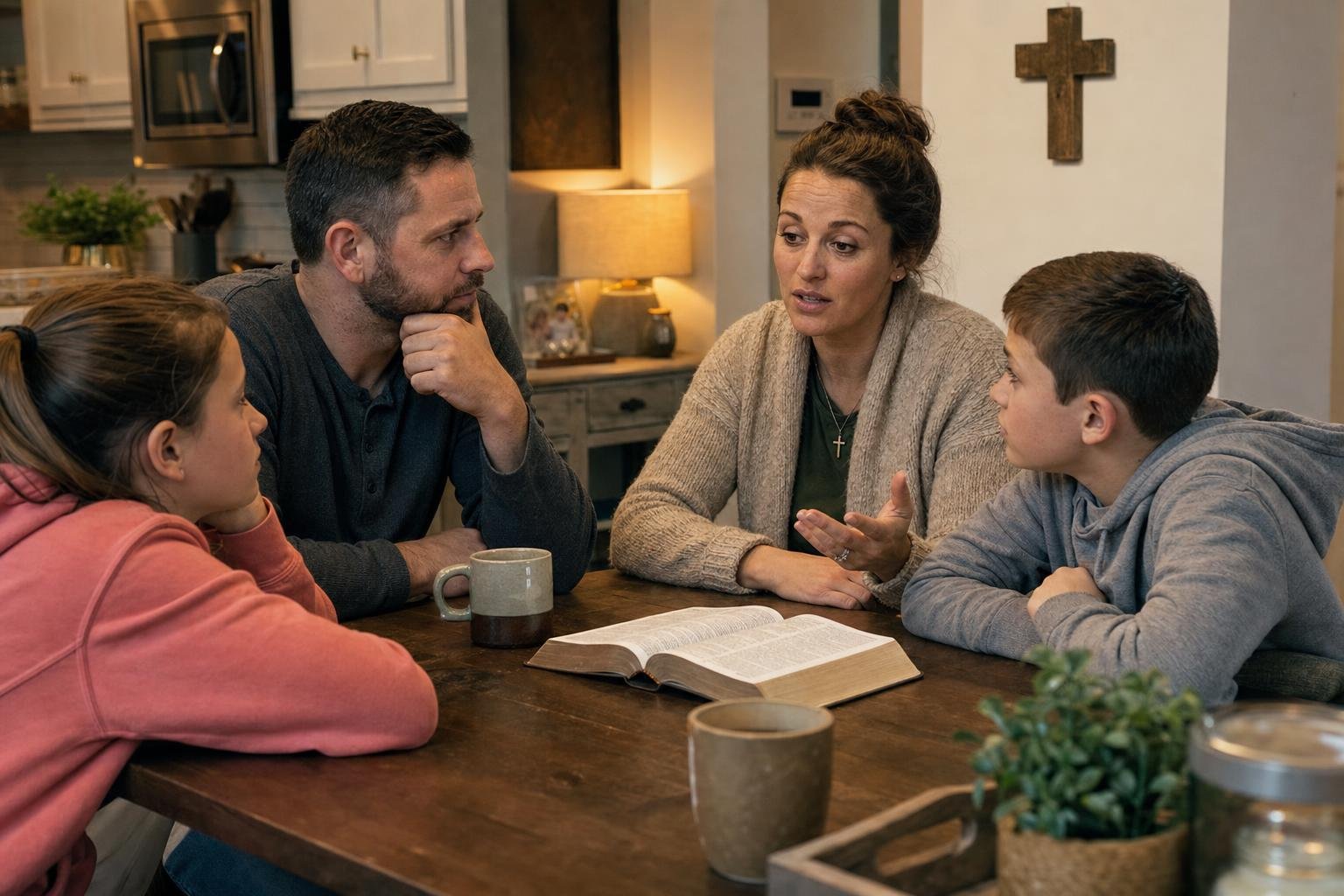
How To Talk With Kids About Dragon magic In Family Movies
A parent-friendly guide to discussing dragon magic in family movies through a Christian lens.
Read article
How To Talk With Kids About Mild fantasy peril In Family Movies
A parent-friendly guide to discussing mild fantasy peril in family movies through a Christian lens.
Read articleMore Reviews


Official regional ratings
Local ratings remain available for reference, but LionLens separates those classifications from Christian family discernment.
Review Method
How this review was prepared
LionLens reviews are written with subtitle and dialogue evidence where available, official regional ratings data, source research, and final human editorial review before publication.