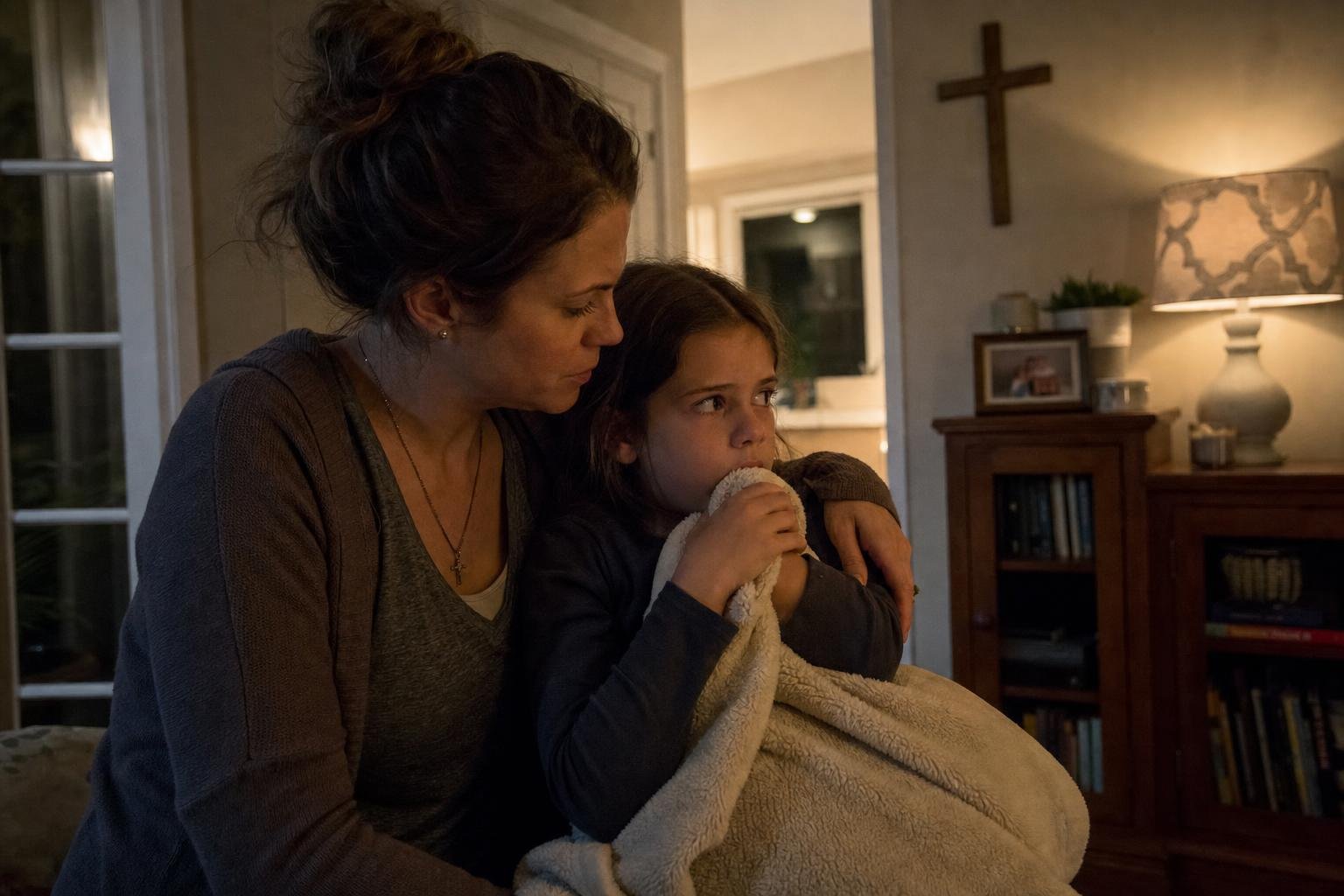

How To Talk After A Scary Scene Without Overreacting
A frightening scene can linger long after the credits roll. Children often do not process fear in the moment. They might sit quietly through the scene, then bring it up later at bedtime, in the car, or just before school the next morning. That does not always mean they are traumatised, but it does mean they need help making sense of what they felt.
For Christian parents, the aim is not to panic, mock the fear, or rush to explain it away. It is to respond calmly, wisely, and in a way that points a child back to what is true. LionLens has been helpful in drawing attention to how children respond differently to what they watch, but the bigger question for parents is how to shepherd those responses well.
Start by lowering the temperature
When a child is unsettled, your own calm matters more than perfect wording. If you react with alarm, they are likely to feel that something is seriously wrong. If you brush it off, they may feel silly for speaking up.
A better first step is simple and steady. Sit with them. Keep your voice warm. Ask one or two gentle questions.
You might say:
- “That scene was a bit much, wasn’t it?”
- “What part stayed with you?”
- “Do you want to tell me what bothered you most?”
The goal is not to interrogate. It is to help the child feel safe enough to talk.
Work out what kind of fear it was
Not every scary scene affects children in the same way. Some are bothered by noise, darkness, masks, monsters, or sudden movement. Others are more distressed by the idea behind the scene, such as being abandoned, losing a parent, or something bad happening to a good character.
A child who fears the image may need reassurance that it was pretend and that they are not in danger. A child shaken by the idea may need a deeper conversation about how the world really works, and how hard things are not always the final word.
You can ask:
Was it the picture, the idea, or the possibility?
Sometimes a child says, “I didn’t like the monster.” Sometimes they say, “What if that happened to me?” Those are different fears, and they need different responses.
Did the story leave the fear unresolved?
Some films move on quickly from a frightening moment. Children do not. If the story gave no comfort, no rescue, or no sense of justice, parents may need to provide that missing reassurance.
Speak plainly and gently
Children do not need a big speech. They need clear, ordinary words. Avoid saying, “There is nothing to be scared of,” if they obviously are scared. That can make them feel misunderstood. Better to name the fear without feeding it.
Helpful phrases include:
- “That was meant to feel intense, but you are safe now.”
- “It makes sense that stayed with you.”
- “I’m glad you told me.”
- “That was pretend, but feelings can still be real.”
- “We do not need to pretend it didn’t bother you.”
If your child is younger, keep it short. If they are older, you can ask more about what they imagined might happen next.
Bring the conversation back to truth
This is where Christian parenting gives something especially valuable. Fear shrinks when children are reminded that God is not absent, random, or caught off guard. The world can be genuinely unsettling, but it is not beyond God’s care.
You do not need to force a sermon into the moment. A simple, truthful reminder is enough.
You might say: “Scenes like that can make the world feel bigger and scarier than it is, but God is still good and He is still with us.” Or: “Even when something feels dark, Jesus has not stopped caring for you.”
If it fits the moment, remind them that Jesus knows what fear is like. He was troubled, rejected, and suffering, yet He remained faithful. He is not a distant helper but a Saviour who understands and reigns.
Help them separate story fear from real life
Children sometimes absorb a scene more deeply than adults realise. They may begin to worry about what could happen in the dark, at night, or in their own home. So it helps to gently put the movie back in its place.
You can say:
- “That was a story, not a warning about our house.”
- “Films often make things bigger and faster than real life.”
- “What happened on screen is not what God has told us to expect every day.”
If a child is particularly imaginative, it may help to talk through exactly what is real in the room around them. Lights are on. Doors are locked. You are there. They are safe.
Know when to pause the viewing habit
Sometimes the right response after a scary scene is not just comfort afterwards but a change before next time. Christian parents do not need to allow every film in the name of resilience. Some children simply are not ready for certain material.
That is not weakness. It is wisdom.
If your child is repeatedly unsettled, avoid assuming they will “grow out of it” if you keep exposing them. Choose material more carefully. Talk before the film begins about what kind of scenes might come up. Let children know they can ask to stop without being shamed.
End with reassurance, not overexplaining
After a scary scene, children usually need a short, confident close. Do not keep talking until the fear gets bigger. Give them something solid to carry into the rest of the night.
You might end with: “Thank you for telling me. You are safe. God is with us. Let’s have a drink of water and do something calm.”
Then move on. Read a Bible story, pray together, or choose a quieter activity. The point is not to dwell on the fear, but to place it inside a larger reality of God’s care.
Three practical questions or actions for parents
- Ask: “Was it the image, the idea, or the possibility that bothered you?”
- Say: “That felt scary, but you are safe and God is still with us.”
- Decide: “Is this a one-off moment, or do we need to choose different viewing next time?”