
Human Reviewed
Parent feedback
76 families found this review helpful
Christian Movie Review
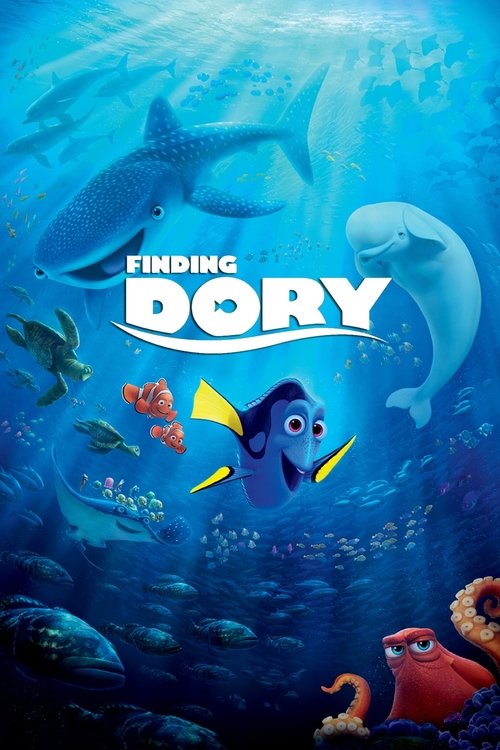
Finding Dory Christian Movie Review
(2016)Dory is reunited with her friends Nemo and Marlin in the search for answers about her past. What can she remember? Who are her parents? And where did she learn to speak Whale?
This animated sequel centers on Dory’s search for family and identity, with warm themes of belonging, perseverance, and care for those with limitations. The main concerns in the film are repeated scenes of separation, panic, and peril, plus a small amount of mild substitute language.
Start with the content rating, then use the Christian guidance rating to decide how much conversation your family may need.
Content Indicators

Reviewed 9 March 2026
Micah covers action, fantasy, and franchise releases, with close attention to violence, spiritual themes, and moral framing.
Finding Dory Christian Movie Review (2016)
Guidance: Talk Together
This animated sequel centers on Dory’s search for family and identity, with warm themes of belonging, perseverance, and care for those with limitations. The main concerns in the film are repeated scenes of separation, panic, and peril, plus a small amount of mild substitute language.
Why This Guidance Level
This is a family-oriented story with strong relational themes, but also several moments that may trouble younger or sensitive children. Dory’s memory loss is discussed explicitly and often, and the story includes repeated confusion, getting lost, cries for help, warnings about the undertow, and a distressed parent shouting, “A white boat! They took my son! My son! Help me! Please!” There is no clear sign here of sexual content, occult material, or strong profanity. Because the concerns are mostly emotional and situational rather than graphic or morally corrosive, this fits a middle category where parent conversation may be especially helpful.
Faith & Worldview Perspective
The film strongly reflects themes of family love, perseverance, compassion, and community support. It also presents disability as a real limitation that affects daily life without reducing a person’s worth to that limitation. The overall moral direction appears affirming and relational, with little in the film that directly conflicts with Christian teaching.
Truths Reflected
- Family bonds matter, and loved ones are not easily forgotten: “We will never forget you, Dory.”
- People with weaknesses still bear dignity and need patient support from others.
Tensions to Discuss
- The story’s emotional framework is largely human-centered rather than explicitly grounded in God, so families may want to connect its ideas about identity and belonging to being known by the Lord.
- Some authority figures appear to sideline Dory because of her limitations, which can open discussion about wise care versus exclusion.
Content & Discernment Markers
Occult & Spiritual Content
- No occult, magical practice, spiritual ritual, or supernatural worldview content appears in the film.
Sexuality & Relationships
- No sexual content, romanticized sensuality, or sexual jokes appear in the film. Relationships shown here are centered on parents, children, friendship, and community care.
Identity Themes
- Dory’s identity is closely tied to her short-term memory loss, and the film names that limitation directly and repeatedly. Early on she introduces herself with, “Hi. I’m Dory. I suffer from short-term remembory loss,” later repeating, “I suffer from short-term memory…” and “I can’t remember.” The story also shows how others respond to her condition: some are compassionate, saying, “Oh, how awful,” and trying to help, while others treat her as a burden, as when she is told she should not be with the class because “you have problems remembering things sometimes” and “it can cause you to wander.” This material can be meaningful for conversations about dignity, patience, and not defining a person only by weakness.
Violence & Intensity
- Violence is not graphic here, but there are several tense danger moments. Dory’s parents repeatedly warn her, “Remember, honey, we have to stay away from the undertow,” and teach her to respond, “We see the undertow and we say… ‘heck no.’” The danger is reinforced when Dory excitedly cries, “There’s the undertow! There’s the undertow.” Later, a panicked fish shouts, “A white boat! They took my son! My son! Help me! Please!” followed by frantic reactions: “Watch out!” and “Oh! Oh, sorry! Are you okay?” The same distressed character says, “He’s gone. He’s gone,” and “No, no, they took him away. I have to find the boat.” These scenes are more upsetting than violent, but the fear of losing a child and the sense of urgent danger may be intense for some children.
Language & Humour
- Language is very mild here. The clearest substitute expression is “heck no,” used in a family safety rhyme about the undertow: “We see the undertow and we say… ‘heck no.’” There is also one use of “Oh my goodness,” which functions as a soft exclamation rather than profanity. Humour is mostly situational and wordplay-based, including Dory’s misstatement “short-term remembory loss,” and light teasing such as “Don’t be a stranger, stranger.” No strong profanity stands out here. Other reported moments mention substitutes like “carp” and one “suck it,” but those lines are not confirmed in the film, so they are not treated as established evidence here.
Other Content Notes
- Separation and abandonment themes are central here. Dory repeatedly asks strangers for help: “Can you please help me?” “I lost my family. Can you help me?” and “I have to find the boat.” The emotional weight is heightened by tender family dialogue such as, “What if I forget you? Would you ever forget me?” and the reassurance, “We will never forget you, Dory.” Young viewers who are sensitive to getting lost, forgetting parents, or being left behind may feel this strongly.
- The film includes moments of exclusion tied to Dory’s limitations. She is told she should not join the class because “you have problems remembering things sometimes” and because she may “wander.” Although the scene is framed as practical concern, it can still land as rejection and may prompt sadness or empathy in children.
Notable Moments
- Dory names her memory loss: The film explicitly introduces Dory’s disability and returns to it often, shaping how she sees herself and how others treat her.
“Hi. I’m Dory. I suffer from short-term remembory loss.”
- Parents reassure Dory of their love: A tender exchange emphasizes family faithfulness in the face of Dory’s fear that she will forget them.
“What if I forget you? Would you ever forget me? … We will never forget you, Dory.”
- Lost child distress: A group of fish realizes Dory is alone and unable to remember where she came from, creating a sad and anxious moment.
“The poor thing is lost! … She can’t remember a thing!”
- Boat panic: One of the most intense moment here involves a parent crying out that a child has been taken by a boat.
“A white boat! They took my son! My son! Help me! Please!”
Discussion Prompts
- Identity and weakness: Dory keeps saying what she cannot do: “I can’t remember.” How should we think about a person when they have a weakness or disability?
- Biblical guidance: God gives every person dignity, and weakness does not erase worth. Christians are called to show honor, patience, and compassion.
- Scripture: Psalm 139:13-14, 1 Corinthians 12:22-26, Galatians 6:2
- Family love and faithfulness: What stands out when Dory asks, “Would you ever forget me?” and her parents answer, “We will never forget you”?
- Biblical guidance: Family love in the film can point to God’s faithful care and the call to steadfast love within our homes.
- Scripture: Isaiah 49:15-16, Psalm 103:13, Ephesians 6:1-4
- Helping the vulnerable: Some fish try to help Dory, while others seem impatient or dismissive. What does loving our neighbor look like when someone needs extra help?
- Biblical guidance: Believers are called to bear with one another in love and to care especially for those who are vulnerable or overlooked.
- Scripture: Luke 10:33-37, Ephesians 4:2, Romans 15:1
- Fear, danger, and trust: How did the scenes about the undertow and the lost child make you feel? What should we do when we feel afraid or overwhelmed?
- Biblical guidance: Fear is real, but Scripture teaches us to bring our anxieties to God and to seek wise help in dangerous situations.
- Scripture: Psalm 56:3, Philippians 4:6-7, Proverbs 27:12
Common questions about Finding Dory
- What age is Finding Dory suitable for?
- Finding Dory suits children of about 6 and older in most families. The main reason is violence and peril. Violence is not graphic here, but there are several tense danger moments.
- Is Finding Dory okay for a 4-year-old?
- Finding Dory is generally better suited to children of about 6 and up, so a 4-year-old may find parts of it a stretch. Violence is not graphic here, but there are several tense danger moments. Families whose children handle violence and peril well may still be comfortable watching together.
Age guidance is derived from this review's content findings and the film's official classifications. It is a starting point for your own judgement, not a rule.
Parent comments
Leave a comment on this review
Share a short note on Finding Dory, or help other parents with discernment.
Submit will ask you to sign in first.
Weekend family picks
Get the short family movie list before the weekend
Example newsletter: 3 movies to watch this weekend with your family, plus one question to ask after the credits.
Sample: 3 movies to watch this weekend with your family
One cinema pick, one streaming pick, one conversation-starter pick.
Related Articles
A few bigger-picture reads for parents who want more context than a single review page can hold.

How To Talk With Kids About Magic, Fate, And Spiritual Themes In Movies
Many family movies use magic, destiny, spirits, or cosmic balance to drive the story. This article helps Christian parents respond without overreacting, while still drawing clear lines back to biblical truth.
Read article
Animal Farm And Talking With Kids About Power, Truth, And Sin
Animal Farm can help older children see how slogans, fear, and corrupted authority distort truth, but parents should frame the story with a biblical view of sin.
Read article
How To Talk After A Scary Scene Without Overreacting
Children do not always process fear while the movie is still playing. This guide helps parents respond calmly after intense or unsettling scenes and turn the moment into wise reassurance instead of panic.
Read articleMore Reviews




Review Method
How this review was prepared
LionLens reviews are written with subtitle and dialogue evidence where available, official regional ratings data, source research, and final human editorial review before publication.