Human Reviewed
Parent feedback
75 families found this review helpful
Christian Movie Review
The Simpsons Movie Christian Movie Review
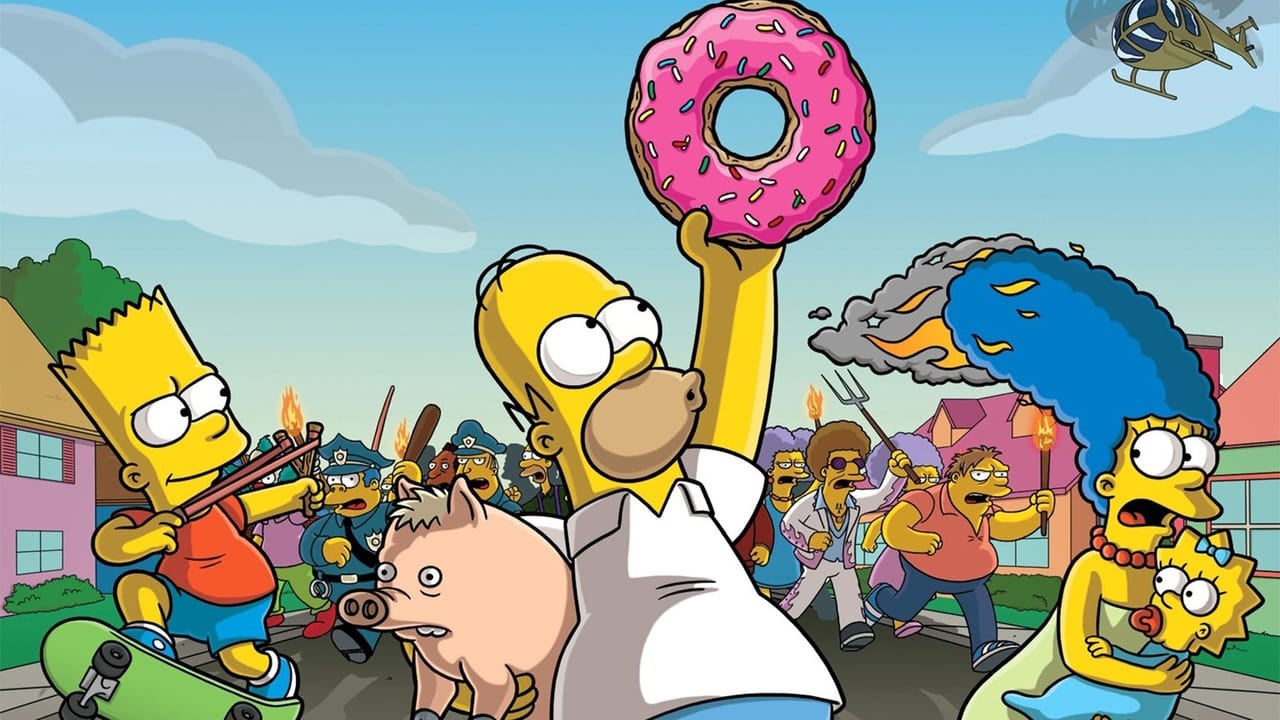
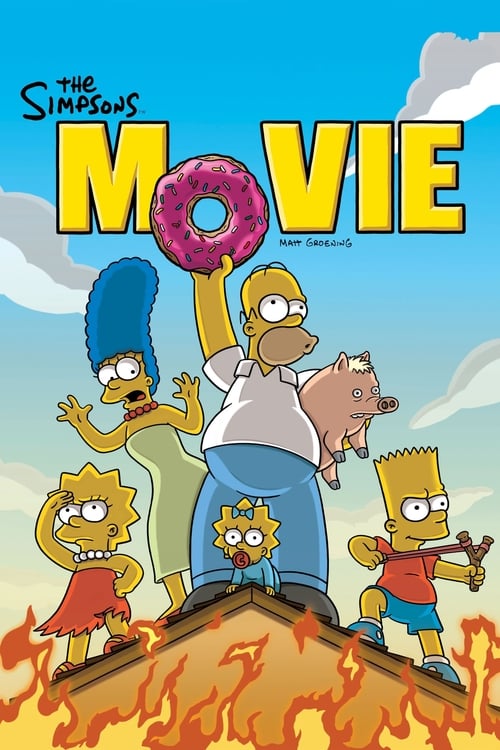
(2007)The Simpsons Movie follows Homer, Marge, Bart, Lisa, and Maggie as Springfield faces a disaster tied to pollution and the EPA seals the town under a dome. The story mixes broad satire, family chaos, and a rescue-driven plot built around the show's familiar irreverent humor.
This is a loud, crude, and often funny animated comedy with some nudity, sexual jokes, coarse language, and a few tense disaster moments. Christian families may also want to talk through its mocking tone toward church life and its casual treatment of sacred things.
Use the content rating for the crude humor and nudity, and the Christian guidance rating for the film’s mocking worldview and irreverent spiritual tone.
Content Indicators

Reviewed 17 May 2026
Esther handles review quality, clarity, and the practical guidance families need after the credits roll.
The Simpsons Movie Christian Movie Review (2007)
Guidance: Talk Together
This is a loud, crude, and often funny animated comedy with some nudity, sexual jokes, coarse language, and a few tense disaster moments. Christian families may also want to talk through its mocking tone toward church life and its casual treatment of sacred things.
Why This Guidance Level
This film sits in the middle range for family discernment because its surface content is edgy but not extreme, while its tone and worldview carry more weight than the cartoon peril alone. The nudity, crude jokes, and frequent coarse language are the main content concerns, but the larger issue for Christian families is the movie’s habit of mocking church life, prayer, and reverence. It also rewards selfishness with comedy before finally steering toward family sacrifice, so it gives parents several natural points for discussion rather than a simple yes-or-no reaction.
Faith & Worldview Perspective
The movie is built on satire, and that gives it a sharp, cynical edge toward authority, religion, and public behavior. It does affirm family loyalty and shows Homer learning to value others, but it also treats sacred language lightly and turns church scenes into jokes, so parents may want to help children separate comedy from reverence and think about what honor toward God looks like in Christ.
Truths Reflected
- Selfish choices can damage a family and a community.
- People can change and act more responsibly.
Tensions to Discuss
- Church, prayer, and sacred things are mocked rather than treated with reverence.
- The film’s sarcasm can normalize cynicism instead of humility, truth, and respect.
Content & Discernment Markers
Occult & Spiritual Content
- Occult material does not stand out here. The spiritual material is mostly church satire and exaggerated religious language, such as the chaotic prayer scene and Grampa’s outburst, which turns worship into a joke. Parents may want to discuss the difference between comedy about religion and genuine reverence before God.
Sexuality & Relationships
- Bart’s dare sends him skateboarding naked to Krusty Burger and back, with the film openly joking about his “doodle” and showing brief nudity. The humor is crude rather than romantic, but the moment is memorable and likely to matter for families.
Identity Themes
- The film leans into Springfield’s crowd mentality, public shaming, and pressure to conform, especially when Bart is branded “chicken for life” and Homer is pushed by the mob and authorities. Parents may want to discuss how a crowd can reward foolishness and punish courage.
Violence & Intensity
- The movie uses cartoon peril, crashes, and mob chaos rather than graphic violence. There are tense moments with the dome disaster, angry crowds, and Homer’s repeated slapstick abuse, but the danger stays stylized and comic.
Language & Humour
- Language is edgy throughout, with insults and coarse phrases like “You suck,” “Shut up,” “hell,” “phony-baloney God,” “pious morons,” “screw,” and “damn”-type speech. The humor often depends on irreverent wordplay and crude punch lines, so parents may want to note how casually the film uses disrespectful speech.
Other Content Notes
- The opening theater gag mocks moviegoing, then the story shifts into environmental activism, civic panic, and family dysfunction. Lisa’s pollution campaign gives the film a clear moral concern, but the satire keeps undercutting seriousness with jokes and crowd mockery.
Notable Moments
- Church mockery: A worship scene turns chaotic as Grampa shouts warnings and the congregation treats a religious moment like a punchline. The scene matters because it sets the film’s irreverent tone toward faith.
“Those pious morons are too busy… talking to their phony-baloney God.”
- Naked dare: Homer dares Bart to skateboard naked to Krusty Burger and back, leading to public humiliation and a brief nude gag. This is one of the film’s clearest content flags for families.
“I dare you to skateboard to Krusty Burger and back… naked.”
- Crude church joke: A blessing over food turns into a penis joke, showing how the film uses sacred settings for crude humor. Parents may want to discuss why that kind of joke lands differently in a church context.
“Bountiful penis.”
Discussion Prompts
- Reverence and speech: What did you notice about how the movie talks about church, prayer, and God?
- Biblical guidance: Scripture calls believers to honor God with their words and to treat holy things with reverence, not mockery.
- Scripture: Exodus 20:7, Ephesians 4:29, Ecclesiastes 5:1
- Selfishness and sacrifice: How does Homer’s selfishness hurt other people, and what changes when he starts thinking about his family?
- Biblical guidance: The Bible teaches that love looks to the interests of others and that real change shows up in action.
- Scripture: Philippians 2:3-4, 1 Corinthians 13:4-7, James 2:17
- Crowd pressure: Why do the crowd and the town push people into shame and conformity, and how should a Christian respond differently?
- Biblical guidance: Followers of Jesus Christ are called to stand for truth with humility, even when a crowd is loud or mocking.
- Scripture: Romans 12:2, Proverbs 29:25, John 15:18-19
- Environmental responsibility: What does the movie say about pollution and caring for creation, and where does that line up with stewardship?
- Biblical guidance: God gives people responsibility to care for what He has made, not to treat creation carelessly.
- Scripture: Genesis 2:15, Psalm 24:1, Colossians 1:16-17
Common questions about The Simpsons Movie
- What age is The Simpsons Movie suitable for?
- The Simpsons Movie suits children of about 9 and older in most families. The main reason is sexual content. Bart’s dare sends him skateboarding naked to Krusty Burger and back, with the film openly joking about his “doodle” and showing brief nudity. Younger viewers may still enjoy it alongside a parent, and it raises worldview questions worth talking through afterwards.
- Is The Simpsons Movie okay for a 7-year-old?
- The Simpsons Movie is generally better suited to children of about 9 and up, so a 7-year-old may find parts of it a stretch. Bart’s dare sends him skateboarding naked to Krusty Burger and back, with the film openly joking about his “doodle” and showing brief nudity. Families whose children handle sexual content well may still be comfortable watching together.
Age guidance is derived from this review's content findings and the film's official classifications. It is a starting point for your own judgement, not a rule.
Parent comments
Leave a comment on this review
Share a short note on The Simpsons Movie, or help other parents with discernment.
Submit will ask you to sign in first.
Weekend family picks
Get the short family movie list before the weekend
Example newsletter: 3 movies to watch this weekend with your family, plus one question to ask after the credits.
Sample: 3 movies to watch this weekend with your family
One cinema pick, one streaming pick, one conversation-starter pick.
Related Articles
A few bigger-picture reads for parents who want more context than a single review page can hold.
Animal Farm And Talking With Kids About Power, Truth, And Sin
Animal Farm can help older children see how slogans, fear, and corrupted authority distort truth, but parents should frame the story with a biblical view of sin.
Read article
5 Things To Notice In Kids Movies Before The Message Lands
A child can absorb a movie long before they can explain it. These five checkpoints help Christian parents notice what a film is training the heart to love, fear, excuse, or trust.
Read article
Why A Clean Movie Can Still Need A Christian Conversation
Sometimes the hardest films to evaluate are not the obviously rough ones, but the polished and emotionally appealing movies that carry deeper assumptions quietly. This article explains why.
Read articleMore Reviews


Official regional ratings
Local ratings remain available for reference, but LionLens separates those classifications from Christian family discernment.
Review Method
How this review was prepared
LionLens reviews are written with subtitle and dialogue evidence where available, official regional ratings data, source research, and final human editorial review before publication.