Human Reviewed
Parent feedback
48 families found this review helpful
Christian Movie Review
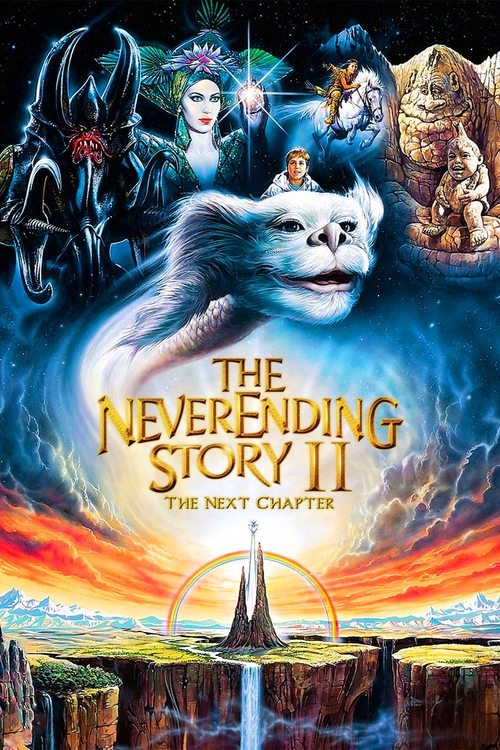
The NeverEnding Story II: The Next Chapter Christian Movie Review
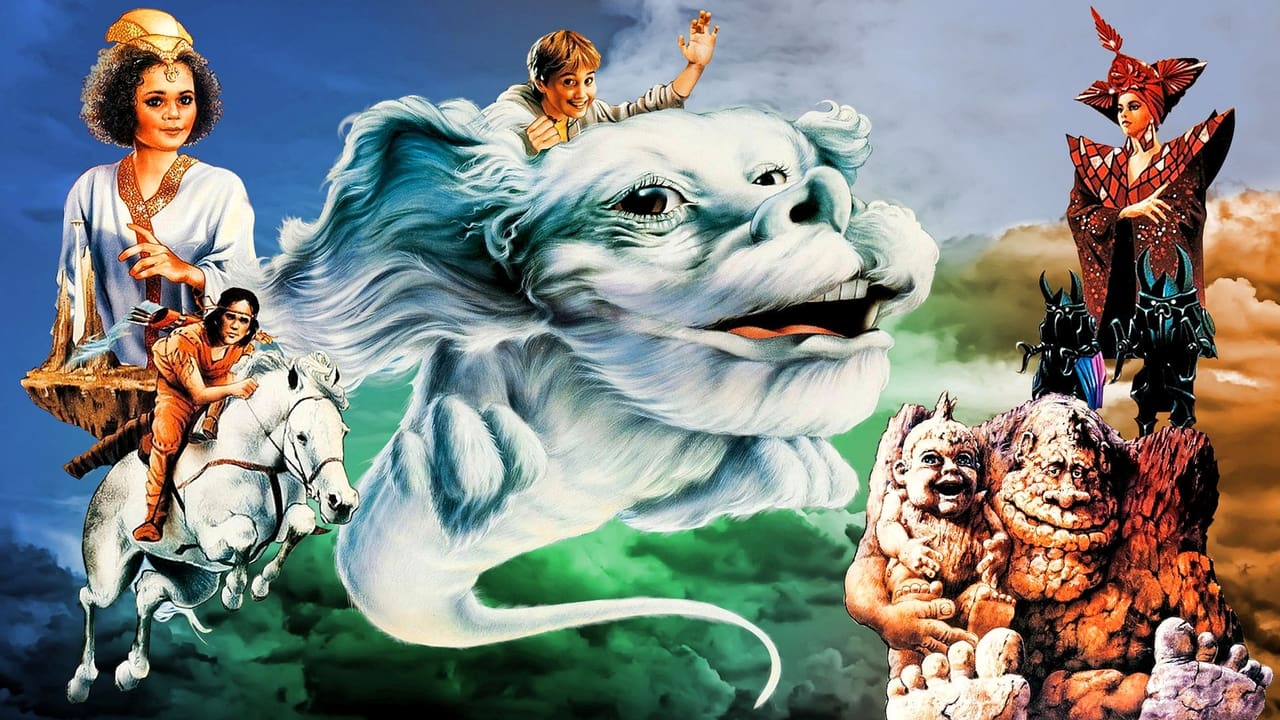
(1990)In this fantasy sequel, Bastian returns to Fantasia after being called back to help the Childlike Empress. His journey centers on courage, wishes, memory, and a growing battle against forces that threaten both Fantasia and the human world.
This is a family fantasy adventure with mild language, recurring peril, and a strong magical framework built around wish-fulfillment and memory loss. For Christian families, the bigger issue is not surface content but the film’s spiritual and worldview messaging about imagination, salvation, and power.
Use the content rating for what children will see and hear, and the Christian guidance rating for what the story teaches or normalizes.
Content Indicators

Reviewed 28 August 2026
Esther handles review quality, clarity, and the practical guidance families need after the credits roll.
The NeverEnding Story II: The Next Chapter Christian Movie Review (1990)
Guidance: Talk Together
This is a family fantasy adventure with mild language, recurring peril, and a strong magical framework built around wish-fulfillment and memory loss. For Christian families, the bigger issue is not surface content but the film’s spiritual and worldview messaging about imagination, salvation, and power.
Why This Guidance Level
This lands in the middle range because the surface content is fairly light, but the story’s fantasy spirituality is central to the plot. Wishes, magical power, and the idea that human dreams sustain reality are not side details; they shape the film’s message and give parents worthwhile material to discuss.
Faith & Worldview Perspective
The movie celebrates courage, loyalty, and resisting fear, which are meaningful virtues. At the same time, it presents Fantasia as dependent on human dreams and stories for life, and it casts Bastian as the one who can save both worlds through the use of Auryn and his choices. That gives the story a mythic, imaginative feel, but it also shifts ultimate hope toward human imagination and magical power rather than toward God’s truth and redemption in Jesus Christ. Parents may want to discuss the difference between enjoying fantasy and trusting Christ as the true source of hope, identity, and salvation.
Truths Reflected
- Courage matters when fear and pressure are strong.
- Power used selfishly can cost a person part of himself.
Tensions to Discuss
- The film treats wishes and a magical object as a source of guidance and rescue, which may conflict with trusting God rather than supernatural power outside Him.
- The story suggests human imagination gives life and meaning to the world, while Scripture teaches that life and truth come from the Creator, not from human desire.
Content & Discernment Markers
Occult & Spiritual Content
- Auryn is presented as a wish-granting power that can change reality, protect Bastian, and guide his mission. Characters urge him to use it in moments of danger, making magic a central problem-solving tool rather than a passing fantasy detail. Parents may want to discuss why Christians should be careful about stories that place trust in supernatural power apart from God.
- The villain’s ‘Memory Machine’ turns each wish into memory loss, creating a supernatural exchange where power costs identity. Tri Face explains, ‘Every time the Earthling uses Auryn to make a wish… my new invention makes him lose a memory!’
- The Childlike Empress and Fantasia are described in spiritualized terms: ‘We are the creatures of human fantasies. We need your dreams and stories to exist.’ This gives the film a mystical worldview built on imagination as life-source rather than creation under God.
Sexuality & Relationships
- Sexual content does not stand out here. Relationships are not a major focus, and there is no notable romantic or sensual material in the story.
Identity Themes
- A major thread involves memory loss and the danger of forgetting who you are, where you came from, and why you were sent. The villain wants Bastian emptied of memory so he will forget his mission and his world. This can open a helpful conversation about identity being received, not invented. Parents may want to connect this with finding identity in Christ rather than in power or performance.
- Bastian is repeatedly told, ‘Only you can save us’ and ‘Only you can heal both of our worlds.’ The child hero carries a savior role that can feel emotionally weighty, even in a fantasy setting.
Violence & Intensity
- Fantasy peril is frequent. Bastian and others face giants, an acid lake, threats to ships and cities, and warnings that travelers to the Ivory Tower have perished. The danger is more adventurous than graphic, but it is a steady part of the film.
- There is verbal reference to injury and blood in a story passage: ‘Siegfried dealt the king a mortal blow’ and ‘The sword drew blood.’ This is brief and not the film’s main tone, but parents of sensitive children may notice it.
Language & Humour
- Language is mostly mild, with teasing and put-downs such as ‘High wimp factor’ and ‘silly boy.’ There is also a brief exclamation using ‘God!’ that some Christian families will want to note.
Other Content Notes
- The story repeatedly frames fear, courage, and pressure to perform through Bastian’s struggles at home and in Fantasia. His father is emotionally distant and critical in early scenes, which may be worth discussing alongside healthier models of encouragement and truth-telling.
- The film’s central message ties the survival of Fantasia to whether people keep believing in dreams and stories. That can be moving in a literary sense, but it may also blur the line between imagination as gift and imagination as ultimate source of meaning.
Notable Moments
- Wish power explained: Nimbly urges Bastian to use Auryn to change the acid lake and solve problems by wishing.
“You have Auryn. It fulfills all of your wishes.”
- Memory for power trade: The villain explains that every wish costs Bastian a memory, raising the stakes around magical power and identity.
“Every time the Earthling uses Auryn to make a wish…my new invention makes him lose a memory!”
- Human imagination as life-source: The Childlike Empress describes Fantasia as dependent on human dreams and stories for existence.
“We are the creatures of human fantasies. We need your dreams and stories to exist.”
- Child hero as savior: Bastian is told that he alone can rescue both worlds, giving the story a strong chosen-one structure.
“Only you can save us, Bastian. Only you can heal both of our worlds.”
Discussion Prompts
- Where does true hope come from?: The film says Fantasia needs human dreams and stories to live. How is that different from the Christian belief that life and hope come from God?
- Biblical guidance: Scripture points us to God as Creator and sustainer, and to Jesus Christ as the source of life and hope.
- Scripture: Colossians 1:16-17, John 1:3-4
- Power and its cost: Bastian is tempted to use Auryn to fix problems quickly, but each wish costs him a memory. What does that teach about the danger of wanting power without wisdom?
- Biblical guidance: God warns that gaining what we want can still lead to deep loss if it pulls us away from truth and obedience.
- Scripture: Mark 8:36, James 1:14-15
- Identity and memory: What happens to Bastian when he starts forgetting who he is and why he came? How does remembering God’s truth help us stay grounded?
- Biblical guidance: Christians are called to remember who we belong to and to let God’s word shape our identity.
- Scripture: Deuteronomy 6:12, James 1:22-25
- Courage under pressure: Bastian struggles with fear and embarrassment before he ever reaches Fantasia. What is the difference between self-confidence and courage that trusts God?
- Biblical guidance: Biblical courage is not pretending to be strong; it is acting faithfully because the Lord is with us.
- Scripture: Joshua 1:9, 2 Timothy 1:7
Common questions about The NeverEnding Story II: The Next Chapter
- What age is The NeverEnding Story II: The Next Chapter suitable for?
- The NeverEnding Story II: The Next Chapter suits children of about 6 and older in most families. The main reason is language. Language is mostly mild, with teasing and put-downs such as 'High wimp factor' and 'silly boy.' Younger viewers may still enjoy it alongside a parent, and it raises worldview questions worth talking through afterwards.
- Is The NeverEnding Story II: The Next Chapter okay for a 4-year-old?
- The NeverEnding Story II: The Next Chapter is generally better suited to children of about 6 and up, so a 4-year-old may find parts of it a stretch. Language is mostly mild, with teasing and put-downs such as 'High wimp factor' and 'silly boy.' Families whose children handle language well may still be comfortable watching together.
Age guidance is derived from this review's content findings and the film's official classifications. It is a starting point for your own judgement, not a rule.
Parent comments
Leave a comment on this review
Share a short note on The NeverEnding Story II: The Next Chapter, or help other parents with discernment.
Submit will ask you to sign in first.
Weekend family picks
Get the short family movie list before the weekend
Example newsletter: 3 movies to watch this weekend with your family, plus one question to ask after the credits.
Sample: 3 movies to watch this weekend with your family
One cinema pick, one streaming pick, one conversation-starter pick.
Related Articles
A few bigger-picture reads for parents who want more context than a single review page can hold.

How To Talk With Kids About Magic, Fate, And Spiritual Themes In Movies
Many family movies use magic, destiny, spirits, or cosmic balance to drive the story. This article helps Christian parents respond without overreacting, while still drawing clear lines back to biblical truth.
Read article
How To Talk With Kids About Dragon magic In Family Movies
A parent-friendly guide to discussing dragon magic in family movies through a Christian lens.
Read article
How To Talk With Kids About Mild fantasy peril In Family Movies
A parent-friendly guide to discussing mild fantasy peril in family movies through a Christian lens.
Read articleMore Reviews


Official regional ratings
Local ratings remain available for reference, but LionLens separates those classifications from Christian family discernment.
Review Method
How this review was prepared
LionLens reviews are written with subtitle and dialogue evidence where available, official regional ratings data, source research, and final human editorial review before publication.