
Human Reviewed
Parent feedback
31 families found this review helpful
Christian Movie Review
The Magic Faraway Tree Christian Movie Review
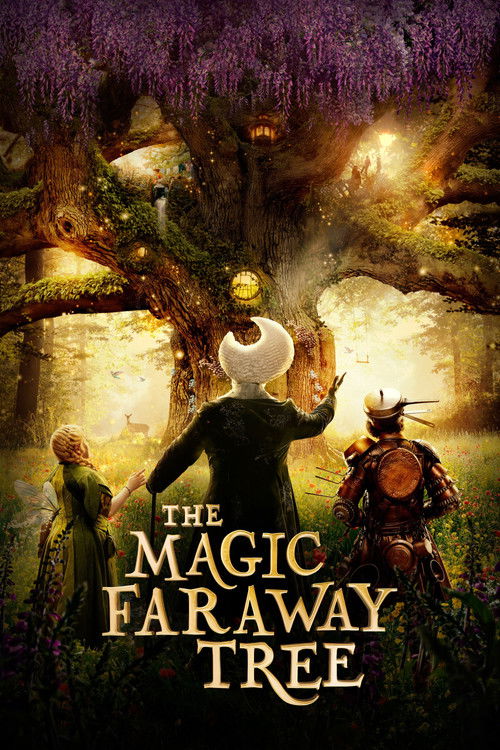
(2026)The Magic Faraway Tree is a family fantasy about parents and their three children leaving city life behind after a financial crisis and moving to a rural property. As the family adjusts to a stripped-down new life, the story leans into imagination, nature, and the wonder of childhood.
This is a gentle family fantasy with very mild surface content, but it carries enough magical-worldview material and a few family-culture talking points to make conversation worthwhile. Parents are more likely to be discussing its ideas than its intensity.
Use the content rating for what children will hear and see, and the Christian guidance rating for what the film may prompt you to talk through afterward.
Content Indicators

Reviewed 28 March 2026
Esther handles review quality, clarity, and the practical guidance families need after the credits roll.
The Magic Faraway Tree Christian Movie Review (2026)
Guidance: Talk Together
This is a gentle family fantasy with very mild surface content, but it carries enough magical-worldview material and a few family-culture talking points to make conversation worthwhile. Parents are more likely to be discussing its ideas than its intensity.
Why This Guidance Level
This lands in a middle category because the film’s surface content is very mild, but its fantasy magic and a few cultural lines give parents real conversation points. The bigger issue is how wonder, truth, and family life are framed, not whether the movie is intense or crude.
Faith & Worldview Perspective
The film values family, imagination, and stepping away from screen-shaped living, which can resonate with Christian parents. At the same time, its enchanted-world fantasy places wonder in a magical framework rather than grounding awe in the God who made the world. A Christian family may want to affirm delight, beauty, and childlike wonder while pointing children to Jesus Christ as the source of true hope and truth, not to magic as a spiritual lens.
Truths Reflected
- Family members need one another during hardship and should not carry failure alone.
- Childhood wonder, creation, and life beyond constant screens are good gifts worth recovering.
Tensions to Discuss
- The story’s enchantment invites children to enjoy supernatural wonder outside a Christ-centered understanding of reality.
- A line about “the oppression of the patriarchy” brings in a culture-war frame that may flatten biblical teaching about men, women, and family responsibility.
Content & Discernment Markers
Occult & Spiritual Content
- The story centers on an enchanted setting and magical fantasy elements tied to the Faraway Tree. For Christian families, the key issue is not horror but a whimsical supernatural world presented as part of the film’s wonder. Parents may want to discuss the difference between fantasy adventure and the real spiritual hope found in Jesus Christ.
Sexuality & Relationships
- There is no notable sexual material in the dialogue provided. The married parents show ordinary affection and work through stress together.
Identity Themes
- One child complains, “This is the oppression of the patriarchy right here,” during a family argument about moving. The line is brief and played for humor, but it introduces a modern ideological phrase that some Christian parents may want to unpack rather than leave unexplained.
- The family dynamic includes strain around work and caregiving, with the father saying, “I work and you look after the kids. That’s the deal.” This may open discussion about responsibility, sacrifice, and how Christian families can honor one another without reducing roles to resentment.
Violence & Intensity
- Violence is very light. A child blurts out “Kill, kill, kill!” and “mind blast” in a playful, exaggerated context, more like noisy pretend aggression than real threat. Parents of very young children may still want to note how casually violent phrases can become part of play.
Language & Humour
- Language is mild and mostly takes the form of put-downs and sarcasm, including “loser,” “You really need to get a job,” and family sniping. There is also bathroom-style humor in a line about food “adding bulk to your stool.” This is the kind of broad family-film humor many parents will simply want to notice and discuss.
Other Content Notes
- The opening family conflict includes job loss, financial collapse, and the line, “The company wants the flat back, and the car. Everything. We’re homeless.” The material is not intense, but children may feel the stress of adult instability.
- A privacy concern appears when a smart fridge is said to have “a camera behind this panel here to monitor people’s eating and drinking habits -without their permission.” This gives families a useful opening to talk about technology, wisdom, and stewardship.
- Wine is mentioned casually at home, including “Round about this time, Timothy likes wine” and “Would you like some wine?” It is not glamorized heavily, but it is part of the adults’ stressed domestic setting.
Notable Moments
- Privacy concern: The father’s workplace conflict turns on hidden surveillance built into a smart appliance.
“they’ve put a camera behind this panel here to monitor people’s eating and drinking habits -without their permission.”
- Family strain: The parents openly discuss financial collapse and the pressure it places on their marriage and children.
“The company wants the flat back, and the car. Everything. We’re homeless.”
- Screen dependence: The children react to the move mainly through the loss of devices, signal, and Wi-Fi.
“My 5G is going! I only have 3G! I’ve only got 2G.”
- Ideological joke: A brief line introduces gender-politics language into a family argument.
“This is the oppression of the patriarchy right here.”
Discussion Prompts
- Wonder and where it points: What makes something feel magical or special to you, and how is that different from the real wonder of God’s creation?
- Biblical guidance: The film celebrates wonder, which can be a good doorway to talk about creation as God’s handiwork and about true hope being found in Christ rather than in magic.
- Scripture: Psalm 19:1, Colossians 1:16-17, Hebrews 1:1-3
- Screens, habits, and wisdom: How do screens help us, and how can they start to control us?
- Biblical guidance: The family’s dependence on devices can lead to a wise conversation about self-control, gratitude, and using technology as a tool rather than a master.
- Scripture: 1 Corinthians 6:12, Ephesians 5:15-16, Galatians 5:22-23
- Family stress and grace: How should family members speak to each other when life feels scary or unfair?
- Biblical guidance: The parents and children speak out of frustration at times, which gives a natural opening to discuss gentleness, bearing burdens, and finding security in God’s care.
- Scripture: Ephesians 4:29, Colossians 3:12-14, Matthew 6:31-33
- Ideas from culture: When a movie uses a phrase like ‘oppression of the patriarchy,’ what do you think it means, and does Scripture give a fuller picture of men and women?
- Biblical guidance: A brief joke can still shape assumptions, so parents may want to contrast culture-war slogans with the Bible’s call to mutual honor, sacrificial love, and dignity for both men and women in Christ.
- Scripture: Genesis 1:27, Ephesians 5:21-25, Galatians 3:28
Common questions about The Magic Faraway Tree
- What age is The Magic Faraway Tree suitable for?
- The Magic Faraway Tree suits all ages, including young children. Younger viewers may still enjoy it alongside a parent, and it raises worldview questions worth talking through afterwards.
- Can young children watch The Magic Faraway Tree?
- Yes. The Magic Faraway Tree is gentle enough for young children, with nothing in the content that needs an older audience. There are still ideas in it worth discussing together afterwards.
Age guidance is derived from this review's content findings and the film's official classifications. It is a starting point for your own judgement, not a rule.
Parent comments
Leave a comment on this review
Share a short note on The Magic Faraway Tree, or help other parents with discernment.
Submit will ask you to sign in first.
Weekend family picks
Get the short family movie list before the weekend
Example newsletter: 3 movies to watch this weekend with your family, plus one question to ask after the credits.
Sample: 3 movies to watch this weekend with your family
One cinema pick, one streaming pick, one conversation-starter pick.
Related Articles
A few bigger-picture reads for parents who want more context than a single review page can hold.

What Christian Parents Can Discuss After Ruby Gillman, Teenage Kraken
A practical post-movie conversation guide for Christian parents after watching Ruby Gillman, Teenage Kraken.
Read article
Disney And Pixar Films For Christian Families: Why They Still Need Discernment
Disney and Pixar films often feel safer than they really are. This guide helps Christian parents notice the spiritual assumptions, emotional messages, and identity themes that can slip past a quick first impression.
Read article
How To Talk With Kids About Magic, Fate, And Spiritual Themes In Movies
Many family movies use magic, destiny, spirits, or cosmic balance to drive the story. This article helps Christian parents respond without overreacting, while still drawing clear lines back to biblical truth.
Read articleMore Reviews




Official regional ratings
Local ratings remain available for reference, but LionLens separates those classifications from Christian family discernment.
Review Method
How this review was prepared
LionLens reviews are written with subtitle and dialogue evidence where available, official regional ratings data, source research, and final human editorial review before publication.