

Human Reviewed
Parent feedback
78 families found this review helpful
Christian Movie Review
The Kid Who Would Be King Christian Movie Review
(2019)Old-school magic meets the modern world when young Alex stumbles upon the mythical sword Excalibur. He soon unites his friends and enemies, and they become knights who join forces with the legendary wizard Merlin. Together, they must save mankind from the wicked enchantress Morgana and her army of supernatural warriors.
This modern Arthurian adventure has strong themes of courage, loyalty, and standing up to bullies, but it also leans heavily on wizardry, magical power, and dark sorcery. For many Christian families, the main discernment issue is not crude content so much as the film’s fantasy spirituality and some scary peril.
Start with the content rating, then use the Christian guidance rating to decide how much conversation your family may need.
Content Indicators

Reviewed 14 April 2026
Rachel focuses on animated films, family viewing habits, and helping parents spot worldview themes quickly.
The Kid Who Would Be King Christian Movie Review (2019)
Guidance: Talk Together
This modern Arthurian adventure has strong themes of courage, loyalty, and standing up to bullies, but it also leans heavily on wizardry, magical power, and dark sorcery. For many Christian families, the main discernment issue is not crude content so much as the film’s fantasy spirituality and some scary peril.
Why This Guidance Level
The film stays within the broad range of a PG fantasy adventure, but magic is central to the story rather than incidental. A wizard conjures Excalibur, Morgana uses dark sorcery, and the plot treats supernatural power as a key source of hope and rescue. Add in bullying, chase scenes, threats, and some coarse language, and this lands in a range where many parents may want conversation before or after viewing.
Faith & Worldview Perspective
The story reflects admirable ideas about courage, sacrifice, friendship, truth-telling, and using strength to protect the weak. It also presents a noble vision of leadership that serves others rather than dominating them. At the same time, its spiritual framework is built on Merlin, enchantment, magical destiny, and dark sorcery, all operating outside any reference to the true God. Christian families may want to talk about the difference between fantasy heroism and real hope in Jesus Christ, who does not save by magic but by truth, sacrifice, and resurrection power. Parents may also want to discuss how standing up to evil is good, while seeking supernatural power apart from God is not.
Truths Reflected
- The film honors courage, loyalty, and defending those who are mistreated.
- It values truth-telling and suggests that leadership should protect others rather than serve self.
Tensions to Discuss
- The story normalizes wizardry, enchantment, and dark sorcery as part of its heroic world, which may conflict with a biblical view because spiritual power is treated apart from God.
- The film places hope in magical destiny and noble character; Christian parents may want to discuss that lasting hope is found in Jesus Christ, not in hidden power or mythic calling.
Content & Discernment Markers
Occult & Spiritual Content
- Magic is a major part of the film’s world. The opening explains that ‘the wizard Merlin conjured a magical sword in a stone called Excalibur,’ and Morgana is described as turning ‘to dark sorcery.’ This is fantasy material, but it is central enough that Christian families may want to discuss the difference between story magic and real-world spiritual practices God forbids.
- Dark supernatural language is used to build menace, including Morgana’s vow to return when the land is ‘lost and leaderless again’ and the repeated threat, ‘The sword must be mine. The king must die.’ Parents may want to talk with children about why evil often promises power through fear and control, while Christian hope in Christ calls people to truth and trust.
- A lighter school scene includes ‘Abracadabra! Alakazam!’ as a failed trick, but the broader story treats magic and wizardry as real forces, not just stage illusion.
Sexuality & Relationships
- Sexual content does not stand out as a major issue. There is no strong romance emphasis in the material here, though parents of younger children may still want to be aware of brief comic content elsewhere in the film involving Merlin’s body humor.
Identity Themes
- The story pushes back against school pecking-order thinking. Alex and Bedders are treated as insignificant by bullies, yet the film frames worth around courage and character rather than popularity or power. This can open a helpful conversation about identity being received from God rather than from status or intimidation.
Violence & Intensity
- Early school scenes include bullying and physical intimidation. Bedders cries out, ‘Let go of me! Leave me alone! Put me down!’ and Alex steps in to defend him. The conflict escalates into threats and a fight, giving the film a real but still family-adventure level of aggression. Parents may want to discuss wise ways to protect others and seek help.
- Threat language is direct at points, including ‘You’re dead now, you little snitch!’ and ‘You and me have got a fight to finish.’ These moments may feel intense for younger viewers, especially because the danger is personal and targeted.
- The fantasy plot carries dark peril from the start, with war, vengeance, and a villain seeking the death of the new king. The tone is adventurous, but the supernatural threat is meant to feel ominous and may unsettle sensitive children.
Language & Humour
- Language is fairly mild for a PG fantasy, but there are still words and phrases some families will notice, including ‘Damn,’ ‘hell,’ ‘what the hell,’ ‘oh my God,’ and insults like ‘shrimp,’ ‘stupid,’ and ‘Lego Minifigure boy.’ The speech is more teasing and coarse banter than harsh profanity, but it is repeated enough to be worth noting.
- There is also some crude comic material, including a reference to ‘beaver urine,’ used for humor rather than sexual content.
Other Content Notes
- The film includes a clear bullying thread, with adults and children responding differently to whether telling the truth helps or makes things worse. One key line says, ‘He’d say that telling the truth and doing the right thing never makes anything worse.’ That gives families a strong discussion point about courage, honesty, and trusting God when doing right is costly.
- News audio about a world becoming unstable and leaderless gives the story a cultural backdrop of fear and uncertainty. The film answers that fear with heroic action and unity, which is constructive, though Christian families may want to contrast that with the deeper hope and kingship of Jesus Christ.
Notable Moments
- Merlin and Excalibur: The opening establishes the film’s magical framework through Merlin, Excalibur, and Arthurian legend.
“So the wizard Merlin conjured a magical sword in a stone called Excalibur”
- Dark sorcery setup: Morgana is introduced as the chief spiritual threat, tied directly to sorcery and vengeance.
“she turned to dark sorcery”
- Bullying rescue: Alex intervenes when Bedders is being physically harassed at school.
“Let go of me! Leave me alone! Put me down!”
- Truth and courage: A parent challenges Alex’s fear that honesty only makes things worse.
“He’d say that telling the truth and doing the right thing never makes anything worse.”
- Threat against the king: The villain’s intent is stated plainly in ominous supernatural language.
“The sword must be mine. The king must die.”
Discussion Prompts
- Standing up to bullies: What did Alex do well when he defended his friend, and what could he have done differently to seek help and tell the truth?
- Biblical guidance: Scripture calls us to defend the vulnerable, but also to walk in wisdom and truth.
- Scripture: Proverbs 31:8-9, Ephesians 4:25
- Magic versus real spiritual power: How does the movie make wizardry and sorcery feel exciting or powerful, and how is that different from trusting God?
- Biblical guidance: The Bible warns against seeking spiritual power apart from God and points us to Jesus Christ as our true source of hope and salvation.
- Scripture: Deuteronomy 18:10-12, Colossians 2:8
- Leadership and service: What kind of leader does the film admire, and how does that compare with the way Jesus leads?
- Biblical guidance: Good leadership serves others humbly rather than ruling through fear or pride.
- Scripture: Mark 10:42-45, Philippians 2:3-5
- Hope in a fearful world: The movie talks about a world that feels unstable and leaderless. Where should Christians place their hope when the world feels dark?
- Biblical guidance: Believers can work bravely for good while remembering that our deepest hope is in Christ the King.
- Scripture: John 16:33, Hebrews 12:28
Common questions about The Kid Who Would Be King
- What age is The Kid Who Would Be King suitable for?
- The Kid Who Would Be King suits children of about 8 and older in most families. That follows its official classification. It is rated PG in the US, New Zealand, the UK and Canada. Language is fairly mild for a PG fantasy, but there are still words and phrases some families will notice, including 'Damn,' 'hell,' 'what the hell,' 'oh my God,' and insults like 'shrimp,' 'stupid,' and 'Lego Minifigure boy.' Younger viewers may still enjoy it alongside a parent, and it raises worldview questions worth talking through afterwards.
- Is The Kid Who Would Be King okay for a 6-year-old?
- The Kid Who Would Be King is generally better suited to children of about 8 and up, so a 6-year-old may find parts of it a stretch. It is rated PG in the US, New Zealand, the UK and Canada. Language is fairly mild for a PG fantasy, but there are still words and phrases some families will notice, including 'Damn,' 'hell,' 'what the hell,' 'oh my God,' and insults like 'shrimp,' 'stupid,' and 'Lego Minifigure boy.' Families comfortable watching a little above the classification together may still be fine with it.
Age guidance is derived from this review's content findings and the film's official classifications. It is a starting point for your own judgement, not a rule.
Parent comments
Leave a comment on this review
Share a short note on The Kid Who Would Be King, or help other parents with discernment.
Submit will ask you to sign in first.
Weekend family picks
Get the short family movie list before the weekend
Example newsletter: 3 movies to watch this weekend with your family, plus one question to ask after the credits.
Sample: 3 movies to watch this weekend with your family
One cinema pick, one streaming pick, one conversation-starter pick.
Related Articles
A few bigger-picture reads for parents who want more context than a single review page can hold.

How To Talk With Kids About Magic, Fate, And Spiritual Themes In Movies
Many family movies use magic, destiny, spirits, or cosmic balance to drive the story. This article helps Christian parents respond without overreacting, while still drawing clear lines back to biblical truth.
Read article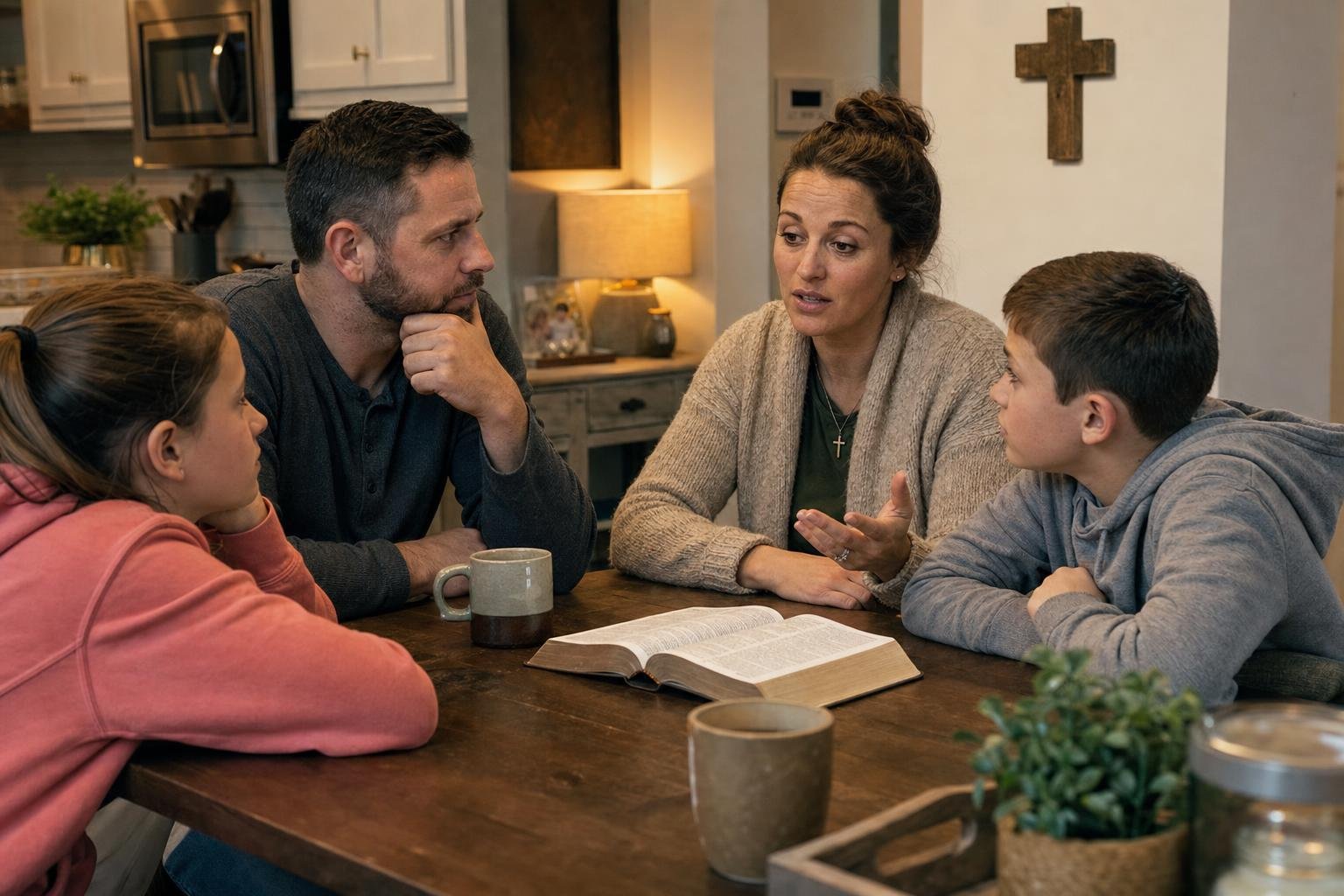
How To Talk With Kids About Dragon magic In Family Movies
A parent-friendly guide to discussing dragon magic in family movies through a Christian lens.
Read article
How To Talk With Kids About Mild fantasy peril In Family Movies
A parent-friendly guide to discussing mild fantasy peril in family movies through a Christian lens.
Read articleMore Reviews



Official regional ratings
Local ratings remain available for reference, but LionLens separates those classifications from Christian family discernment.
Review Method
How this review was prepared
LionLens reviews are written with subtitle and dialogue evidence where available, official regional ratings data, source research, and final human editorial review before publication.