
Human Reviewed
Parent feedback
37 families found this review helpful
Christian Movie Review
The Jungle Book Christian Movie Review
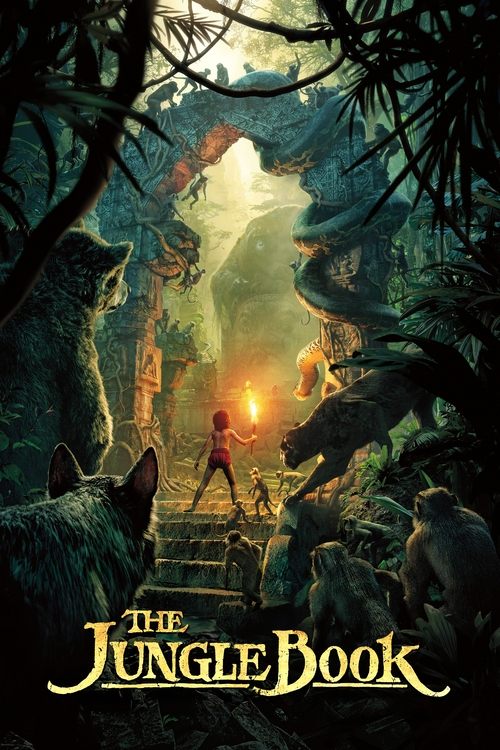
(2016)After a threat from the tiger Shere Khan, Mowgli, a man-cub fostered by wolves, is forced to flee the jungle, and he embarks on a journey of self-discovery with the help of the panther, Bagheera, and the free-spirited bear, Baloo.
This live-action remake leans more intense than many younger children may expect from the title, with jungle danger, a threatening predator, and a stronger survival tone. It also opens good family conversation about identity, belonging, courage, and whether a child should define himself by instinct, usefulness, or something deeper.
Start with the content rating, then use the Christian guidance rating to decide how much conversation your family may need.
Content Indicators

Reviewed 13 March 2026
Rachel focuses on animated films, family viewing habits, and helping parents spot worldview themes quickly.
The Jungle Book Christian Movie Review (2016)
Guidance: Talk Together
This live-action remake leans more intense than many younger children may expect from the title, with jungle danger, a threatening predator, and a stronger survival tone. It also opens good family conversation about identity, belonging, courage, and whether a child should define himself by instinct, usefulness, or something deeper.
Why This Guidance Level
The main concern here is not sexual content or coarse language, but the film’s stronger adventure intensity and its repeated emphasis on survival, danger, and self-discovery. For many families, the material will sit within normal PG territory, yet the realistic jungle threat and the film’s identity themes make it worth a conversation rather than a casual background watch.
Faith & Worldview Perspective
The story reflects loyalty, courage, sacrificial care, and the longing to belong. At the same time, it frames Mowgli’s journey around discovering who he is and where he fits, which can drift toward a message that identity is found mainly by inner instinct, personal ability, or social acceptance. Christian families may want to contrast that with the truth that our deepest identity is not self-made but received from God, and that lasting hope is found in Jesus Christ rather than in proving our place. Parents may want to discuss whether being gifted or different is enough to tell us who we are.
Truths Reflected
- Loyalty and protective love within a family-like community matter.
- Courage is often shown by serving others in danger rather than protecting only yourself.
Tensions to Discuss
- The film may suggest that identity is discovered mainly by finding where you fit naturally, rather than by being created and known by God.
- Survival and belonging can become the highest goods, while Christian hope in Christ points beyond mere survival to truth, holiness, and reconciliation with God.
Content & Discernment Markers
Occult & Spiritual Content
- Fantasy elements are present through talking animals and a story world shaped by animal society and jungle lore. Occult material does not stand out here, but parents may still want to remind children that fantasy creatures and animal speech are storytelling devices, not spiritual truth.
Sexuality & Relationships
- Sexual content does not stand out in this film. The focus stays on survival, family bonds, and adventure rather than romance.
Identity Themes
- Mowgli’s story centers on being a ‘man-cub’ raised by wolves and trying to understand where he belongs. That can be a helpful starting point for discussing identity, but Christian parents may want to talk about how a person’s worth comes from being made by God, not just from fitting in or being useful.
Violence & Intensity
- The film carries a real sense of jungle danger, especially through the threat of Shere Khan and the repeated pressure on Mowgli to flee, hide, or survive. The peril is adventure-focused rather than graphic, but younger viewers may find the predator threat and chase tension unsettling.
- The story includes life-and-death stakes tied to the wild, with danger from powerful animals and the fear that Mowgli may not be safe among them. Parents may want to discuss the difference between courage and recklessness when characters face danger.
Language & Humour
- Language concerns do not stand out as a major issue. The tone is shaped more by tension, banter, and adventure than by profanity or crude humor.
Other Content Notes
- The film’s found-family theme is one of its strongest elements, with wolves and other protectors functioning as Mowgli’s community. That can reflect real affection and sacrifice, while also giving parents a chance to discuss God’s design for family, care, and belonging.
Notable Moments
- Threat from Shere Khan: A central source of tension is the tiger Shere Khan, whose threat drives Mowgli out of safety and into a dangerous journey.
- Man-cub identity: Mowgli’s status as a human child raised by wolves shapes the film’s repeated questions about belonging, difference, and purpose.
Discussion Prompts
- Identity and belonging: When Mowgli feels caught between two worlds, what seems to tell him who he is? What does God say gives a person value and identity?
- Biblical guidance: Scripture teaches that people are made intentionally by God and are not defined only by ability, tribe, or acceptance. In Christ, identity is received, not invented.
- Scripture: Psalm 139:13-14, Genesis 1:27, Galatians 2:20
- Courage and wisdom: What is the difference between brave action and reckless action in a dangerous situation?
- Biblical guidance: Biblical courage is not showing off or trusting yourself alone. It is doing what is right with wisdom, humility, and trust in the Lord.
- Scripture: Joshua 1:9, Proverbs 3:5-7, Ephesians 5:15-17
- Family, loyalty, and sacrifice: Which characters act like family to Mowgli, and what makes their care meaningful?
- Biblical guidance: The film reflects the beauty of protective love and loyalty. Christians can connect that to God’s care for His people and to the call to love others sacrificially in Jesus Christ.
- Scripture: John 15:13, Romans 12:10, Psalm 68:5-6
- Survival versus true hope: Does the story make survival seem like the most important thing? What hope does Jesus offer that is bigger than simply staying safe?
- Biblical guidance: Earthly safety matters, but Christian hope is deeper than survival. Our ultimate security is found in Christ, who gives eternal life and calls us to faithfulness.
- Scripture: Matthew 10:28-31, John 11:25-26, Philippians 1:20-21
Common questions about The Jungle Book
- What age is The Jungle Book suitable for?
- The Jungle Book suits children of about 8 and older in most families. That follows its official classification. It is rated PG in Australia, the US, New Zealand, the UK and Canada. The film carries a real sense of jungle danger, especially through the threat of Shere Khan and the repeated pressure on Mowgli to flee, hide, or survive.
- Is The Jungle Book okay for a 6-year-old?
- The Jungle Book is generally better suited to children of about 8 and up, so a 6-year-old may find parts of it a stretch. It is rated PG in Australia, the US, New Zealand, the UK and Canada. The film carries a real sense of jungle danger, especially through the threat of Shere Khan and the repeated pressure on Mowgli to flee, hide, or survive. Families comfortable watching a little above the classification together may still be fine with it.
Age guidance is derived from this review's content findings and the film's official classifications. It is a starting point for your own judgement, not a rule.
Parent comments
Leave a comment on this review
Share a short note on The Jungle Book, or help other parents with discernment.
Submit will ask you to sign in first.
Weekend family picks
Get the short family movie list before the weekend
Example newsletter: 3 movies to watch this weekend with your family, plus one question to ask after the credits.
Sample: 3 movies to watch this weekend with your family
One cinema pick, one streaming pick, one conversation-starter pick.
Related Articles
A few bigger-picture reads for parents who want more context than a single review page can hold.

How To Talk With Kids About Magic, Fate, And Spiritual Themes In Movies
Many family movies use magic, destiny, spirits, or cosmic balance to drive the story. This article helps Christian parents respond without overreacting, while still drawing clear lines back to biblical truth.
Read article
Animal Farm And Talking With Kids About Power, Truth, And Sin
Animal Farm can help older children see how slogans, fear, and corrupted authority distort truth, but parents should frame the story with a biblical view of sin.
Read article
How To Talk After A Scary Scene Without Overreacting
Children do not always process fear while the movie is still playing. This guide helps parents respond calmly after intense or unsettling scenes and turn the moment into wise reassurance instead of panic.
Read articleMore Reviews


Official regional ratings
Local ratings remain available for reference, but LionLens separates those classifications from Christian family discernment.
Review Method
How this review was prepared
LionLens reviews are written with subtitle and dialogue evidence where available, official regional ratings data, source research, and final human editorial review before publication.