Human Reviewed
Parent feedback
51 families found this review helpful
Christian Movie Review
Sing Christian Movie Review
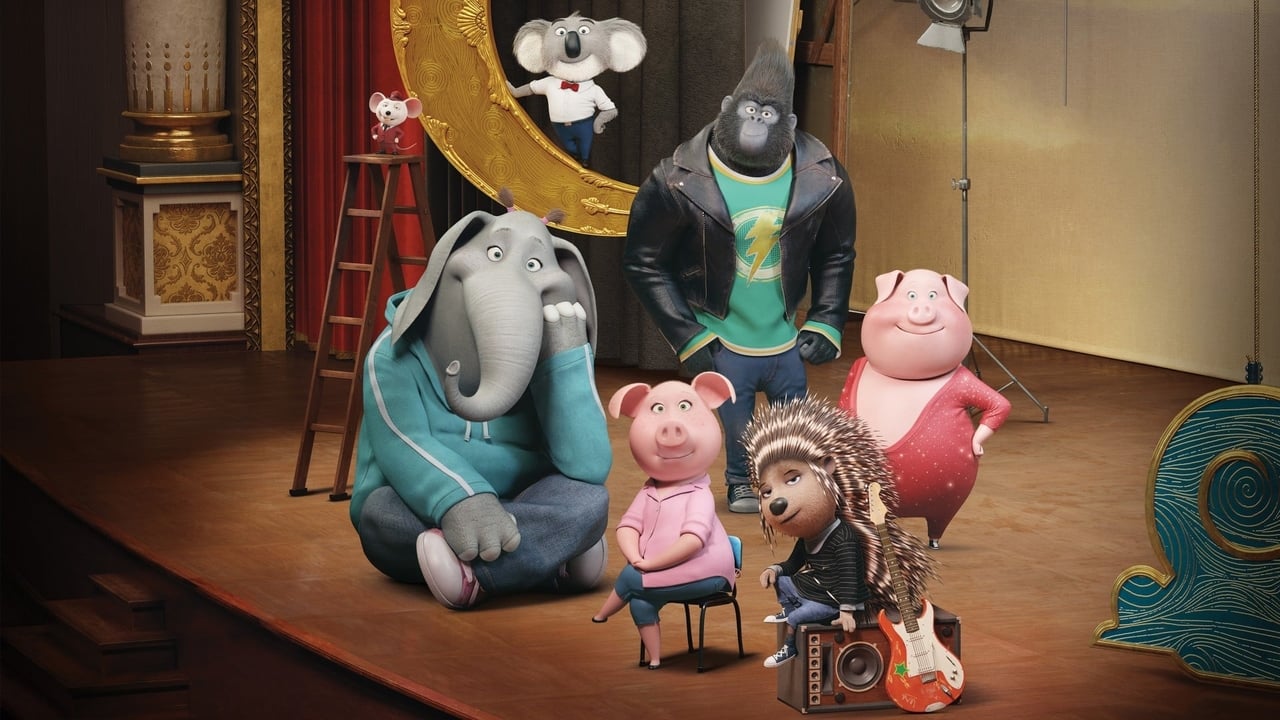
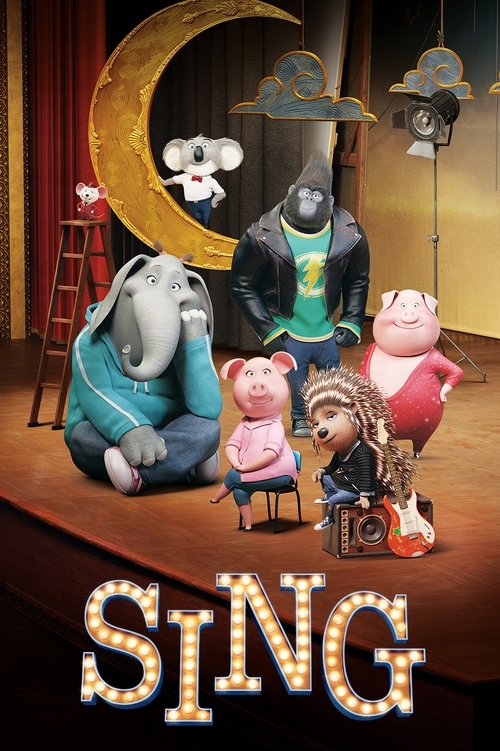
(2016)A koala named Buster recruits his best friend to help him drum up business for his theater by hosting a singing competition.
Sing is a lively family musical with upbeat themes of courage, perseverance, and using gifts well. Its main concerns are mild peril, a few suggestive music-and-dance moments, light insults, and a mixed moral thread where dishonesty and self-focused ambition need conversation.
Start with the content rating, then use the Christian guidance rating to decide how much conversation your family may need.
Content Indicators

Reviewed 17 March 2026
Esther handles review quality, clarity, and the practical guidance families need after the credits roll.
Sing Christian Movie Review (2016)
Guidance: Talk Together
Sing is a lively family musical with upbeat themes of courage, perseverance, and using gifts well. Its main concerns are mild peril, a few suggestive music-and-dance moments, light insults, and a mixed moral thread where dishonesty and self-focused ambition need conversation.
Why This Guidance Level
This lands in the middle range because the film is clearly built for families, but it is not entirely carefree. Most content concerns stay mild, yet the story includes repeated peril, romantic and suggestive moments tied to pop performance culture, and a central plot driven by deception and image-management. For many Christian families, the bigger issue is not surface content but the chance to talk about truthfulness, identity, and whether success should rest on applause or on character before God.
Faith & Worldview Perspective
The film celebrates courage, hard work, perseverance, and the joy of using talent, which can reflect the goodness of creativity and diligent stewardship. At the same time, it leans heavily on a “believe in yourself” message and gives a mixed picture of honesty, since Buster’s dream is advanced through exaggeration and deception before consequences catch up with him. Some family and relationship threads also reflect modern assumptions rather than a distinctly Christian vision of faithfulness and ordered love. Parents may want to discuss how gifts are best used not merely for self-expression or applause, but for truth, service, and gratitude to God in light of Jesus Christ.
Truths Reflected
- Perseverance, courage, and disciplined practice are treated as worthwhile.
- Several characters grow when they stop hiding and act with honesty about their fears and gifts.
Tensions to Discuss
- The film often treats self-belief as the main answer, while Christian hope is grounded more deeply in God’s truth and grace in Christ than in confidence in self.
- Dishonesty and image-driven ambition are central to the plot; a Christian parent may want to discuss why ends do not justify sinful means.
Content & Discernment Markers
Occult & Spiritual Content
- Occult material does not stand out here. The story world is fantasy only in the sense that animals talk and perform like people, without spiritual practices or supernatural teaching. Parents may simply remind children that the film’s hope is in talent and determination, while Christian hope rests in Christ.
Sexuality & Relationships
- A porcupine couple are presented as living together, and their relationship breaks when she catches her boyfriend flirting, hugging, and singing closely with another porcupine. The scene matters because it introduces betrayal and romance drama in a family film. Parents may want to discuss God’s design for faithfulness and honesty in relationships.
- Rosita performs a dance number in a more attention-grabbing costume, and her husband kisses her afterward. The moment is played for celebration and confidence, but some families may still notice the film borrowing pop-performance ideas of attractiveness and approval.
- A few audition and performance moments use suggestive pop lyrics and body-focused humor, including a rabbit act dancing to “oh my gosh, look at her butt” and a brief lyric from “Butterfly” with “come, my lady.” These are brief, but they reflect mainstream pop culture more than modesty or purity.
Identity Themes
- The film repeatedly tells characters to chase dreams, be brave, and believe in themselves. That can encourage courage, but it may also teach children to ground identity in talent, applause, or personal desire rather than in being made by God. Parents may want to ask where true worth comes from.
- Rosita’s storyline touches on motherhood, homemaking, and personal fulfillment, with humor that may leave some viewers feeling that ordinary family duties are less meaningful than public success. A Christian parent may want to discuss how Scripture honors both family service and faithful use of gifts.
Violence & Intensity
- There is recurring animated peril, including mob-connected bears threatening Mike after a card-cheating incident, chase scenes, police pursuit with helicopters, and moments where characters fear serious harm. The tone stays family-friendly, but younger children may still feel the tension.
- The theater suffers a dramatic collapse when a glass aquarium shatters and flooding destroys the building. It is visually intense for a family comedy, even though the film quickly moves toward recovery rather than trauma.
- A few slapstick injuries appear, such as stage lights falling on a character and Ash’s quills flying into the audience during a performance. These moments are comic rather than graphic.
Language & Humour
- Language is mild and mostly consists of insults and put-downs such as “stupid,” “fool,” “loser,” “jerk,” “porky,” “fat,” “nobody,” plus exclamations like “holy moly” and a “fart” joke. This is typical family-film banter, but parents of younger children may still want to address unkind speech.
Other Content Notes
- Buster’s contest and theater plans are driven by exaggeration and dishonesty, and although the story does show fallout, he is still rescued and restored in a way that can blur the moral lesson. What may conflict with a biblical view is the suggestion that a good dream can excuse deceit; a Christian parent may want to discuss why truth matters even when goals seem noble.
- Animals are shown drinking in a club setting. It is brief and not a major focus.
Notable Moments
- Theater collapse: A shattered aquarium floods and destroys the theater in the film’s biggest peril sequence.
- Cheating discovered: Ash finds her boyfriend being unfaithful, which pushes her emotional turning point and introduces relationship betrayal into the story.
- Contest deception: Buster’s dream moves forward through misleading promises and inflated expectations, creating the film’s main moral tension.
Discussion Prompts
- Dreams, gifts, and identity: What did the movie say makes someone valuable: talent, applause, success, or something deeper?
- Biblical guidance: Scripture teaches that our worth is not earned by performance. We receive identity from God, and our gifts are meant to be used faithfully for Him.
- Scripture: Psalm 139:14, Colossians 3:23-24, 1 Peter 4:10
- Honesty and ambition: Did Buster’s good goal make his lies acceptable? Why or why not?
- Biblical guidance: God cares about truth as well as outcomes. A noble dream does not make deceit righteous.
- Scripture: Proverbs 12:22, Luke 16:10, Ephesians 4:25
- Relationships and faithfulness: How did cheating and flirting hurt Ash? What does real faithfulness look like?
- Biblical guidance: The Bible treats love as truthful, loyal, and self-giving rather than selfish or deceptive.
- Scripture: 1 Corinthians 13:4-7, Hebrews 13:4, Proverbs 3:3
- Courage and hope: When we feel afraid or not good enough, is ‘believe in yourself’ enough? Where should Christians place their hope?
- Biblical guidance: Confidence is strongest when rooted in God’s presence and in the hope we have through Jesus Christ, not merely in our own ability.
- Scripture: Philippians 4:13, 2 Corinthians 3:4-5, Hebrews 12:1-2
Common questions about Sing
- What age is Sing suitable for?
- Sing suits children of about 6 and older in most families. The main reason is sexual content. A porcupine couple are presented as living together, and their relationship breaks when she catches her boyfriend flirting, hugging, and singing closely with another porcupine.
- Is Sing okay for a 4-year-old?
- Sing is generally better suited to children of about 6 and up, so a 4-year-old may find parts of it a stretch. A porcupine couple are presented as living together, and their relationship breaks when she catches her boyfriend flirting, hugging, and singing closely with another porcupine. Families whose children handle sexual content well may still be comfortable watching together.
Age guidance is derived from this review's content findings and the film's official classifications. It is a starting point for your own judgement, not a rule.
Parent comments
Leave a comment on this review
Share a short note on Sing, or help other parents with discernment.
Submit will ask you to sign in first.
Weekend family picks
Get the short family movie list before the weekend
Example newsletter: 3 movies to watch this weekend with your family, plus one question to ask after the credits.
Sample: 3 movies to watch this weekend with your family
One cinema pick, one streaming pick, one conversation-starter pick.
Related Articles
A few bigger-picture reads for parents who want more context than a single review page can hold.
Animal Farm And Talking With Kids About Power, Truth, And Sin
Animal Farm can help older children see how slogans, fear, and corrupted authority distort truth, but parents should frame the story with a biblical view of sin.
Read article
5 Things To Notice In Kids Movies Before The Message Lands
A child can absorb a movie long before they can explain it. These five checkpoints help Christian parents notice what a film is training the heart to love, fear, excuse, or trust.
Read article
How To Talk With Kids About Magic, Fate, And Spiritual Themes In Movies
Many family movies use magic, destiny, spirits, or cosmic balance to drive the story. This article helps Christian parents respond without overreacting, while still drawing clear lines back to biblical truth.
Read articleMore Reviews



Official regional ratings
Local ratings remain available for reference, but LionLens separates those classifications from Christian family discernment.
Review Method
How this review was prepared
LionLens reviews are written with subtitle and dialogue evidence where available, official regional ratings data, source research, and final human editorial review before publication.