

Human Reviewed
Parent feedback
72 families found this review helpful
Christian Movie Review
Rascal Does Not Dream of a Dreaming Girl Christian Movie Review
(2019)This anime film follows Sakuta as his steady relationship with Mai is disrupted by the sudden return of Shoko, a girl connected to his past and to a strange age-shifting mystery. The story blends romance, hospital drama, and speculative ideas about identity and reality.
Surface content is fairly mild, but the film carries heavier emotional themes around illness, romantic tension, and metaphysical ideas about identity and existence. Christian families may want conversation afterward more for worldview and relationship themes than for explicit content.
Use the content rating for what is shown and heard, and the Christian guidance rating for what the story encourages children to think about love, identity, and reality.
Content Indicators

Reviewed 13 May 2026
Micah covers action, fantasy, and franchise releases, with close attention to violence, spiritual themes, and moral framing.
Rascal Does Not Dream of a Dreaming Girl Christian Movie Review (2019)
Guidance: Talk Together
Surface content is fairly mild, but the film carries heavier emotional themes around illness, romantic tension, and metaphysical ideas about identity and existence. Christian families may want conversation afterward more for worldview and relationship themes than for explicit content.
Why This Guidance Level
This lands in the middle because the movie is not especially graphic, crude, or violent, but it does carry meaningful discussion points around romance, illness, and a supernatural-leaning mystery about identity and reality. Many families will find the main need is not shielding younger viewers from explicit content, but helping them process the film’s emotional and metaphysical ideas through Christian truth.
Faith & Worldview Perspective
The story honors love, care for the sick, and the need to speak affection clearly within families. It also builds its mystery around uncertainty, alternate selves, and reality-bending ideas that sit outside a Christian understanding of personhood and truth. Parents may want to talk with children about how our identity is not fluid or self-generated, but grounded in the God who made us, and how Christian hope in Christ speaks more clearly to suffering and death than speculative theories do.
Truths Reflected
- Loving words matter, and family members need to hear gratitude, affection, and reassurance.
- Suffering can deepen compassion and reveal the importance of sacrificial care for others.
Tensions to Discuss
- The film uses metaphysical uncertainty and shifting versions of self to explain reality, which may conflict with a biblical view of personhood as created and known by God.
- Romantic tension is often played for humor in ways that blur faithfulness and emotional boundaries, which Christian parents may want to discuss.
Content & Discernment Markers
Occult & Spiritual Content
- The film’s mystery leans on supernatural and metaphysical ideas outside a Christian framework, including an older and younger Shoko existing in relation to each other and dialogue about being unobserved and uncertain, capped by a joke about “Schrodinger’s Shoko.” This is not occult practice, but it does normalize reality-bending explanations for identity and existence. Parents may want to discuss how truth and personhood are grounded in God, not in uncertainty.
Sexuality & Relationships
- Romantic affection is frequent but mild. Sakuta and Mai exchange flirtatious lines, including “I can’t wake up without my good morning kiss,” and there is jealousy when Shoko stays over. The triangle dynamic includes teasing about “two-timing” and emotional boundary-testing that families may want to talk through.
- A suggestive joke about an “erotic present” appears in playful banter. The line is brief, but it is the kind of innuendo parents of younger viewers may notice right away.
Identity Themes
- A central plot point involves Shoko saying, “They’re both me, Shoko Makinohara,” and describing sudden age changes. The movie treats identity as entangled with unusual phenomena rather than as something stable and God-given. Parents may want to discuss what makes a person the same person over time and how Scripture speaks about being known by God.
Violence & Intensity
- Violence is light and mostly comic. A tense joke includes “Knife, not with the knife!” during a jealous confrontation, but the moment plays as exaggerated humor rather than actual attack.
- There is also joking about being in the middle of a “bloodbath,” though the line is figurative and used for comic panic about relationship drama, not real gore.
Language & Humour
- The film uses teasing and suggestive humor more than profanity. Notable phrases include “erotic present,” “two-time them,” and “sleazeball,” along with recurring flirtatious banter that gives the movie a more teen-romance tone than a child-focused family film.
Other Content Notes
- Hospital and illness themes are emotionally significant. Shoko speaks about poor health and repeated hospitalization, and scenes at the hospital carry sadness and vulnerability. For some children, the medical anxiety may be heavier than the movie’s surface content suggests.
- The film includes a moving conversation about wanting to hear “I like you” or “I love you” instead of “I’m sorry” from loved ones. This is one of the story’s strongest relational moments and may open a helpful family conversation about grace, affection, and honest speech.
Notable Moments
- Future plans classroom scene: Children write out dreams for the future, including school, marriage, and children, which gives the story an early sense of longing and fragility.
“GRADUATE COLLEGE GET MARRIED KIDS ARE BORN.”
- Jealousy played for comedy: Mai confronts the surprise of Shoko staying over, and the scene mixes relationship tension with comic exaggeration.
“Wait, Mai-san! Knife, not with the knife!”
- Romantic triangle banter: The morning scene pushes the love-triangle setup with kissing jokes and teasing about cheating.
“I can’t wake up without my good morning kiss.”
- Hospital conversation about family love: One of the film’s most thoughtful exchanges centers on illness, guilt, and the need to say loving words plainly.
“I’d be a whole lot happier to hear ‘I like you,’ instead of ‘I’m sorry’ from someone.”
Discussion Prompts
- Identity and truth: When the movie treats identity as uncertain or split, what do you think makes a person truly who they are?
- Biblical guidance: Scripture teaches that we are created intentionally and known personally by God, not defined by confusion or unstable experience. Parents may want to point children to identity rooted in Christ.
- Scripture: Psalm 139:13-16, Genesis 1:27, Colossians 3:3
- Love, affection, and family words: Why do words like ‘I love you’ and ‘thank you’ matter so much in the hospital conversation?
- Biblical guidance: The Bible calls us to use words that give grace and build others up. This is a good chance to talk about speaking life inside the family.
- Scripture: Ephesians 4:29, Proverbs 16:24, 1 Thessalonians 5:11
- Romantic boundaries and faithfulness: How does the movie treat jealousy, flirting, and emotional boundaries? What would faithfulness look like instead?
- Biblical guidance: Christian love is not just strong feeling; it is honorable, self-controlled, and truthful. Parents may want to discuss how joking about divided loyalty can still shape the heart.
- Scripture: 1 Corinthians 13:4-7, Hebrews 13:4, Philippians 4:8
- Suffering and hope: How should Christians respond when a story deals with illness, fear, and the possibility of loss?
- Biblical guidance: The film shows compassion well, but Christian hope goes further by pointing to Jesus Christ, who is with us in suffering and gives lasting hope beyond death.
- Scripture: Psalm 34:18, John 11:25-26, 2 Corinthians 1:3-4
Common questions about Rascal Does Not Dream of a Dreaming Girl
- What age is Rascal Does Not Dream of a Dreaming Girl suitable for?
- Rascal Does Not Dream of a Dreaming Girl suits children of about 6 and older in most families. The main reason is sexual content. Romantic affection is frequent but mild.
- Is Rascal Does Not Dream of a Dreaming Girl okay for a 4-year-old?
- Rascal Does Not Dream of a Dreaming Girl is generally better suited to children of about 6 and up, so a 4-year-old may find parts of it a stretch. Romantic affection is frequent but mild. Families whose children handle sexual content well may still be comfortable watching together.
Age guidance is derived from this review's content findings and the film's official classifications. It is a starting point for your own judgement, not a rule.
Parent comments
Leave a comment on this review
Share a short note on Rascal Does Not Dream of a Dreaming Girl, or help other parents with discernment.
Submit will ask you to sign in first.
Weekend family picks
Get the short family movie list before the weekend
Example newsletter: 3 movies to watch this weekend with your family, plus one question to ask after the credits.
Sample: 3 movies to watch this weekend with your family
One cinema pick, one streaming pick, one conversation-starter pick.
Related Articles
A few bigger-picture reads for parents who want more context than a single review page can hold.

How To Talk With Kids About Magic, Fate, And Spiritual Themes In Movies
Many family movies use magic, destiny, spirits, or cosmic balance to drive the story. This article helps Christian parents respond without overreacting, while still drawing clear lines back to biblical truth.
Read article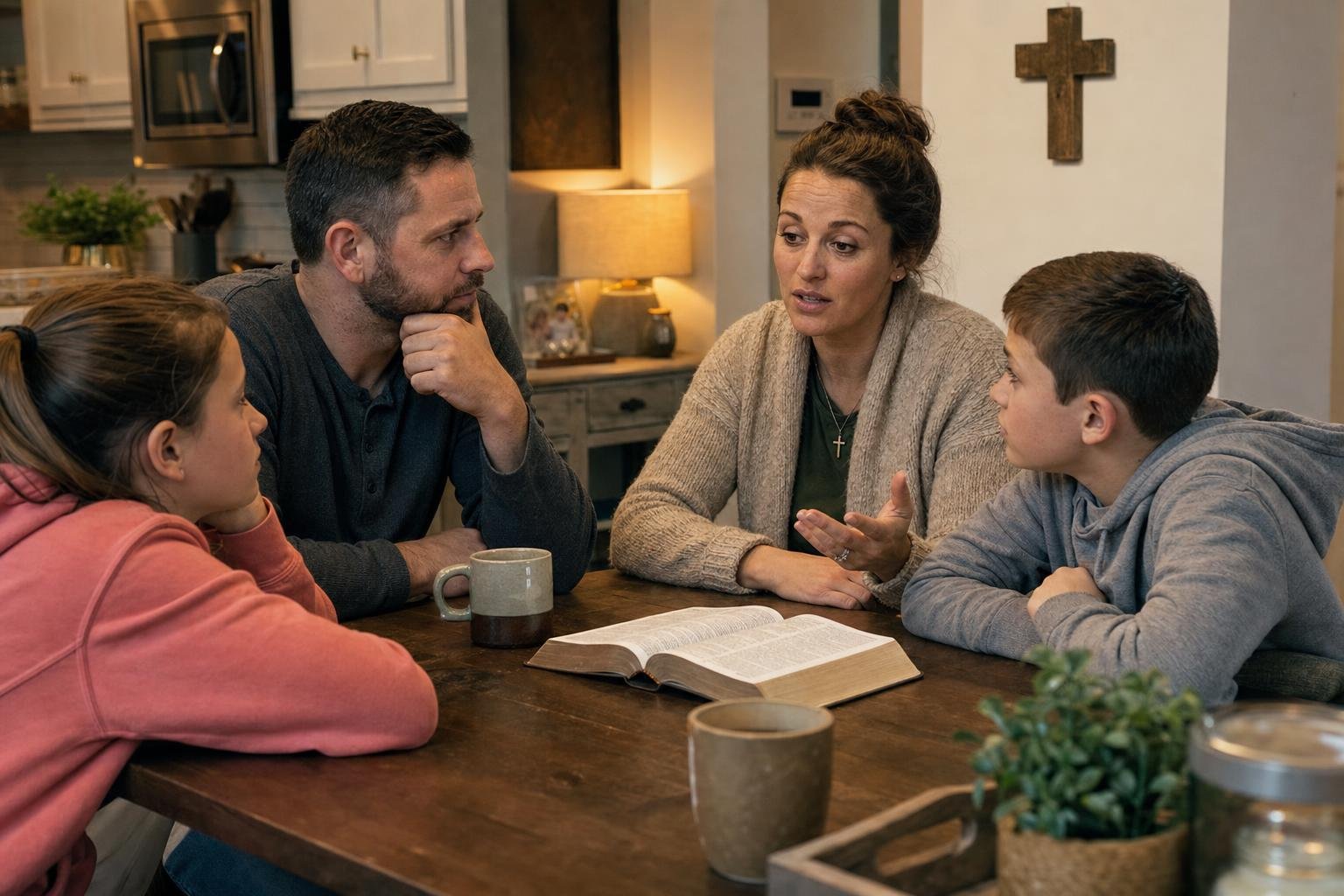
How To Talk With Kids About Dragon magic In Family Movies
A parent-friendly guide to discussing dragon magic in family movies through a Christian lens.
Read article
How To Talk With Kids About Mild fantasy peril In Family Movies
A parent-friendly guide to discussing mild fantasy peril in family movies through a Christian lens.
Read articleMore Reviews



Official regional ratings
Local ratings remain available for reference, but LionLens separates those classifications from Christian family discernment.
Review Method
How this review was prepared
LionLens reviews are written with subtitle and dialogue evidence where available, official regional ratings data, source research, and final human editorial review before publication.