
Human Reviewed
Parent feedback
31 families found this review helpful
Christian Movie Review
Propeller One-Way Night Coach Christian Movie Review
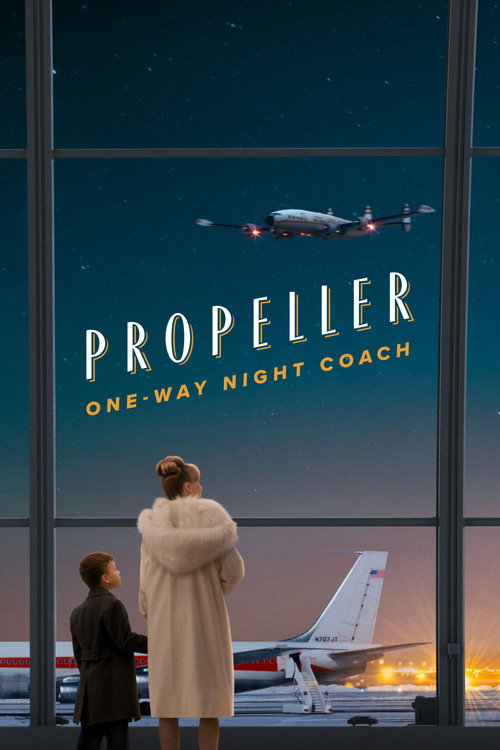
(2026)This nostalgic drama follows a young boy as he remembers a late-night airport departure, his first flight, and his mother's hopes for a new life in Los Angeles. The story is told through a child's wonder, while adult sadness, ambition, and loneliness quietly shape what he sees.
Surface content stays in the PG range, but the film regularly places a child inside adult conversations about attraction, alcohol, smoking, and disappointment. For Christian families, the main guidance need is less about shock content and more about helping children process the adult world the boy is beginning to notice.
Use the content rating for what is shown and said, and the Christian guidance rating for the deeper conversations the film may open up.
Content Indicators

Reviewed 26 April 2026
Micah covers action, fantasy, and franchise releases, with close attention to violence, spiritual themes, and moral framing.
Propeller One-Way Night Coach Christian Movie Review (2026)
Guidance: Talk Together
Surface content stays in the PG range, but the film regularly places a child inside adult conversations about attraction, alcohol, smoking, and disappointment. For Christian families, the main guidance need is less about shock content and more about helping children process the adult world the boy is beginning to notice.
Why This Guidance Level
This lands in the middle because the film’s surface content is fairly mild, but its emotional and moral texture is more mature than many family titles. The child narrator absorbs adult ideas about sexiness, romance, drinking, and self-invention, so many families will benefit from a conversation afterward about what children see, what adults model, and where lasting hope should be placed.
Faith & Worldview Perspective
The film warmly values memory, family bonds, and a child’s wonder, and it understands that children are shaped by the adults they trust. At the same time, it gives real space to glamour, flirtation, alcohol, and personal reinvention as part of the mother’s inner world. The story does not read as openly hostile to Christian faith, but it does present a morally mixed adult world that children may romanticize unless parents help name it clearly. Parents may want to discuss how Jesus Christ offers a truer hope than charm, travel, romance, or career dreams.
Truths Reflected
- Children watch adults closely and are deeply shaped by what they see.
- Family affection, memory, and hope for a better future matter deeply.
Tensions to Discuss
- The film sometimes treats adult flirtation, sex appeal, and drinking as part of a glamorous life a child admires, which may need biblical framing.
- Hope is often tied to escape, romance, or career opportunity rather than to steady truth, sacrificial love, and hope in Christ.
Content & Discernment Markers
Occult & Spiritual Content
- Occult material does not stand out here. The spiritual tension is more about what gives life meaning and where hope is placed. Parents may want to discuss the difference between worldly dreams and Christian hope in Christ.
Sexuality & Relationships
- The child narrator compares the thrill of flying to “playing doctor with the kids on the block,” which introduces a sexualized childhood reference in a reflective, joking way.
- The mother is described in terms of attractiveness and body image, including comments about her figure, “a little bit of a potbelly,” and the thought that it was “very sexy to some.” This matters because the film lets a child observe adult self-sexualization without much correction.
- The boy imagines his mother possibly meeting “a handsome man on the plane” or even “the captain,” and outside references note a hotel-night implication and men talking crudely about a woman who “did” something with all of them. Parents may want to discuss how the film treats romance and adult relationships.
Identity Themes
- The story centers on a boy trying to make sense of adulthood, glamour, and his mother’s dreams. Identity themes are tied more to longing, family influence, and aspiration than to modern self-definition debates. Parents may want to discuss where a person’s worth comes from before success or attention.
Violence & Intensity
- There is little direct on-screen violence in the material described, but the film includes sober references to losing parents, a concentration camp, a jet crash, women dying from cancer, and a man dying of a heart attack. These are thematic rather than graphic, but they add emotional weight.
Language & Humour
- Language is mild. Reported words include “ass,” “stupid,” “geez,” and “Oh my God.” The tone is more casual and period-flavored than aggressively coarse.
Other Content Notes
- Alcohol and smoking are part of the mother’s world and the film’s mid-century atmosphere. The boy connects first-class travel with “free drinks,” and later sees his mother in the dark with “her cigarette… burning” and “a glass of white wine by her side.” This matters because the film presents these habits through a child’s fascinated, affectionate gaze.
- The movie repeatedly frames adult sadness and longing through a child’s innocence, which can be moving but also confusing for younger viewers who may not catch the emotional cost beneath the glamour.
Notable Moments
- Playing doctor reference: The narrator compares the thrill of flying to childhood sexual curiosity, which may catch families off guard in an otherwise nostalgic scene.
“Knowing that, within minutes, I would be airborne for the first time was comparable to nothing, including playing doctor with the kids on the block.”
- Mother framed as sexy: The film lets the child narrator describe his mother in adult, sexualized terms, blending innocence with mature ideas.
“And a lot of men didn’t mind a little bit of a potbelly. It was very sexy to some, she thought.”
- Smoking and wine in the dark: A quiet scene captures the mother’s loneliness and habits in a way that is emotionally strong even without confrontation.
“Her cigarette was burning in the dark, a glass of white wine by her side.”
- Concentration camp mention: A brief line introduces historical trauma into the boy’s understanding of adult sadness.
“I did ask her why Liz seemed so different from others, and my mom told me that it was because she had depth and true sadness in her life from being in a concentration camp.”
Discussion Prompts
- What children learn from adults: What does the boy learn about life by watching his mother, and which parts of that seem wise or unwise?
- Biblical guidance: Children are shaped by what they see in the adults around them, so Scripture calls parents to model what is true, honorable, and self-controlled.
- Scripture: Deuteronomy 6:6-7, Proverbs 22:6, 1 Corinthians 11:1
- Where hope is placed: Why does moving to Los Angeles feel like such a big answer for this family, and can a new place or dream job really fix the heart?
- Biblical guidance: Earthly opportunities can be gifts, but lasting hope is not found in reinvention or success; Christian hope is anchored in Jesus Christ.
- Scripture: Psalm 20:7, Jeremiah 17:5-8, 1 Peter 1:3-4
- Glamour versus wisdom: Does the film make smoking, drinking, or flirtation look appealing through the boy’s eyes? What might be missing from that picture?
- Biblical guidance: Scripture calls believers to sobriety, self-control, and wisdom, not to confuse glamour with goodness.
- Scripture: Proverbs 20:1, Ephesians 5:15-18, Titus 2:11-12
- Sadness and compassion: How does the film show that adults can carry sadness children do not fully understand?
- Biblical guidance: The Bible teaches us to be compassionate toward those who suffer and to bring sorrow honestly before God, who comforts His people in Christ.
- Scripture: Romans 12:15, Psalm 34:18, 2 Corinthians 1:3-4
Common questions about Propeller One-Way Night Coach
- What age is Propeller One-Way Night Coach suitable for?
- Propeller One-Way Night Coach suits children of about 9 and older in most families. The main reason is sexual content. The child narrator compares the thrill of flying to "playing doctor with the kids on the block," which introduces a sexualized childhood reference in a reflective, joking way. Younger viewers may still enjoy it alongside a parent, and it raises worldview questions worth talking through afterwards.
- Is Propeller One-Way Night Coach okay for a 7-year-old?
- Propeller One-Way Night Coach is generally better suited to children of about 9 and up, so a 7-year-old may find parts of it a stretch. The child narrator compares the thrill of flying to "playing doctor with the kids on the block," which introduces a sexualized childhood reference in a reflective, joking way. Families whose children handle sexual content well may still be comfortable watching together.
Age guidance is derived from this review's content findings and the film's official classifications. It is a starting point for your own judgement, not a rule.
Parent comments
Leave a comment on this review
Share a short note on Propeller One-Way Night Coach, or help other parents with discernment.
Submit will ask you to sign in first.
Weekend family picks
Get the short family movie list before the weekend
Example newsletter: 3 movies to watch this weekend with your family, plus one question to ask after the credits.
Sample: 3 movies to watch this weekend with your family
One cinema pick, one streaming pick, one conversation-starter pick.
Related Articles
A few bigger-picture reads for parents who want more context than a single review page can hold.
Animal Farm And Talking With Kids About Power, Truth, And Sin
Animal Farm can help older children see how slogans, fear, and corrupted authority distort truth, but parents should frame the story with a biblical view of sin.
Read article
5 Things To Notice In Kids Movies Before The Message Lands
A child can absorb a movie long before they can explain it. These five checkpoints help Christian parents notice what a film is training the heart to love, fear, excuse, or trust.
Read article
How To Talk With Kids About Magic, Fate, And Spiritual Themes In Movies
Many family movies use magic, destiny, spirits, or cosmic balance to drive the story. This article helps Christian parents respond without overreacting, while still drawing clear lines back to biblical truth.
Read articleMore Reviews




Official regional ratings
Local ratings remain available for reference, but LionLens separates those classifications from Christian family discernment.
Review Method
How this review was prepared
LionLens reviews are written with subtitle and dialogue evidence where available, official regional ratings data, source research, and final human editorial review before publication.