Human Reviewed
Parent feedback
47 families found this review helpful
Christian Movie Review
Pinocchio Christian Movie Review
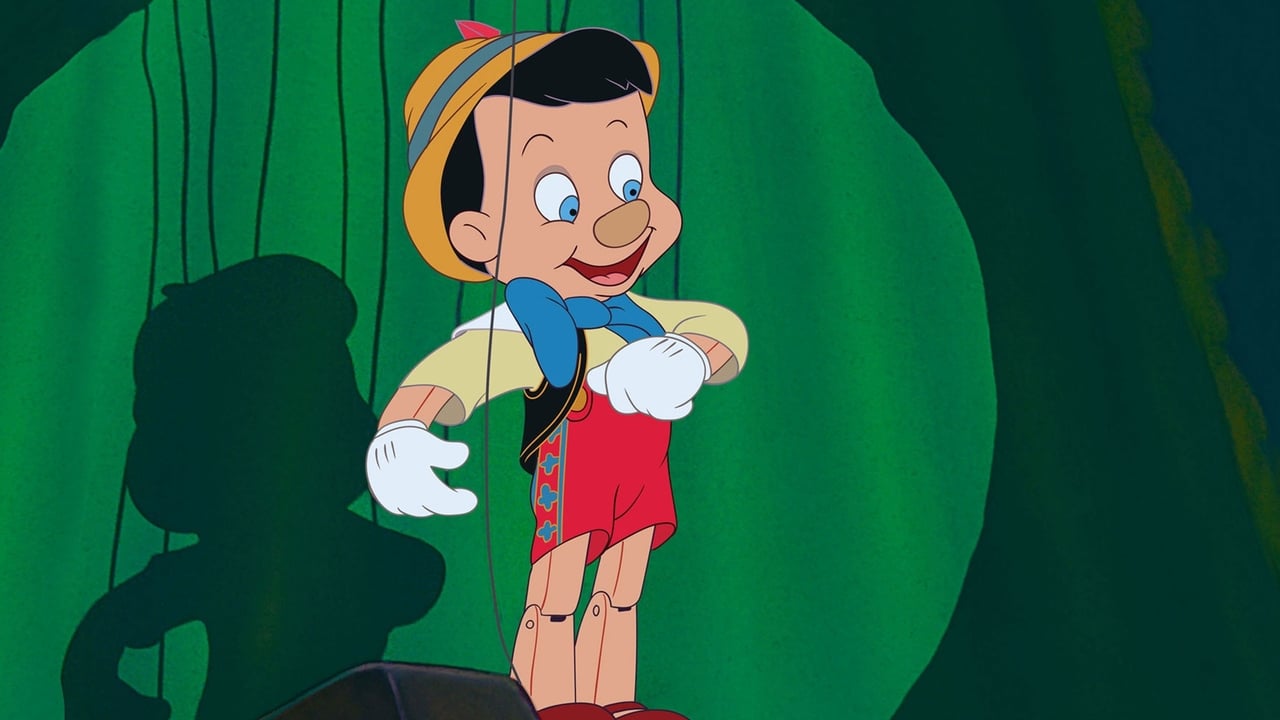
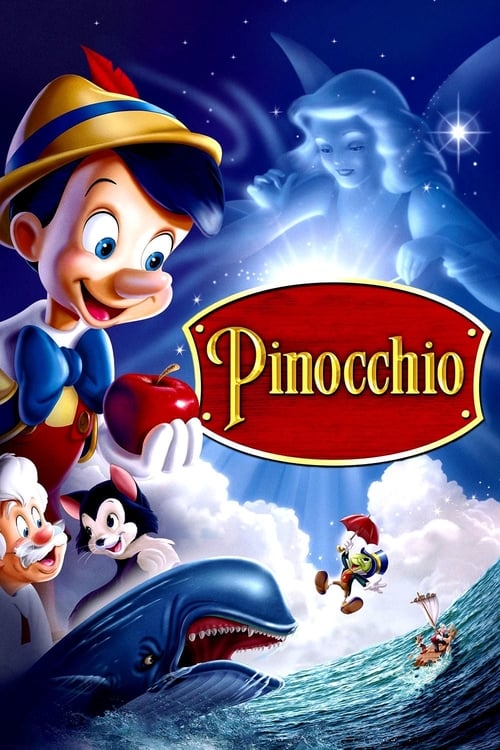
(1940)Disney's Pinocchio follows a wooden puppet who longs to become a real boy. Guided by Jiminy Cricket and tested by temptation, he faces a series of dangers and poor choices before learning hard lessons about truth, courage, and selflessness.
This classic has a strong moral center, but it also includes some frightening peril, smoking and drinking, and a worldview that treats becoming 'real' as something earned through behavior. Christian families may want to talk through the film's lessons about conscience, truth, and where true identity comes from.
Use the content rating to gauge the film's mild peril and substance use, and the Christian guidance rating to weigh its moral framing about conscience, identity, and becoming 'real'.
Content Indicators

Reviewed 6 May 2026
Micah covers action, fantasy, and franchise releases, with close attention to violence, spiritual themes, and moral framing.
Pinocchio Christian Movie Review (1940)
Guidance: Talk Together
This classic has a strong moral center, but it also includes some frightening peril, smoking and drinking, and a worldview that treats becoming ‘real’ as something earned through behavior. Christian families may want to talk through the film’s lessons about conscience, truth, and where true identity comes from.
Why This Guidance Level
Pinocchio is a classic family film with a strong moral message and only mild surface content, but it is not entirely gentle. The kidnapping, caging, near-drowning, smoking, drinking, and a few tense scenes can unsettle younger viewers, and the film’s idea that a boy becomes ‘real’ by proving himself is worth a parent-child conversation from a Christian perspective. That combination makes it a title many families can approach comfortably, while still benefiting from some guided discussion.
Faith & Worldview Perspective
The film clearly values truthfulness, bravery, self-control, humility, and compassion, and it treats conscience as something important rather than optional. Its main tension for Christian families is that it presents becoming a ‘real’ boy as a reward for moral achievement, while Christian hope in Christ centers on grace, repentance, and identity received from God rather than earned status.
Truths Reflected
- Lying and selfishness bring harm, while truth and courage matter.
- A loving father and a well-formed conscience are good gifts.
Tensions to Discuss
- Pinocchio’s worth as a ‘real’ boy is tied to performance rather than grace in Christ.
- Conscience is honored, but the film does not point beyond moral effort to redemption.
Content & Discernment Markers
Occult & Spiritual Content
- Occult material does not stand out here. The story uses a fairy-tale wish and magical transformation, but it stays in a classic fantasy register rather than teaching occult practice. Parents may still want to discuss the difference between storybook magic and the Christian hope found in Christ.
Sexuality & Relationships
- Sexual content is essentially absent. The only notable moment is a brief comic gesture from Jiminy Cricket toward a female statue, followed by an embarrassed ‘Pardon me…’ It is harmless, but parents may want to note the joke if they are watching with very young children.
Identity Themes
- The film’s central identity message is that Pinocchio must become ‘real’ by proving he is ‘brave, truthful, and unselfish.’ That gives the story its moral force, but it also invites a conversation about how Christian identity is not earned by good behavior; in Christ, a person is made new by grace. Parents may want to discuss what makes someone truly real and truly good.
Violence & Intensity
- The danger is mostly stylized, but it is still meaningful: Pinocchio is kidnapped, caged, threatened with destruction, and nearly drowns, and there is also a gunshot and some rough fighting among boys. These scenes give the film real tension, especially for sensitive children. Parents may want to prepare children for the kidnapping and water peril.
Language & Humour
- Language is mild overall, with comic or sharp phrases rather than strong profanity. The most notable words are ‘hell’ in a few exclamations, along with ‘what the…’ style outbursts and some insults in tense moments. Parents may want to note that the speech is more rough than reverent in a few scenes.
Other Content Notes
- Smoking and drinking are visible throughout the film, including Geppetto smoking a pipe, boys smoking cigars, beer in a tavern, and a character drinking wine. These details are not the film’s focus, but they are part of the setting and may be worth a brief family conversation.
Notable Moments
- Conscience ignored: Jiminy Cricket functions as Pinocchio’s conscience, and the story repeatedly shows the trouble that follows when Pinocchio ignores him. This is one of the film’s clearest moral lessons.
“as he ignores his conscience”
- Real boy lesson: The film’s central promise is that Pinocchio must prove himself brave, truthful, and unselfish before he can become ‘real.’ That makes the movie a strong conversation starter about identity and virtue.
“brave, truthful, and unselfish”
- Father’s longing: Geppetto’s grief and love for family give the story warmth and emotional weight, especially in the way he creates Pinocchio out of longing for a son.
“The love of a father is a powerful thing.”
Discussion Prompts
- Truth and conscience: Why do you think Pinocchio keeps getting into trouble when he ignores Jiminy Cricket?
- Biblical guidance: The Bible teaches that conscience matters, but it must be shaped by God’s truth. Talk about how lying and self-will lead us away from wisdom, while honesty and repentance lead us back to what is right.
- Scripture: Proverbs 12:22, Romans 2:15
- Identity and grace: What does the movie say a person must do to become ‘real,’ and how is that different from how God gives new life?
- Biblical guidance: Pinocchio earns status by performance, but the gospel centers on grace in Jesus Christ. A Christian’s identity is received from God, not achieved by proving worth.
- Scripture: Ephesians 2:8-9, 2 Corinthians 5:17
- Courage and selflessness: Which choices in the story show real courage, and which choices only look brave at first?
- Biblical guidance: The Bible connects courage with obedience and love for others, not just boldness or impulse. Jesus Christ shows the fullest example of self-giving love.
- Scripture: Joshua 1:9, Philippians 2:3-5
Common questions about Pinocchio
- What age is Pinocchio suitable for?
- Pinocchio suits children of about 6 and older in most families. The main reason is language. Language is mild overall, with comic or sharp phrases rather than strong profanity. Younger viewers may still enjoy it alongside a parent, and it raises worldview questions worth talking through afterwards.
- Is Pinocchio okay for a 4-year-old?
- Pinocchio is generally better suited to children of about 6 and up, so a 4-year-old may find parts of it a stretch. Language is mild overall, with comic or sharp phrases rather than strong profanity. Families whose children handle language well may still be comfortable watching together.
Age guidance is derived from this review's content findings and the film's official classifications. It is a starting point for your own judgement, not a rule.
Parent comments
Leave a comment on this review
Share a short note on Pinocchio, or help other parents with discernment.
Submit will ask you to sign in first.
Weekend family picks
Get the short family movie list before the weekend
Example newsletter: 3 movies to watch this weekend with your family, plus one question to ask after the credits.
Sample: 3 movies to watch this weekend with your family
One cinema pick, one streaming pick, one conversation-starter pick.
Related Articles
A few bigger-picture reads for parents who want more context than a single review page can hold.

How To Talk With Kids About Magic, Fate, And Spiritual Themes In Movies
Many family movies use magic, destiny, spirits, or cosmic balance to drive the story. This article helps Christian parents respond without overreacting, while still drawing clear lines back to biblical truth.
Read article
How To Talk With Kids About Dragon magic In Family Movies
A parent-friendly guide to discussing dragon magic in family movies through a Christian lens.
Read article
How To Talk With Kids About Mild fantasy peril In Family Movies
A parent-friendly guide to discussing mild fantasy peril in family movies through a Christian lens.
Read articleMore Reviews



Official regional ratings
Local ratings remain available for reference, but LionLens separates those classifications from Christian family discernment.
Review Method
How this review was prepared
LionLens reviews are written with subtitle and dialogue evidence where available, official regional ratings data, source research, and final human editorial review before publication.