Human Reviewed
Parent feedback
62 families found this review helpful
Christian Movie Review
Orangutan Christian Movie Review
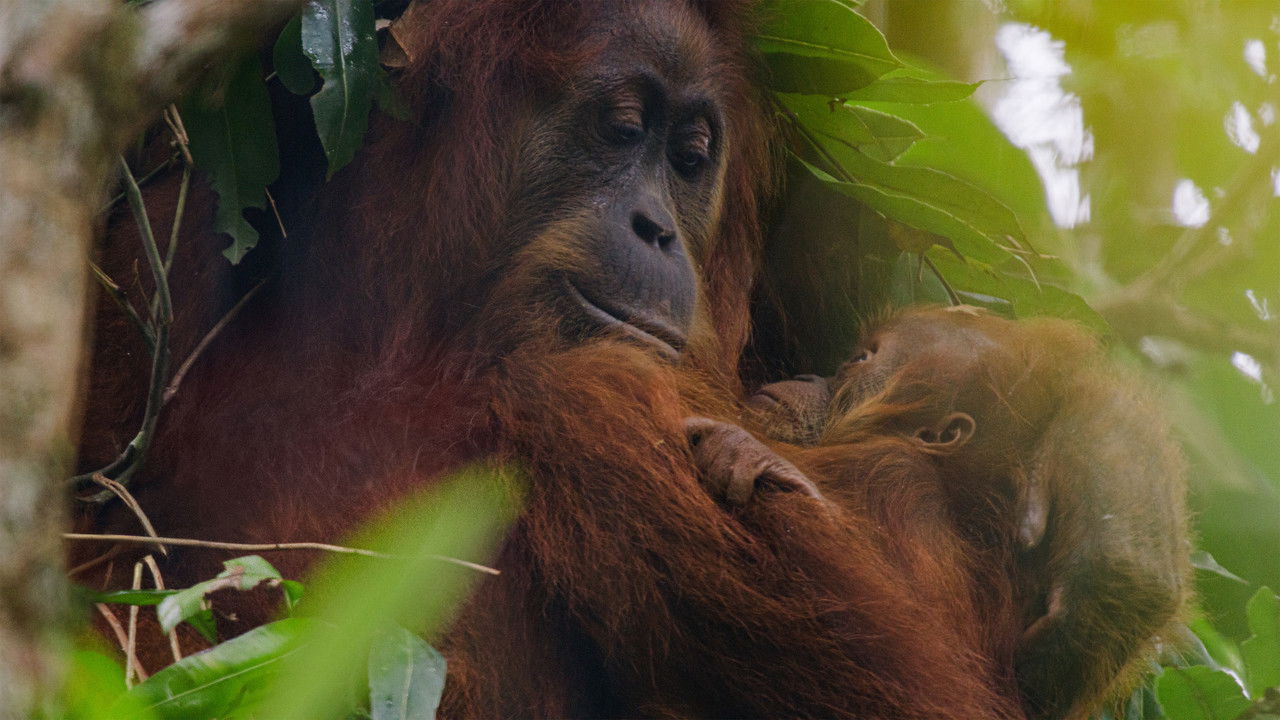
(2026)This nature documentary follows a young orangutan named Indah as she grows toward independence in the forests of Borneo and Sumatra. The film mixes animal behavior, family dynamics, survival challenges, and light humor as it tracks her life with her mother and younger brother.
Surface content is mild for most families, with a few tense animal-danger moments and brief natural-world mating references. The bigger point for Christian parents is worldview discussion, especially the film's evolutionary framing and its use of songs and narration that blur the line between ape and human identity.
Use the content rating for what children will see and hear, and the Christian guidance rating for what the film encourages them to think about life and truth.
Content Indicators

Reviewed 24 April 2026
Esther handles review quality, clarity, and the practical guidance families need after the credits roll.
Orangutan Christian Movie Review (2026)
Guidance: Talk Together
Surface content is mild for most families, with a few tense animal-danger moments and brief natural-world mating references. The bigger point for Christian parents is worldview discussion, especially the film’s evolutionary framing and its use of songs and narration that blur the line between ape and human identity.
Why This Guidance Level
This lands in a discussion-advised range because the surface content stays mild, but the film carries a clearer worldview message than many parents may expect from a family nature documentary. The main issue is not occult or harsh content; it is the evolutionary framing of humans and apes, which is worth discussing alongside the film’s strong themes of family care, learning, and life in creation.
Faith & Worldview Perspective
Orangutan celebrates the wonder, intelligence, and social life of animals, and it does that with warmth and charm. It also presents humans and orangutans as close relatives and reinforces that idea with playful music about an ape becoming human. That may conflict with the Christian belief that animals are part of God’s good creation but human beings are uniquely made in God’s image. Parents may want to discuss the difference between appreciating animal likenesses and accepting a story about human origins that leaves out the Creator and the distinct dignity of people in Christ.
Truths Reflected
- The film highlights care within families, patient learning, and the beauty of life in creation.
- It shows that the natural world is complex, vulnerable, and worthy of responsible stewardship.
Tensions to Discuss
- The narration describes orangutans as “close relatives of ours,” which may press children toward an evolutionary view of human origins rather than creation by God.
- Lyrics about an ape learning to be human can blur the biblical distinction between animals and people made in the image of God.
Content & Discernment Markers
Occult & Spiritual Content
- Occult material does not stand out here. The spiritual concern is worldview, not magic or supernatural practice.
Sexuality & Relationships
- Sexual content is limited to natural-animal behavior. The film includes brief mention of mating rituals, males calling to attract females, and a male sniffing a female to check fertility. These moments are presented as wildlife education rather than sensual material.
Identity Themes
- Early narration says the orangutans are “close relatives of ours,” and the soundtrack includes lyrics such as “I wanna walk like you, talk like you” and “An ape like me can learn to be human too.” For Christian families, this matters because it can blur the line between animals and humans made in God’s image. Parents may want to discuss what makes human beings uniquely accountable before God.
Violence & Intensity
- A suspenseful survival moment warns against traveling on the forest floor because “it only takes one” Sumatran tiger “to eat you.” The line is memorable and may unsettle younger children even though the film remains family-friendly overall.
- There are brief painful nature moments, including a wasp encounter where the narration jokes that there is “quite a bit of pain” after expecting honey. The tone stays light, but younger viewers may still react to the stings.
- The documentary includes falls, treetop slips, hunger, and some animal aggression tied to competition and survival. The tension is real but generally handled in a gentle documentary style.
Language & Humour
- Language is very mild. The narration uses playful phrases like “yeah, I don’t think that’s such a good idea,” “super weird,” and “jungle VIP,” with teasing humor rather than profanity or crude speech.
Other Content Notes
- The film shows a social hierarchy where Ruby and her son get the first pick of food while Diann and her family get scraps. This creates a mild theme of unfairness, scarcity, and survival pressure within the animal group.
- Indah’s story includes sibling jealousy and the pain of feeling overlooked after Bimo is born. The film treats this with warmth and humor, giving families a natural opening to talk about love, attention, and maturity.
Notable Moments
- Human-ape comparison: The opening narration directly links orangutans to humans in a way that raises the film’s main worldview issue.
“They were right that close relatives of ours live up here, but wrong about everything else.”
- Tiger danger: A memorable line introduces predator threat and adds the film’s strongest moment of peril.
“Fewer than 400 Sumatran tigers are left in the wild… but it only takes one to eat you.”
- Sibling jealousy: The film gives Indah an emotional arc as she adjusts to life after her younger brother’s birth.
“For Indah, nothing was the same after Bimo.”
- Status and scarcity: Food competition creates mild social tension and helps explain the family’s hardship.
“Ruby and her son, Rafi, are the true jungle VIPs, entitled to the first pick of everything… while Diann and her family just get scraps.”
Discussion Prompts
- Human uniqueness and creation: The film says orangutans are close relatives of humans. What similarities can animals share with us, and what makes people different from animals?
- Biblical guidance: Scripture teaches that animals are part of God’s good creation, but human beings are uniquely made in God’s image and given a distinct calling before Him.
- Scripture: Genesis 1:26-27, Psalm 8:4-8
- Family love and sibling jealousy: How did Indah respond when Bimo got more attention, and what can we do when we feel overlooked in our own family?
- Biblical guidance: God calls us away from jealousy and toward patient, loving care for one another.
- Scripture: 1 Corinthians 13:4-5, Philippians 2:3-4
- Fear, danger, and trust: How did the film show danger in the forest, and how should Christians think about fear when life feels unsafe?
- Biblical guidance: Creation is beautiful but fallen and dangerous in places, and our ultimate security is not in ourselves but in the Lord and the hope we have in Jesus Christ.
- Scripture: Psalm 46:1-2, John 16:33
- Stewardship of creation: What did this story make you notice about animals and their habitat, and how should people care for God’s world?
- Biblical guidance: Christians can value conservation and wise care for creatures as part of faithful stewardship under God’s authority.
- Scripture: Genesis 2:15, Psalm 24:1
Common questions about Orangutan
- What age is Orangutan suitable for?
- Orangutan suits children of about 6 and older in most families. The main reason is violence and peril. A suspenseful survival moment warns against traveling on the forest floor because "it only takes one" Sumatran tiger "to eat you." Younger viewers may still enjoy it alongside a parent, and it raises worldview questions worth talking through afterwards.
- Is Orangutan okay for a 4-year-old?
- Orangutan is generally better suited to children of about 6 and up, so a 4-year-old may find parts of it a stretch. A suspenseful survival moment warns against traveling on the forest floor because "it only takes one" Sumatran tiger "to eat you." Families whose children handle violence and peril well may still be comfortable watching together.
Age guidance is derived from this review's content findings and the film's official classifications. It is a starting point for your own judgement, not a rule.
Parent comments
Leave a comment on this review
Share a short note on Orangutan, or help other parents with discernment.
Submit will ask you to sign in first.
Weekend family picks
Get the short family movie list before the weekend
Example newsletter: 3 movies to watch this weekend with your family, plus one question to ask after the credits.
Sample: 3 movies to watch this weekend with your family
One cinema pick, one streaming pick, one conversation-starter pick.
Related Articles
A few bigger-picture reads for parents who want more context than a single review page can hold.
Animal Farm And Talking With Kids About Power, Truth, And Sin
Animal Farm can help older children see how slogans, fear, and corrupted authority distort truth, but parents should frame the story with a biblical view of sin.
Read article
5 Things To Notice In Kids Movies Before The Message Lands
A child can absorb a movie long before they can explain it. These five checkpoints help Christian parents notice what a film is training the heart to love, fear, excuse, or trust.
Read article
3 Family Movies To Watch With The Kids This Weekend
Three family movie options with quick Christian discernment notes, review links, and simple conversation prompts for parents.
Read articleMore Reviews



Official regional ratings
Local ratings remain available for reference, but LionLens separates those classifications from Christian family discernment.
Review Method
How this review was prepared
LionLens reviews are written with subtitle and dialogue evidence where available, official regional ratings data, source research, and final human editorial review before publication.