
Human Reviewed
Parent feedback
46 families found this review helpful
Christian Movie Review
Next Gen Christian Movie Review
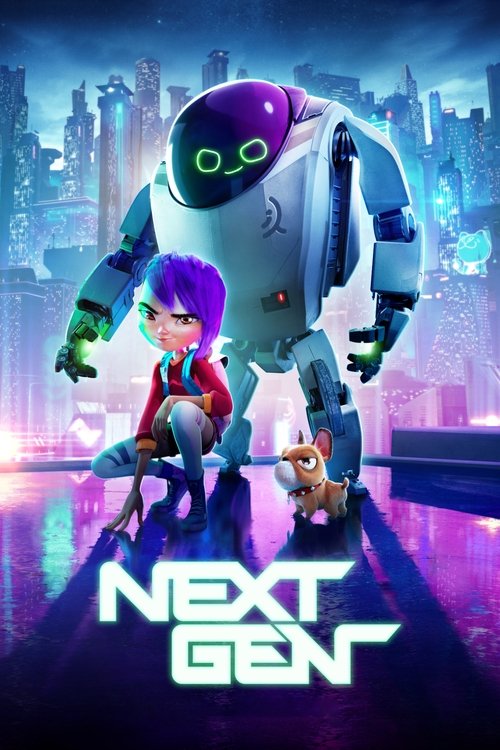
(2018)A friendship with a top-secret robot turns a lonely girl's life into a thrilling adventure as they take on bullies, evil bots and a scheming madman.
This animated sci-fi adventure mixes heartfelt themes of loneliness, friendship, and healing with repeated robot peril, family tension, mild coarse language, and a few worldview points parents may want to talk through. The biggest discernment areas are the action intensity, disrespect toward authority, and the film’s confidence in technology as a source of hope and rescue.
Start with the content rating, then use the Christian guidance rating to decide how much conversation your family may need.
Content Indicators

Reviewed 16 April 2026
Micah covers action, fantasy, and franchise releases, with close attention to violence, spiritual themes, and moral framing.
Next Gen Christian Movie Review (2018)
Guidance: Talk Together
This animated sci-fi adventure mixes heartfelt themes of loneliness, friendship, and healing with repeated robot peril, family tension, mild coarse language, and a few worldview points parents may want to talk through. The biggest discernment areas are the action intensity, disrespect toward authority, and the film’s confidence in technology as a source of hope and rescue.
Why This Guidance Level
Next Gen stays in the family-animation range, but it is not especially light. There is repeated action peril involving robots, explosions, threats, and kids in danger, along with mild blasphemy, sarcastic disrespect, and a strained mother-daughter dynamic. The film also raises useful but important questions about whether technology can save us, what shapes identity, and how pain affects behavior, so many families will likely want conversation afterward.
Faith & Worldview Perspective
The film reflects real longings for friendship, healing, loyalty, and using power for good. It also leans heavily on the idea that memory, personal choice, and advanced technology can repair what is broken. That can open a thoughtful contrast with Christian hope: our deepest healing is not found in machines or self-definition, but in the God who knows us and in the redemption offered through Jesus Christ. Parents may want to discuss where human invention is helpful and where it cannot replace love, wisdom, repentance, or hope in Christ.
Truths Reflected
- Loneliness and hurt can shape a child’s behavior, and compassionate friendship can help bring healing.
- Powerful tools should be used responsibly rather than selfishly or recklessly.
Tensions to Discuss
- The film can suggest that technology and human ingenuity are the main path to a better world, which may compete with Christian hope in Jesus Christ as our true source of restoration.
- Disrespect toward parents and authority is often played for humor or attitude, which may conflict with a biblical call to honor and self-control.
Content & Discernment Markers
Occult & Spiritual Content
- Occult material does not stand out here. The story’s supernatural-feeling elements come from advanced AI and futuristic technology rather than magic or spiritual practice.
Sexuality & Relationships
- An opening song includes lines such as “I think I wanna take you home,” “I wanna try on your clothes,” and “In her kiss, I taste the revolution.” The moment is musical background rather than plot-driving content, but some parents may still want to note the flirtatious and same-sex-coded lyrics.
Identity Themes
- The film connects identity closely to memory, pain, and personal experience. That can be emotionally insightful, but it may also invite discussion about grounding identity in being made by God rather than only in wounds or self-expression. Parents may want to ask what finally tells us who we are.
Violence & Intensity
- The story includes repeated animated sci-fi peril involving dangerous robots, chases, falls, explosions, laser-style combat, and threats tied to unstable AI. The action is stylized, but it is frequent enough to shape the viewing experience for younger children.
- Children are put in danger during chaotic public scenes, including escalator mishaps, crowd movement, and restricted-area pursuit. The tension is played partly for comedy, but the sense of risk is still present.
Language & Humour
- Language is mostly mild, but there is blasphemous speech such as “Oh my god, Mai” and “Oh my God,” along with “Oh, fudge.” Insults and sharp talk also appear, including “Stupid robot,” “Shut it,” and “you little…” Parents sensitive to casual use of God’s name may want to discuss reverence in speech.
Other Content Notes
- Family conflict is established early with heated lines like “You’re being selfish” and “You have your daughter!” The home atmosphere feels strained, which helps explain the child’s anger but may be heavy for some younger viewers.
- Disrespect and rebellious behavior are noticeable. Mai resists help with lines like “Get off me,” “stop being so dramatic,” and “I can do it myself,” and she pushes against adult direction in public. Parents may want to discuss the difference between independence and dishonor.
- The corporate-tech setting celebrates convenience and innovation, with promises of a “better world” through robotics. That message is not inherently wrong, but Christian families may want to talk about the limits of technology and the need for wisdom, humility, and moral responsibility.
Notable Moments
- Heated family argument: The film opens with sharp conflict between adults, setting a wounded emotional tone around loss and family strain.
“You’re being selfish. That’s what happens when a man loses everything. - You have your daughter!”
- Suggestive song lyrics: A punk song plays with flirtatious and same-sex-coded lyrics that some families may want to notice even though the moment is brief.
“I think I wanna take you home / I wanna try on your clothes… In her kiss, I taste the revolution.”
- Disrespect toward parent: Mai responds to help and grooming with irritation and self-assertion rather than gratitude or respect.
“Get off me. Oh, stop being so dramatic. I can do it myself!”
- Dangerous AI warning: Scientists openly acknowledge that the robot project is powerful and risky, underscoring the film’s caution about unchecked technology.
“Do you have any idea how dangerous what we built is?”
Discussion Prompts
- Technology and trust: When the movie talks about building a better world through robots, what can technology do well, and what can it never do for the human heart?
- Biblical guidance: Human skill is a gift from God, but our ultimate trust belongs in the Lord, not in inventions. Jesus Christ offers the kind of hope and restoration no machine can provide.
- Scripture: Psalm 20:7, Jeremiah 17:5-7, Colossians 1:16-17
- Honoring parents and authority: Did Mai’s attitude feel understandable, sinful, or both? How should we respond when we feel hurt but still need correction?
- Biblical guidance: Scripture calls children to honor parents and calls all of us to self-control, even when emotions are strong.
- Scripture: Ephesians 6:1-3, Proverbs 15:1, James 1:19-20
- Identity and memories: The movie suggests memories make us who we are. Is that fully true? What else should shape our identity?
- Biblical guidance: Past experiences matter, but they are not our final authority. Our deepest identity is found in being created by God and, for believers, made new in Christ.
- Scripture: Genesis 1:27, Psalm 139:13-16, 2 Corinthians 5:17
- Friendship and healing: How did friendship help with loneliness in the story, and what makes a friendship truly good and safe?
- Biblical guidance: God often uses faithful friendship for comfort and growth, but wise friendship should move us toward truth, love, and courage.
- Scripture: Proverbs 17:17, Ecclesiastes 4:9-10, John 15:12-13
Common questions about Next Gen
- What age is Next Gen suitable for?
- Next Gen suits children of about 8 and older in most families. That follows its official classification. It is rated PG in Australia, the US, New Zealand and Canada, and 12 in the UK. Language is mostly mild, but there is blasphemous speech such as “Oh my god, Mai” and “Oh my God,” along with “Oh, fudge.” Younger viewers may still enjoy it alongside a parent, and it raises worldview questions worth talking through afterwards.
- Is Next Gen okay for a 6-year-old?
- Next Gen is generally better suited to children of about 8 and up, so a 6-year-old may find parts of it a stretch. It is rated PG in Australia, the US, New Zealand and Canada, and 12 in the UK. Language is mostly mild, but there is blasphemous speech such as “Oh my god, Mai” and “Oh my God,” along with “Oh, fudge.” Families comfortable watching a little above the classification together may still be fine with it.
Age guidance is derived from this review's content findings and the film's official classifications. It is a starting point for your own judgement, not a rule.
Parent comments
Leave a comment on this review
Share a short note on Next Gen, or help other parents with discernment.
Submit will ask you to sign in first.
Weekend family picks
Get the short family movie list before the weekend
Example newsletter: 3 movies to watch this weekend with your family, plus one question to ask after the credits.
Sample: 3 movies to watch this weekend with your family
One cinema pick, one streaming pick, one conversation-starter pick.
Related Articles
A few bigger-picture reads for parents who want more context than a single review page can hold.
Animal Farm And Talking With Kids About Power, Truth, And Sin
Animal Farm can help older children see how slogans, fear, and corrupted authority distort truth, but parents should frame the story with a biblical view of sin.
Read article
5 Things To Notice In Kids Movies Before The Message Lands
A child can absorb a movie long before they can explain it. These five checkpoints help Christian parents notice what a film is training the heart to love, fear, excuse, or trust.
Read article
Why A Clean Movie Can Still Need A Christian Conversation
Sometimes the hardest films to evaluate are not the obviously rough ones, but the polished and emotionally appealing movies that carry deeper assumptions quietly. This article explains why.
Read articleMore Reviews



Official regional ratings
Local ratings remain available for reference, but LionLens separates those classifications from Christian family discernment.
Review Method
How this review was prepared
LionLens reviews are written with subtitle and dialogue evidence where available, official regional ratings data, source research, and final human editorial review before publication.