
Human Reviewed
Parent feedback
72 families found this review helpful
Christian Movie Review
Moana 2 Christian Movie Review
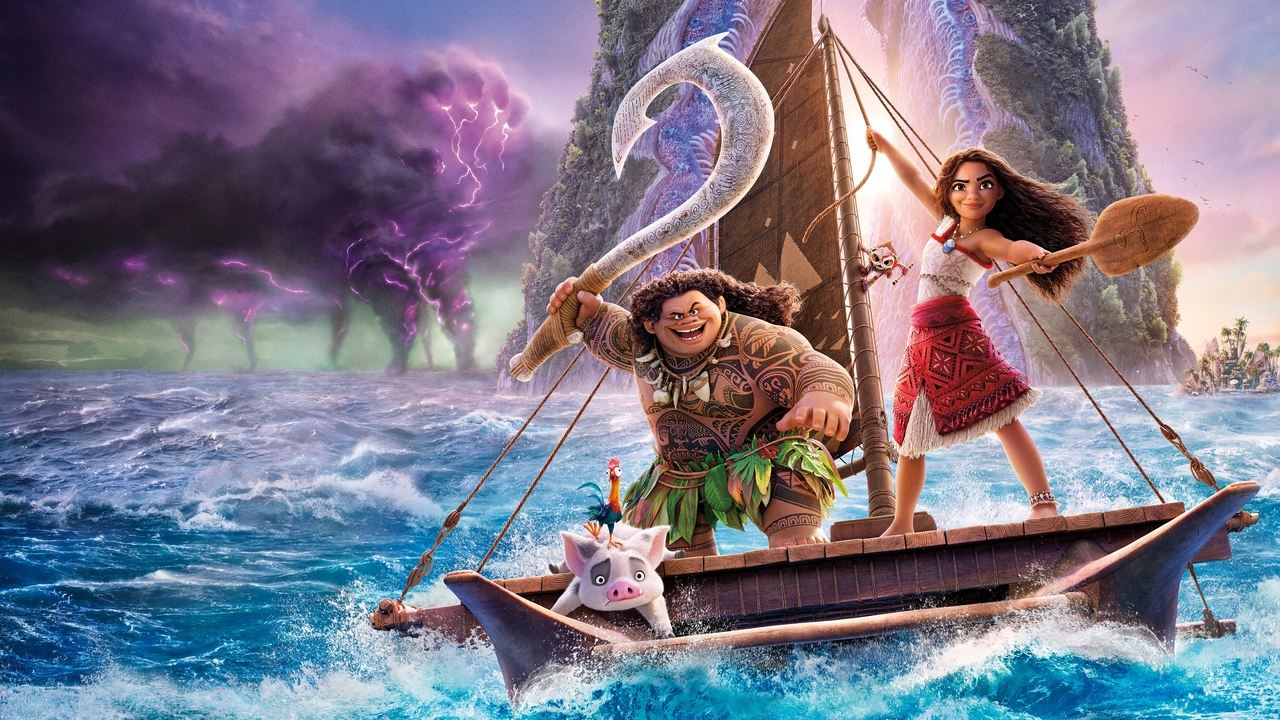
(2024)This animated sequel follows Moana as she continues voyaging beyond her island in search of other people and deeper connection across the ocean. The story blends music, adventure, family relationships, and supernatural elements tied to Polynesian mythology.
Surface content stays in the family-adventure range, with peril, storms, and a few intense moments. The bigger area for Christian families is the film’s spiritual framework of ancestors, demigods, sacred titles, and guidance outside the hope and authority of Jesus Christ.
Use the content rating for what children will see and hear, and the Christian guidance rating for what the story teaches or normalizes.
Content Indicators

Reviewed 9 November 2025
Rachel focuses on animated films, family viewing habits, and helping parents spot worldview themes quickly.
Moana 2 Christian Movie Review (2024)
Guidance: Talk Together
Surface content stays in the family-adventure range, with peril, storms, and a few intense moments. The bigger area for Christian families is the film’s spiritual framework of ancestors, demigods, sacred titles, and guidance outside the hope and authority of Jesus Christ.
Why This Guidance Level
This lands in the middle guidance range because the surface content is fairly mild for a family adventure, but the spiritual worldview is more significant than the action itself. Ancestors, sacred titles, visions, and demigod mythology are woven into the story’s meaning, so many Christian families will want conversation rather than simply treating it as harmless fantasy.
Faith & Worldview Perspective
Moana 2 values bravery, sacrificial leadership, family affection, and reconnecting divided people. Those are meaningful themes that can echo biblical ideas about serving others and seeking peace. The tension comes from how the film frames spiritual truth: ancestors guide, sacred rituals confer meaning, and demigods operate as real powers within the world of the story. Parents may want to discuss how Christians can appreciate courage and heritage while trusting God alone for guidance, identity, and hope through Jesus Christ.
Truths Reflected
- Leadership is shown as service to others rather than self-glory.
- Community, perseverance, and care for family are treated as goods worth sacrifice.
Tensions to Discuss
- The story treats ancestor guidance and sacred ritual as spiritually trustworthy, which may conflict with a biblical call to seek the Lord rather than the dead.
- Demigods and spiritual power are normalized as part of identity and direction, which can blur the uniqueness of God and the hope found in Jesus Christ.
Content & Discernment Markers
Occult & Spiritual Content
- Spiritual material is central to the story world. Moana speaks of ‘the place of our ancestors’ and says, ‘Gramma showed me who we are,’ tying identity and direction to ancestral presence. Parents may want to discuss the difference between remembering family heritage and seeking spiritual guidance apart from God.
- The film openly includes polytheistic fantasy language. A song celebrates that Moana is ‘besties with a demigod,’ and later Maui is called a demigod while another character warns, ‘Nalo is a god, Maui.’ This matters for Christian families because spiritual beings and divine power are treated as normal parts of the world rather than false gods or mere metaphor.
- A feast scene introduces ‘a sacred title’ connected to the last great wayfinder, giving ritual and spiritual weight to leadership and calling. That can be a useful conversation point about where Christians believe calling and authority ultimately come from.
Sexuality & Relationships
- Romantic content is very light. The story emphasis is on family, teamwork, and adventure rather than romance.
- There is brief body humor and a small flirtatious beat noted in broader parent guidance, but sexuality is not a driving part of the film.
Identity Themes
- Identity is framed through ancestry, vocation, and cultural legacy. Moana says, ‘Where I learned our people are voyagers’ and describes becoming ‘a wayfinder’ like those before her. This can open a good family talk about receiving identity from God rather than only from heritage, achievement, or inner calling.
- The film repeatedly links purpose with being ‘who we’re meant to be,’ which is uplifting but spiritually incomplete if left unexamined. Christian parents may want to connect purpose to being created by God and called to follow Him.
Violence & Intensity
- Adventure peril includes storms, dangerous seas, and threat language around destruction. One warning says, ‘If you try to reconnect the people of the ocean, he will destroy you. And then he’ll destroy her too.’ The danger is serious but still presented in a family-film style.
- Characters face monster attacks, swallowing peril, poison darts, falls, and moments where key characters appear close to death or unconscious. These scenes may be intense for younger or sensitive viewers even without graphic detail.
- There is also mild slapstick, including ‘Ow!’ reactions and comic bumps involving Heihei, which keeps some of the tension light.
Language & Humour
- Language stays mild. The film includes words and phrases such as ‘hate,’ ‘crazy,’ ‘sucking at their job,’ ‘butt dial,’ ‘scruffy,’ ‘sucka,’ ‘gross,’ and playful put-downs. This is more teasing and comic banter than coarse profanity.
- Humor often comes through exaggerated personality clashes, including lines like ‘goofy little chicken’ and light sarcasm between characters.
Other Content Notes
- Family bonds are warm and prominent, especially between Moana and her younger sister, with affectionate reunion scenes that give the adventure an emotionally grounded center.
- The story strongly praises courage, teamwork, and reconnecting divided people. Those themes can be fruitful for conversation when anchored to truth and reconciliation under God.
Notable Moments
- Demigod reference: A song openly celebrates Moana’s connection to Maui and normalizes the film’s mythic spiritual world.
“And she’s besties With a demigod!”
- Ancestor identity: Moana ties her understanding of who her people are to a place associated with ancestors and her grandmother’s guidance.
“This is the place of our ancestors. Where I learned our people are voyagers. Where Gramma showed me who we are.”
- Threat warning: A direct warning raises the stakes and shows that the adventure includes real danger, not just comic mishaps.
“Nalo is a god, Maui. If you try to reconnect the people of the ocean, he will destroy you. And then he’ll destroy her too.”
- Sacred title: A ceremonial moment gives spiritual significance to leadership and calling.
“A sacred title, more…”
Discussion Prompts
- Where guidance comes from: The movie talks about ancestors guiding people. Who should we look to for wisdom and direction in real life?
- Biblical guidance: Christians honor family history, but we seek the Lord for guidance and test spiritual claims by His truth.
- Scripture: James 1:5, Isaiah 8:19, Psalm 119:105
- Identity and calling: Moana talks about being ‘who we’re meant to be.’ What do you think gives a person their deepest identity?
- Biblical guidance: Our deepest identity is not just heritage or ability but being made by God and, for believers, belonging to Jesus Christ.
- Scripture: Genesis 1:27, Ephesians 2:10, 2 Corinthians 5:17
- Courage and service: What kind of leader is Moana? How is brave leadership different from selfish power?
- Biblical guidance: The Bible honors courage, but true greatness is shown in humble service, not control or glory-seeking.
- Scripture: Mark 10:43-45, Joshua 1:9, Philippians 2:3-4
- False gods and true hope: The movie includes gods and demigods. How is that different from what Christians believe about God?
- Biblical guidance: Scripture teaches that there is one true God, and our hope is not in lesser spiritual powers but in the Lord and in Jesus Christ.
- Scripture: Exodus 20:3, Isaiah 44:6, John 14:6
Common questions about Moana 2
- What age is Moana 2 suitable for?
- Moana 2 suits children of about 8 and older in most families. That follows its official classification. It is rated PG in Australia, the US, New Zealand, the UK and Canada. Adventure peril includes storms, dangerous seas, and threat language around destruction. Younger viewers may still enjoy it alongside a parent, and it raises worldview questions worth talking through afterwards.
- Is Moana 2 okay for a 6-year-old?
- Moana 2 is generally better suited to children of about 8 and up, so a 6-year-old may find parts of it a stretch. It is rated PG in Australia, the US, New Zealand, the UK and Canada. Adventure peril includes storms, dangerous seas, and threat language around destruction. Families comfortable watching a little above the classification together may still be fine with it.
Age guidance is derived from this review's content findings and the film's official classifications. It is a starting point for your own judgement, not a rule.
Parent comments
Leave a comment on this review
Share a short note on Moana 2, or help other parents with discernment.
Submit will ask you to sign in first.
Weekend family picks
Get the short family movie list before the weekend
Example newsletter: 3 movies to watch this weekend with your family, plus one question to ask after the credits.
Sample: 3 movies to watch this weekend with your family
One cinema pick, one streaming pick, one conversation-starter pick.
Related Articles
A few bigger-picture reads for parents who want more context than a single review page can hold.

How To Talk With Kids About Magic, Fate, And Spiritual Themes In Movies
Many family movies use magic, destiny, spirits, or cosmic balance to drive the story. This article helps Christian parents respond without overreacting, while still drawing clear lines back to biblical truth.
Read article
How To Talk With Kids About Dragon magic In Family Movies
A parent-friendly guide to discussing dragon magic in family movies through a Christian lens.
Read article
How To Talk With Kids About Mild fantasy peril In Family Movies
A parent-friendly guide to discussing mild fantasy peril in family movies through a Christian lens.
Read articleMore Reviews



Official regional ratings
Local ratings remain available for reference, but LionLens separates those classifications from Christian family discernment.
Review Method
How this review was prepared
LionLens reviews are written with subtitle and dialogue evidence where available, official regional ratings data, source research, and final human editorial review before publication.