
Human Reviewed
Parent feedback
40 families found this review helpful
Christian Movie Review
Mary Poppins Christian Movie Review
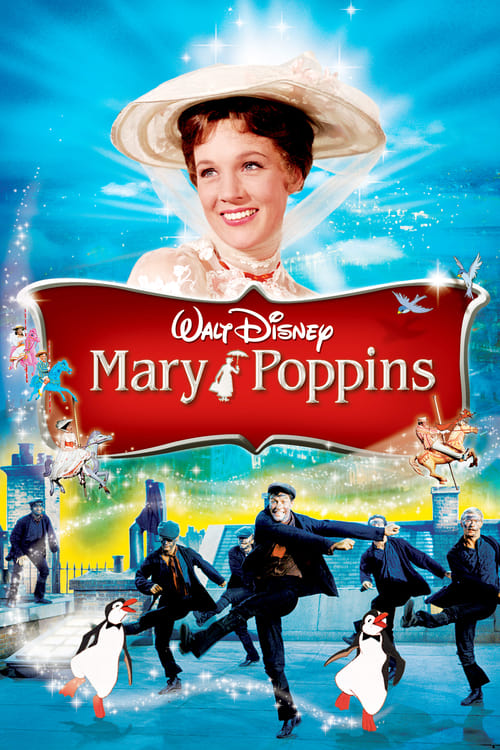
(1964)Mary Poppins is a classic Disney musical about a magical nanny who enters a troubled London household and helps two children and their parents rediscover joy, order, and affection. The film mixes whimsy, songs, and comic adventure with a warm family-centered story.
This is a very light family title with a few brief concerns: mild peril, some dismissive language, and one historically offensive term. Its strongest value is the way it celebrates kindness, play, and family reconciliation.
The content is light, while the worldview conversation is more about values and family than about objectionable material.
Content Indicators

Reviewed 11 May 2026
Esther handles review quality, clarity, and the practical guidance families need after the credits roll.
Mary Poppins Christian Movie Review (1964)
Guidance: Talk Together
This is a very light family title with a few brief concerns: mild peril, some dismissive language, and one historically offensive term. Its strongest value is the way it celebrates kindness, play, and family reconciliation.
Why This Guidance Level
Mary Poppins is a gentle classic with very light surface concerns and a warm family message, so it does not call for heavy caution on content alone. The main reasons for discussion are the brief discriminatory term, the mild peril, and the film’s cheerful treatment of magic, class, and social change. For most families, the bigger value is talking through the film’s themes than worrying about its intensity.
Faith & Worldview Perspective
The film presents a bright, humane worldview that prizes kindness, gratitude, play, and family repair. It also treats social reform, authority, and class with a playful Edwardian tone, and Mary’s supernatural abilities function as fantasy rather than a spiritual system. Parents may want to discuss how the story’s warmth points to real virtues, while Christian hope in Christ offers a deeper and truer restoration than magic can provide.
Truths Reflected
- Children need affection, attention, and wise care.
- Kindness, gratitude, and joy are real moral goods.
Tensions to Discuss
- Magic is used as a charming solution, which can blur the line between fantasy and spiritual reality.
- The film’s social and moral order is shaped by its period setting, including class assumptions and a light treatment of political activism.
Content & Discernment Markers
Occult & Spiritual Content
- Mary Poppins’ supernatural abilities drive the story, but they are presented as whimsical fantasy rather than occult practice. Her magic is used for playful adventures and family repair, not for spiritual instruction. Parents may want to discuss the difference between storybook magic and the real hope Christians place in Jesus Christ.
Sexuality & Relationships
- There is a brief married kiss and some gentle flirtation between Bert and Mary Poppins, but nothing sexual stands out. The film stays firmly in family territory.
Identity Themes
- Mrs. Banks’ suffrage song celebrates women’s political activism with lines like “Political equality / And equal rights with men.” The film treats the movement as lively and admirable, though in a light, idealized way. Parents may want to discuss how dignity, service, and leadership fit within a biblical view of family and public life.
Violence & Intensity
- The film includes comic peril rather than real violence: Admiral Boom fires a rooftop cannon, children are worried about a lion at the zoo, and a wind sequence sends people into chaotic motion. These scenes create brief tension, but they remain stylized and non-graphic.
Language & Humour
- The dialogue includes dismissive and insulting words such as “beasts,” “wretched,” “ruddy,” and the historically offensive “Hottentots.” The language is not profane, but the discriminatory term is the main word parents may want to notice and discuss.
Other Content Notes
- The film strongly centers family reconciliation, especially the children’s need for attention and Mr. Banks’ emotional distance. That theme matters because the story shows how neglect harms a home and how love and responsibility begin to heal it.
Notable Moments
- Suffragette song: Mrs. Banks sings proudly about women’s voting rights, turning political activism into a cheerful musical number.
“We’re clearly soldiers in petticoats”
- Children missing: The household panics when the children are absent again, showing the family’s disorder and the adults’ frustration.
“The children, madam, to be precise, are not here.”
- Rooftop cannon: Admiral Boom’s comic cannon fire creates a loud, startling burst of tension without real harm.
“Posts, everyone! Four, three, two, one… Fire!”
Discussion Prompts
- Family care and attention: What changes in the Banks family when the children are finally noticed and cared for?
- Biblical guidance: Scripture treats children as a gift and calls parents to patient, loving care rather than emotional distance.
- Scripture: Ephesians 6:4, Psalm 127:3
- Joy, play, and wisdom: Why do you think the film values play and imagination so much, and where do those gifts fit under God’s care?
- Biblical guidance: Joy and creativity are good gifts, but Christians look to Christ for lasting hope and restoration.
- Scripture: James 1:17, John 15:11
- Words and respect: Which words in the movie felt unkind or outdated, and why do our words matter to God?
- Biblical guidance: Believers are called to speak with grace and avoid speech that demeans others.
- Scripture: Ephesians 4:29, James 3:9-10
- Magic and real hope: How is Mary’s magic different from the way Christians think about God helping people?
- Biblical guidance: Fantasy can be fun, but Christian hope rests in Jesus Christ, who truly saves and renews hearts.
- Scripture: Colossians 1:13-14, 2 Corinthians 5:17
Common questions about Mary Poppins
- What age is Mary Poppins suitable for?
- Mary Poppins suits children of about 6 and older in most families. The main reason is language. The dialogue includes dismissive and insulting words such as "beasts," "wretched," "ruddy," and the historically offensive "Hottentots." Younger viewers may still enjoy it alongside a parent, and it raises worldview questions worth talking through afterwards.
- Is Mary Poppins okay for a 4-year-old?
- Mary Poppins is generally better suited to children of about 6 and up, so a 4-year-old may find parts of it a stretch. The dialogue includes dismissive and insulting words such as "beasts," "wretched," "ruddy," and the historically offensive "Hottentots." Families whose children handle language well may still be comfortable watching together.
Age guidance is derived from this review's content findings and the film's official classifications. It is a starting point for your own judgement, not a rule.
Parent comments
Leave a comment on this review
Share a short note on Mary Poppins, or help other parents with discernment.
Submit will ask you to sign in first.
Weekend family picks
Get the short family movie list before the weekend
Example newsletter: 3 movies to watch this weekend with your family, plus one question to ask after the credits.
Sample: 3 movies to watch this weekend with your family
One cinema pick, one streaming pick, one conversation-starter pick.
Related Articles
A few bigger-picture reads for parents who want more context than a single review page can hold.
What Christian Parents Can Discuss After Ruby Gillman, Teenage Kraken
A practical post-movie conversation guide for Christian parents after watching Ruby Gillman, Teenage Kraken.
Read article
Disney And Pixar Films For Christian Families: Why They Still Need Discernment
Disney and Pixar films often feel safer than they really are. This guide helps Christian parents notice the spiritual assumptions, emotional messages, and identity themes that can slip past a quick first impression.
Read article
How To Talk With Kids About Magic, Fate, And Spiritual Themes In Movies
Many family movies use magic, destiny, spirits, or cosmic balance to drive the story. This article helps Christian parents respond without overreacting, while still drawing clear lines back to biblical truth.
Read articleMore Reviews



Official regional ratings
Local ratings remain available for reference, but LionLens separates those classifications from Christian family discernment.
Review Method
How this review was prepared
LionLens reviews are written with subtitle and dialogue evidence where available, official regional ratings data, source research, and final human editorial review before publication.