
Human Reviewed
Parent feedback
53 families found this review helpful
Christian Movie Review
Luca Christian Movie Review
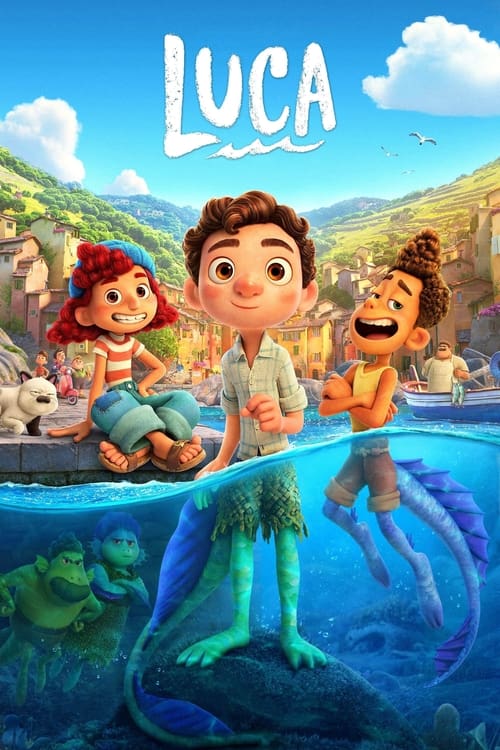
(2021)Luca is a Pixar coming-of-age adventure about a young sea creature who discovers the human world, makes a close friend, and gets swept into a summer of secrecy, competition, and self-discovery on the Italian coast. The story mixes warm humor, playful danger, and a strong friendship arc with a light fantasy premise.
This is a gentle family film with mild peril, some rude language, and a few tense chase moments. Christian families may also want to talk about the film’s emphasis on self-definition, secrecy, and belonging outside the family’s warnings.
Use the content rating for the mild surface concerns and the Christian guidance rating for the deeper message about identity and belonging.
Content Indicators

Reviewed 9 May 2026
Rachel focuses on animated films, family viewing habits, and helping parents spot worldview themes quickly.
Luca Christian Movie Review (2021)
Guidance: Talk Together
This is a gentle family film with mild peril, some rude language, and a few tense chase moments. Christian families may also want to talk about the film’s emphasis on self-definition, secrecy, and belonging outside the family’s warnings.
Why This Guidance Level
Luca is a gentle animated adventure with mild peril and mostly playful conflict, so the surface content stays in the family-friendly range. The bigger reason for discussion is the film’s message about secrecy, identity, and freedom, which can be healthy in some ways but also invites conversation about truth, authority, and where a child finds lasting belonging.
Faith & Worldview Perspective
The movie celebrates friendship, courage, curiosity, and empathy, and it gives a warm picture of loyalty across differences. At the same time, it frames freedom as moving beyond family warnings and self-protection, so parents may want to discuss how good desires are best ordered under truth, wisdom, and the hope found in Christ rather than in self-invention alone.
Truths Reflected
- Friendship and loyalty matter deeply.
- Curiosity and courage can lead to growth.
Tensions to Discuss
- The film treats hiding the truth as understandable when it protects identity, which can soften the importance of honesty.
- It leans toward self-discovery as the path to freedom, while Christians would point children toward identity and belonging in Christ.
Content & Discernment Markers
Occult & Spiritual Content
- Occult material does not stand out here. The fantasy element is limited to sea creatures transforming into humans when dry, which functions as the film’s playful premise rather than spiritual instruction.
Sexuality & Relationships
- Romantic or sexual content does not play a meaningful role. The story centers on friendship, family, and adventure rather than dating or physical affection.
Identity Themes
- Luca is repeatedly warned to hide who he is: “If they catch even a glimpse of you…” and “We do not talk, think, discuss, contemplate, or go anywhere near the surface!” The film turns that secrecy into a major coming-of-age question, so parents may want to discuss honesty, fear, and where true belonging comes from.
Violence & Intensity
- There are chase scenes, spear-throwing, falls, and crash-prone riding stunts, including moments where characters shout, “Oh, no! Help me!” and “Don’t move, don’t move, don’t move!” The danger is mostly comic, but the film does place the characters in repeated physical risk.
Language & Humour
- The dialogue leans on teasing and insults such as “stupido,” “idioti,” “jerk,” “trash,” “loser,” and “what’s wrong with you,” along with exclamations like “Oh God” and “mannaggia.” Parents may want to note the rude tone even though the speech stays below heavy profanity.
Other Content Notes
- Luca lies about where he has been and what he is, with lines like “Don’t say surface. Don’t say surface.” That secrecy is part of the plot, but it also gives parents a natural opening to talk about truthfulness and trust.
- Luca’s mother uses intense warnings such as “The curious fish gets caught” and “They’re here to do murders.” The fear is exaggerated for comic effect, yet it shows a protective family dynamic worth discussing.
Notable Moments
- First surface meeting: Luca meets Alberto on land and is stunned by the human world and the transformation that comes with it. The moment launches the film’s central secret and its fish-out-of-water humor.
“First time? Of course it is!”
- Curiosity about boats: At dinner, Luca asks where boats come from and is immediately shut down by his mother’s fear-driven warning. The scene shows the tension between curiosity and protective authority.
“The curious fish gets caught.”
- Vespa dream: Alberto presents the Vespa as freedom and invites Luca into a dream of independence. Parents may want to discuss whether freedom is only about escape or also about wisdom and responsibility.
“Vespa is freedom.”
Discussion Prompts
- Identity and belonging: What does Luca think will make him free, and how is that different from finding identity in Christ?
- Biblical guidance: Scripture teaches that our deepest identity is received from God, not invented by ourselves. That can help children think about belonging without needing to hide or perform.
- Scripture: 2 Corinthians 5:17, Galatians 2:20, Psalm 139:13-14
- Truth and secrecy: When does Luca hide the truth, and what does the movie suggest about why he does it?
- Biblical guidance: The Bible values truthfulness and wise speech. Children can learn that fear may explain dishonesty, but it does not make it right.
- Scripture: Ephesians 4:25, Proverbs 12:22
- Courage and wisdom: How do curiosity and courage help Luca, and when do they need to be guided by wisdom?
- Biblical guidance: Courage is good when it serves what is true and loving. Wisdom helps us test our desires and choose what honors God.
- Scripture: James 1:5, Proverbs 3:5-6
Common questions about Luca
- What age is Luca suitable for?
- Luca suits children of about 8 and older in most families. That follows its official classification. It is rated PG in the US and Canada, and M in Australia. The dialogue leans on teasing and insults such as “stupido,” “idioti,” “jerk,” “trash,” “loser,” and “what’s wrong with you,” along with exclamations like “Oh God” and “mannaggia.”
- Is Luca okay for a 6-year-old?
- Luca is generally better suited to children of about 8 and up, so a 6-year-old may find parts of it a stretch. It is rated PG in the US and Canada, and M in Australia. The dialogue leans on teasing and insults such as “stupido,” “idioti,” “jerk,” “trash,” “loser,” and “what’s wrong with you,” along with exclamations like “Oh God” and “mannaggia.” Families comfortable watching a little above the classification together may still be fine with it.
Age guidance is derived from this review's content findings and the film's official classifications. It is a starting point for your own judgement, not a rule.
Parent comments
Leave a comment on this review
Share a short note on Luca, or help other parents with discernment.
Submit will ask you to sign in first.
Weekend family picks
Get the short family movie list before the weekend
Example newsletter: 3 movies to watch this weekend with your family, plus one question to ask after the credits.
Sample: 3 movies to watch this weekend with your family
One cinema pick, one streaming pick, one conversation-starter pick.
Related Articles
A few bigger-picture reads for parents who want more context than a single review page can hold.
Animal Farm And Talking With Kids About Power, Truth, And Sin
Animal Farm can help older children see how slogans, fear, and corrupted authority distort truth, but parents should frame the story with a biblical view of sin.
Read article
5 Things To Notice In Kids Movies Before The Message Lands
A child can absorb a movie long before they can explain it. These five checkpoints help Christian parents notice what a film is training the heart to love, fear, excuse, or trust.
Read article
How To Talk With Kids About Magic, Fate, And Spiritual Themes In Movies
Many family movies use magic, destiny, spirits, or cosmic balance to drive the story. This article helps Christian parents respond without overreacting, while still drawing clear lines back to biblical truth.
Read articleMore Reviews



Official regional ratings
Local ratings remain available for reference, but LionLens separates those classifications from Christian family discernment.
Review Method
How this review was prepared
LionLens reviews are written with subtitle and dialogue evidence where available, official regional ratings data, source research, and final human editorial review before publication.