
Human Reviewed
Parent feedback
73 families found this review helpful
Christian Movie Review
Light of the World Christian Movie Review
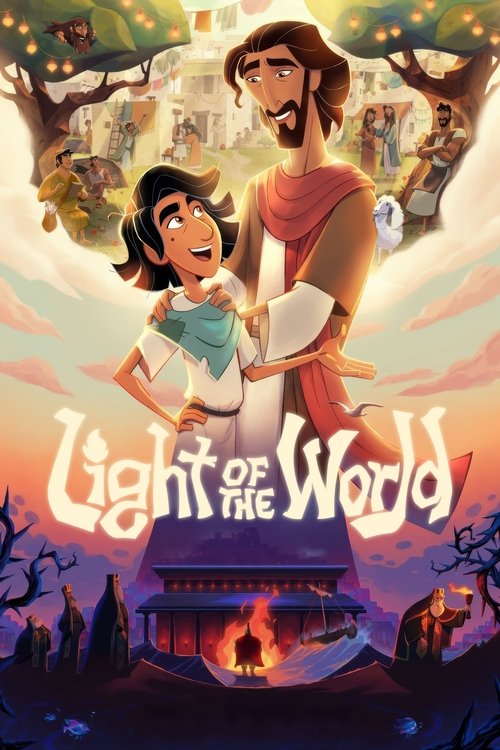
(2025)Light of the World is an animated retelling of the life of Jesus, framed through the eyes of a young John. The story moves from creation and the promise of the Messiah into Jesus' ministry, miracles, suffering, death, and hope.
This is a clearly Christian film with strong biblical themes, but it also includes scenes of Roman oppression, grief, and Jesus' suffering that may be heavy for younger children. For many families, the main need is not surface content so much as thoughtful conversation about who Jesus is and why He came.
Use the content rating for age and intensity, and the Christian guidance rating for worldview and faith discussion.
Content Indicators

Reviewed 17 March 2026
Micah covers action, fantasy, and franchise releases, with close attention to violence, spiritual themes, and moral framing.
Light of the World Christian Movie Review (2025)
Guidance: Talk Together
This is a clearly Christian film with strong biblical themes, but it also includes scenes of Roman oppression, grief, and Jesus’ suffering that may be heavy for younger children. For many families, the main need is not surface content so much as thoughtful conversation about who Jesus is and why He came.
Why This Guidance Level
This lands in the middle guidance range because the film is openly centered on Jesus and biblical themes, yet it also carries meaningful emotional and theological weight. The content itself stays fairly restrained for a family film, but Jesus’ suffering, persecution, and the contrast between human expectations and the hope found in Jesus Christ give parents several worthwhile conversations to have afterward.
Faith & Worldview Perspective
The film presents a recognizably Christian framework: God as Creator, humanity’s fall into sin, the promise of the Messiah, and Jesus as the one who brings light into darkness. It also shows a common first-century misunderstanding of the Messiah as a political conqueror who would punish enemies and defeat Rome. That tension can be useful for families, because it opens discussion about how Jesus came first to save sinners and reconcile people to God. Parents may want to discuss how Christian hope in Christ is deeper than earthly comfort or national victory.
Truths Reflected
- God is Creator, and people are made in His image.
- Jesus is presented as the promised Messiah who brings hope, healing, and sacrificial love.
Tensions to Discuss
- Some characters reduce the Messiah to a political avenger, which conflicts with Jesus’ saving mission and may need clarification.
- A few comments frame God’s rescue mainly in terms of defeating earthly enemies, so parents may want to point children back to the gospel.
Content & Discernment Markers
Occult & Spiritual Content
- Occult material does not stand out here. The supernatural elements are biblical in nature, including creation, prophecy, miracles, and Jesus’ identity as the Messiah rather than magic or spiritual practice outside a Christian framework.
Sexuality & Relationships
- Sexual content is very slight. The creation story mentions Adam and Eve in the garden with suggested nakedness, but nothing explicit is shown and the moment is handled simply within the biblical retelling.
Identity Themes
- The story emphasizes identity in relation to God: people are described as ‘His children, created in His image.’ That gives families a natural opening to discuss human dignity as something received from God, not self-invented.
Violence & Intensity
- Roman oppression creates recurring tension. A child cries, ‘Stop! Papa! Don’t take my Papa!’ as a father is seized over taxes, and later threats include, ‘People have been killed for less than what you’ve done.’ These moments may unsettle younger viewers and can lead to discussion about injustice and courage.
- Jesus’ suffering is part of the story, including beating, ridicule, and crucifixion. The film keeps much of this restrained and not graphic, but the emotional weight is real because children are asked to sit with grief, wounds, death, and burial. Parents may want to explain why Jesus chose to suffer and how His sacrifice points to Christian hope in Christ.
- There is also lighter adventure-style peril, including storm play, a ‘rogue wave,’ and joking about a ‘sea monster,’ but these moments are brief and less intense than the scenes tied to Roman violence.
Language & Humour
- Language is mild overall, with insults and heated put-downs such as ‘traitor,’ ‘crooked tax collectors,’ ‘drunken—’ cut off before completion, and teasing remarks like ‘fish boy.’ The sharper words come during conflict and reflect anger rather than crude comedy.
Other Content Notes
- The film repeatedly contrasts fear and trust. A parent tells the children, ‘Then we trust God to provide the fish,’ linking ordinary work with faith in God’s promises. That theme is central and worth discussing after the movie.
- Wine is poured and consumed at the wedding connected to Jesus’ water-to-wine miracle, but it is not treated as drunken partying or substance misuse.
Notable Moments
- Creation and fall: The opening retells creation, humanity made in God’s image, the forbidden tree, and the fall into darkness.
“But we didn’t trust Him. We disobeyed. And in our shame, we fled from God’s light, into a dark, and dying world.”
- Messiah expectations: The children and townspeople express a forceful hope that the Messiah will defeat Rome and punish enemies.
“He’ll defeat Rome, and free us all.”
- Roman threat: A Roman-connected authority figure threatens severe consequences after a confrontation.
“People have been killed for less than what you’ve done.”
- Trusting God: The film connects fishing imagery with faith and perseverance.
“It’s the same as trusting God’s promises. Even when we find ourselves adrift in the deepest, darkest waters, even when all hope is lost, we still cast our nets.”
Discussion Prompts
- Who is Jesus really?: Some people in the film wanted the Messiah to crush Rome. Why is Jesus’ mission bigger than defeating earthly enemies?
- Biblical guidance: Jesus came first to save sinners and bring people back to God, not simply to win a political victory.
- Scripture: Luke 19:10, John 8:12, 1 Timothy 1:15
- Trusting God in fear: What did the film show about trusting God when life feels dark, unfair, or scary?
- Biblical guidance: Scripture calls believers to trust the Lord even when circumstances are uncertain, because God is present and faithful.
- Scripture: Proverbs 3:5-6, Psalm 56:3-4, Mark 4:39-41
- Why did Jesus suffer?: How did you feel during the scenes of Jesus being hurt, and why do Christians believe His suffering matters?
- Biblical guidance: Jesus gave Himself willingly for sin, and His death is tied to forgiveness, love, and the hope of resurrection in Christ.
- Scripture: Isaiah 53:5, Mark 10:45, 1 Peter 2:24
- Made in God’s image: What does it mean that people are created in God’s image, and how should that change the way we treat others?
- Biblical guidance: Human worth comes from God, so even weak, poor, or overlooked people should be treated with dignity and compassion.
- Scripture: Genesis 1:27, James 3:9-10, Micah 6:8
Common questions about Light of the World
- What age is Light of the World suitable for?
- Light of the World suits children of about 8 and older in most families. That follows its official classification. It is rated PG in Australia, the US, New Zealand and Canada. Roman oppression creates recurring tension. Younger viewers may still enjoy it alongside a parent, and it raises worldview questions worth talking through afterwards.
- Is Light of the World okay for a 6-year-old?
- Light of the World is generally better suited to children of about 8 and up, so a 6-year-old may find parts of it a stretch. It is rated PG in Australia, the US, New Zealand and Canada. Roman oppression creates recurring tension. Families comfortable watching a little above the classification together may still be fine with it.
Age guidance is derived from this review's content findings and the film's official classifications. It is a starting point for your own judgement, not a rule.
Parent comments
Leave a comment on this review
Share a short note on Light of the World, or help other parents with discernment.
Submit will ask you to sign in first.
Weekend family picks
Get the short family movie list before the weekend
Example newsletter: 3 movies to watch this weekend with your family, plus one question to ask after the credits.
Sample: 3 movies to watch this weekend with your family
One cinema pick, one streaming pick, one conversation-starter pick.
Related Articles
A few bigger-picture reads for parents who want more context than a single review page can hold.
Animal Farm And Talking With Kids About Power, Truth, And Sin
Animal Farm can help older children see how slogans, fear, and corrupted authority distort truth, but parents should frame the story with a biblical view of sin.
Read article
5 Things To Notice In Kids Movies Before The Message Lands
A child can absorb a movie long before they can explain it. These five checkpoints help Christian parents notice what a film is training the heart to love, fear, excuse, or trust.
Read article
3 Family Movies To Watch With The Kids This Weekend
Three family movie options with quick Christian discernment notes, review links, and simple conversation prompts for parents.
Read articleMore Reviews



Official regional ratings
Local ratings remain available for reference, but LionLens separates those classifications from Christian family discernment.
Review Method
How this review was prepared
LionLens reviews are written with subtitle and dialogue evidence where available, official regional ratings data, source research, and final human editorial review before publication.