
Human Reviewed
Parent feedback
27 families found this review helpful
Christian Movie Review
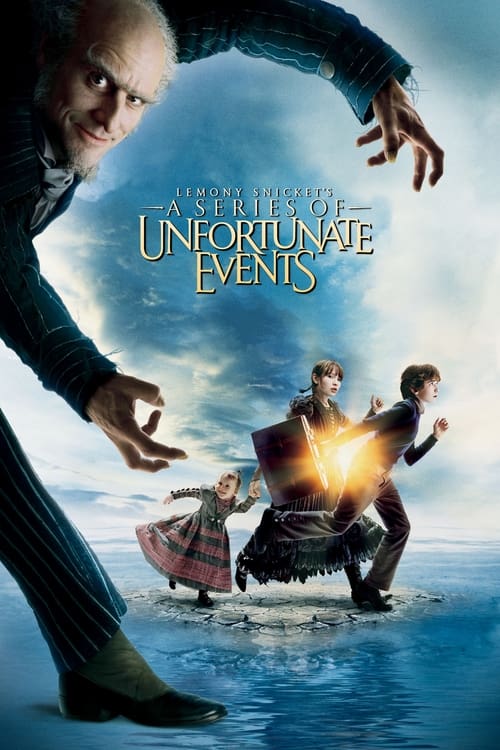
Lemony Snicket's A Series of Unfortunate Events Christian Movie Review
(2004)This darkly comic family fantasy follows the Baudelaire children after their parents die in a fire and they are sent to live with the sinister Count Olaf. As they move through grief, mystery, and repeated danger, the children rely on intelligence, courage, and each other.
The film’s surface content stays in the PG range, but its orphan story, threatening guardian, and bleak comic tone can weigh more heavily on some children than the rating suggests. It also opens good conversations about grief, corrupt authority, and where real hope is found when adults fail.
Use the content rating for intensity and the Christian guidance rating for worldview and follow-up conversation.
Content Indicators

Reviewed 25 July 2026
Rachel focuses on animated films, family viewing habits, and helping parents spot worldview themes quickly.
Lemony Snicket’s A Series of Unfortunate Events Christian Movie Review (2004)
Guidance: Talk Together
The film’s surface content stays in the PG range, but its orphan story, threatening guardian, and bleak comic tone can weigh more heavily on some children than the rating suggests. It also opens good conversations about grief, corrupt authority, and where real hope is found when adults fail.
Why This Guidance Level
This lands in the middle because the film is not heavy in profanity, sexuality, or graphic violence, but it is built around parental death, repeated danger, and a manipulative adult who exploits children for money. Its strongest concern is not shock content but the sustained bleakness and the chance to help children process grief, evil, and hope through a Christian lens.
Faith & Worldview Perspective
The story honors courage, intelligence, sibling loyalty, and perseverance under suffering. It also presents a world where many adults fail badly, justice is delayed, and safety feels fragile. That can be a useful contrast for Christian families: evil is real, but despair is not the final word for those whose hope is in Jesus Christ. Parents may want to discuss how wisdom and endurance matter, while also reminding children that God sees the vulnerable and cares for the orphan.
Truths Reflected
- Evil often hides behind charm, greed, and false concern.
- Children show courage, creativity, and sacrificial care for one another.
Tensions to Discuss
- The film’s emotional world leans toward cynicism, which may conflict with Christian hope and trust in God’s care.
- Authority figures are so consistently unreliable that families may want to discuss the difference between fallen human authority and the goodness of Christ.
Content & Discernment Markers
Occult & Spiritual Content
- Occult material does not stand out here. The mystery elements are gothic and gloomy rather than spiritual instruction or supernatural practice.
Sexuality & Relationships
- Sexual content is not a meaningful issue in this film. Relationship material stays in the background and is not a main concern for family discernment.
Identity Themes
- The children’s identity is shaped by loss and by their gifts: Violet invents, Klaus learns through books, and Sunny contributes in her own unusual way. This can open a helpful talk about using God-given abilities in hardship rather than letting tragedy define a person.
Violence & Intensity
- The story begins with the children learning that their parents died in a fire, and the grief of becoming orphans hangs over the entire film. That loss is central to the story and may hit younger viewers hard.
- Count Olaf’s greed drives repeated danger. He slips and nearly says, “Where is that I sign for the fortune… do I want to say, for the children?” making clear that the children are under the care of someone who wants their money more than their safety.
- The film includes threatening scenes and forbidding settings, with adults warning the children away from dangerous places and Olaf creating an atmosphere of menace. Parents may want to discuss how to recognize manipulative people and seek wise help.
Language & Humour
- Language is mostly mild. The sharper verbal content comes through insults and demeaning humor, including Olaf’s cruel line, “I don’t speak the language of the monkeys,” aimed at Sunny. The humor often has a mean edge rather than coarse profanity.
Other Content Notes
- The narrator repeatedly warns viewers that the story is “extremely unpleasant,” setting a bleak, ironic tone from the start. Even when scenes are whimsical, the film keeps returning to sadness, danger, and adult selfishness.
- Adult failure is a major theme. The children are passed into the care of people who misunderstand them, fail to protect them, or are distracted by their own interests. A Christian parent may want to discuss how human guardians can fail while God remains faithful.
Notable Moments
- Parents’ death announced: The children are told that their parents died in a fire, establishing the film’s grief-heavy emotional core.
“their parents they died in a fire”
- Olaf reveals greed: Count Olaf nearly says the quiet part out loud when he focuses on the children’s inheritance instead of their care.
“Where is that I sign for the fortune… do I want to say, for the children?”
- Bleak opening warning: The narrator frames the entire story as intentionally sad and unpleasant, preparing viewers for a darker family film.
“The film that you are about to see it is extremely unpleasant.”
Discussion Prompts
- Grief and hope: How do the Baudelaire children respond to losing their parents, and what does real comfort look like when life is painful?
- Biblical guidance: Scripture does not pretend suffering is small, but it points us to the God of comfort and to hope that is deeper than circumstances through Jesus Christ.
- Scripture: Psalm 34:18, 2 Corinthians 1:3-4, 1 Thessalonians 4:13-14
- Corrupt authority and wise discernment: What signs showed that Count Olaf could not be trusted, and how should we respond when an authority figure acts selfishly or wrongly?
- Biblical guidance: Children are called to honor authority, but Scripture also teaches wisdom, truthfulness, and protection for the vulnerable when authority is abused.
- Scripture: Proverbs 14:15, Ephesians 6:1-4, Isaiah 1:17
- Using gifts in hardship: How do Violet, Klaus, and Sunny use their different strengths to help one another?
- Biblical guidance: God gives different gifts for service, and hardship can become a place where courage, wisdom, and love are practiced.
- Scripture: Romans 12:4-8, 1 Peter 4:10, Galatians 6:2
- Bleakness versus Christian hope: This story often feels like everything is going wrong. How is that different from the hope Christians have in Christ even when life is hard?
- Biblical guidance: Christian hope does not deny evil, but it refuses to let evil have the last word because Jesus Christ is faithful and victorious.
- Scripture: John 16:33, Romans 8:28, Revelation 21:4-5
Common questions about Lemony Snicket's A Series of Unfortunate Events
- What age is Lemony Snicket's A Series of Unfortunate Events suitable for?
- Lemony Snicket's A Series of Unfortunate Events suits children of about 8 and older in most families. That follows its official classification. It is rated PG in Australia, the US, New Zealand, the UK and Canada. The story begins with the children learning that their parents died in a fire, and the grief of becoming orphans hangs over the entire film.
- Is Lemony Snicket's A Series of Unfortunate Events okay for a 6-year-old?
- Lemony Snicket's A Series of Unfortunate Events is generally better suited to children of about 8 and up, so a 6-year-old may find parts of it a stretch. It is rated PG in Australia, the US, New Zealand, the UK and Canada. The story begins with the children learning that their parents died in a fire, and the grief of becoming orphans hangs over the entire film. Families comfortable watching a little above the classification together may still be fine with it.
Age guidance is derived from this review's content findings and the film's official classifications. It is a starting point for your own judgement, not a rule.
Parent comments
Leave a comment on this review
Share a short note on Lemony Snicket's A Series of Unfortunate Events, or help other parents with discernment.
Submit will ask you to sign in first.
Weekend family picks
Get the short family movie list before the weekend
Example newsletter: 3 movies to watch this weekend with your family, plus one question to ask after the credits.
Sample: 3 movies to watch this weekend with your family
One cinema pick, one streaming pick, one conversation-starter pick.
Related Articles
A few bigger-picture reads for parents who want more context than a single review page can hold.
Animal Farm And Talking With Kids About Power, Truth, And Sin
Animal Farm can help older children see how slogans, fear, and corrupted authority distort truth, but parents should frame the story with a biblical view of sin.
Read article
5 Things To Notice In Kids Movies Before The Message Lands
A child can absorb a movie long before they can explain it. These five checkpoints help Christian parents notice what a film is training the heart to love, fear, excuse, or trust.
Read article
3 Family Movies To Watch With The Kids This Weekend
Three family movie options with quick Christian discernment notes, review links, and simple conversation prompts for parents.
Read articleMore Reviews




Official regional ratings
Local ratings remain available for reference, but LionLens separates those classifications from Christian family discernment.
Review Method
How this review was prepared
LionLens reviews are written with subtitle and dialogue evidence where available, official regional ratings data, source research, and final human editorial review before publication.