

Human Reviewed
Parent feedback
54 families found this review helpful
Christian Movie Review
Kung Fu Panda 3 Christian Movie Review
(2016)While Po and his father are visiting a secret panda village, an evil spirit threatens all of China, forcing Po to form a ragtag army to fight back.
This animated sequel is light and comedic overall, but the film shows repeated martial-arts action, a supernatural villain tied to chi and the Spirit Realm, and a worldview shaped by Eastern mystical ideas rather than biblical spirituality. For many families, the main discernment questions will center less on crude content and more on how the film presents power, identity, and spiritual reality.
Start with the content rating, then use the Christian guidance rating to decide how much conversation your family may need.
Content Indicators

Reviewed 9 March 2026
Esther handles review quality, clarity, and the practical guidance families need after the credits roll.
Kung Fu Panda 3 Christian Movie Review (2016)
Guidance: Talk Together
This animated sequel is light and comedic overall, but the film shows repeated martial-arts action, a supernatural villain tied to chi and the Spirit Realm, and a worldview shaped by Eastern mystical ideas rather than biblical spirituality. For many families, the main discernment questions will center less on crude content and more on how the film presents power, identity, and spiritual reality.
Why This Guidance Level
The strongest concern in the film is not sexual content or harsh language, but the film’s spiritual framework. The film repeatedly centers on “chi,” the “Spirit Realm,” and movement between spiritual and mortal realms: “500 years in the Spirit Realm, you pick up a thing or two,” “I have taken the chi of every master here,” and “With your chi, I will finally be able to return to the mortal world.” Those ideas are presented as real power within the story world, which may matter to Christian families wanting to distinguish fantasy adventure from Eastern religious concepts. Violence also appears regularly, though in a stylized animated form, with combat, peril, fire, crashes, and threats. Language and sexual content appear minimal based on the film. Because the film also offers useful conversations about humility, growth, teaching, and identity, this fits best as content that may call for discussion rather than alarm.
Faith & Worldview Perspective
The film seems to affirm courage, perseverance, mentorship, and sacrificial leadership, which can resonate with biblical virtues. At the same time, it frames spiritual power through chi, the Spirit Realm, and destiny language rather than through a biblical understanding of God, creation, and the spiritual world. Identity is treated as something discovered by looking inward and unlocking one’s true self, which overlaps partly with Christian questions of calling and design but can also drift toward self-defined meaning detached from the Creator.
Truths Reflected
- Growth often comes through humility, failure, and learning from others.
- Leadership includes serving, teaching, and helping others develop their gifts.
Tensions to Discuss
- Spiritual power is portrayed through chi and the Spirit Realm, reflecting Eastern mystical concepts rather than a biblical view of spiritual reality.
- Identity language leans toward discovering the self from within, whereas Scripture roots identity primarily in being created by and accountable to God.
Content & Discernment Markers
Occult & Spiritual Content
- The opening material in the film is saturated with Eastern mystical concepts. A battle takes place in what is explicitly called the “Spirit Realm,” and the villain describes gaining supernatural power there: “500 years in the Spirit Realm, you pick up a thing or two.” He also says, “I have taken the chi of every master here” and “With your chi, I will finally be able to return to the mortal world.” In context, chi is not a throwaway fantasy word; it functions as a transferable spiritual life-force or power source. The story also treats movement between spiritual and mortal realms as real and consequential inside the film’s universe.
Sexuality & Relationships
- No sexual content is present in the film. Other reported moments mention very little romance and some flirtation elsewhere in the film, but the film does not include those scenes.
Identity Themes
- The film strongly emphasizes identity, purpose, and growth. Po struggles with his role as a teacher after a humiliating training session and says, “I’m done. Teaching or being humiliated? Both!” Shifu’s guidance pushes him beyond comfort: “If you only do what you can do, you will…” Though the final line is truncated in the excerpt, the scene clearly frames identity and calling as central themes. Families may want to discuss where true identity comes from and whether the film’s answer is inward self-discovery, destiny, community affirmation, or something else.
Violence & Intensity
- Animated action and peril are frequent in the film. The opening includes a supernatural fight with grunting, yelling, and direct threats: “I have taken the chi of every master here,” “And soon I will have your power, too,” and “Then I will find him, and take his chi, too.” The villain announces, “Justice is about to be served!” before more combat sounds follow. Later, Po’s training session becomes chaotic slapstick violence: commands are shouted, characters crash, and one moment escalates to “Fire! Fire!” followed by “Stop!” and groaning. The tone appears comedic in places, but the conflict still revolves around fighting as the primary means of resolution.
Language & Humour
- Language appears mild in the film. The film includes the insult “loser” 3 times in one short exchange: “What a loser!” then “I think he heard us. I didn’t hear anything. Uh, he said you’re a loser.” There is also a dismissive command, “Be quiet, Po.” Humor is frequent and often slapstick or sarcastic rather than profane, with lines like “Do we have to strike a pose every time we land?” and “Tigress is flammable, it turns out.” Other reported moments mention infrequent words including “stupid,” “butt,” “idiot,” and “shut it,” plus some bathroom humor, but those words are not present in the film, so they are best read as unverified here.
Other Content Notes
- There is a scene of public embarrassment and ridicule after Po’s failed teaching attempt. Onlookers mock him with lines such as “Yeah, that was a complete disaster,” “I’m glad we’re not Po right now,” and “What a loser!” The emotional tone is still comedic, but younger viewers sensitive to shame or peer ridicule may notice the humiliation.
Notable Moments
- Spirit Realm confrontation: A supernatural opening confrontation establishes the villain’s power and the film’s spiritual framework around chi and the Spirit Realm.
“500 years in the Spirit Realm, you pick up a thing or two. I have taken the chi of every master here.”
- Threat to return to the mortal world: The villain states his plan to use stolen chi to cross from the spiritual realm back into the mortal world.
“With your chi, I will finally be able to return to the mortal world.”
- Chaotic training disaster: Po’s first attempt at teaching turns into a comic but destructive sequence with confusion, crashes, and fire.
“Fire! Fire! … Stop! … I’m sorry.”
- Humiliation after failure: Po is mocked by bystanders after his failed lesson, reinforcing the film’s theme of growth through embarrassment and failure.
“What a loser!”
Discussion Prompts
- Where does true identity come from?: Po struggles with failure and purpose. When someone asks, in effect, ‘Who am I?’ where should Christians look for that answer?
- Biblical guidance: Scripture roots identity first in God as Creator and Redeemer, not merely in inner potential or personal destiny.
- Scripture: Genesis 1:27, Psalm 139:13-16, Ephesians 2:10
- How should we think about chi and the Spirit Realm?: The movie talks about “chi,” the “Spirit Realm,” and spiritual power. How is that different from what the Bible teaches about God, the soul, and the spiritual world?
- Biblical guidance: Christians can recognize fantasy elements while also distinguishing them from biblical truth about spiritual reality, which is governed by God rather than impersonal energy forces.
- Scripture: Deuteronomy 18:10-12, Isaiah 8:19, Colossians 1:16-17
- What do we do with failure and humiliation?: Po feels humiliated after failing as a teacher. What does God want us to do when we fail publicly or feel embarrassed?
- Biblical guidance: The Bible connects humility, teachability, and perseverance with growth in wisdom and character.
- Scripture: Proverbs 15:31-33, James 1:2-4, 2 Corinthians 12:9-10
- Is fighting the only way to solve problems?: This story uses a lot of combat to resolve conflict. When is strength good, and how does biblical peacemaking differ from simply overpowering an enemy?
- Biblical guidance: Scripture honors courage and protection of others, but it also calls believers to self-control, peacemaking, and trust in God rather than glorifying violence.
- Scripture: Matthew 5:9, Romans 12:17-21, James 1:19-20
Common questions about Kung Fu Panda 3
- What age is Kung Fu Panda 3 suitable for?
- Kung Fu Panda 3 suits children of about 6 and older in most families. The main reason is violence and peril. Animated action and peril are frequent in the film. Younger viewers may still enjoy it alongside a parent, and it raises worldview questions worth talking through afterwards.
- Is Kung Fu Panda 3 okay for a 4-year-old?
- Kung Fu Panda 3 is generally better suited to children of about 6 and up, so a 4-year-old may find parts of it a stretch. Animated action and peril are frequent in the film. Families whose children handle violence and peril well may still be comfortable watching together.
Age guidance is derived from this review's content findings and the film's official classifications. It is a starting point for your own judgement, not a rule.
Parent comments
Leave a comment on this review
Share a short note on Kung Fu Panda 3, or help other parents with discernment.
Submit will ask you to sign in first.
Weekend family picks
Get the short family movie list before the weekend
Example newsletter: 3 movies to watch this weekend with your family, plus one question to ask after the credits.
Sample: 3 movies to watch this weekend with your family
One cinema pick, one streaming pick, one conversation-starter pick.
Related Articles
A few bigger-picture reads for parents who want more context than a single review page can hold.

How To Talk With Kids About Magic, Fate, And Spiritual Themes In Movies
Many family movies use magic, destiny, spirits, or cosmic balance to drive the story. This article helps Christian parents respond without overreacting, while still drawing clear lines back to biblical truth.
Read article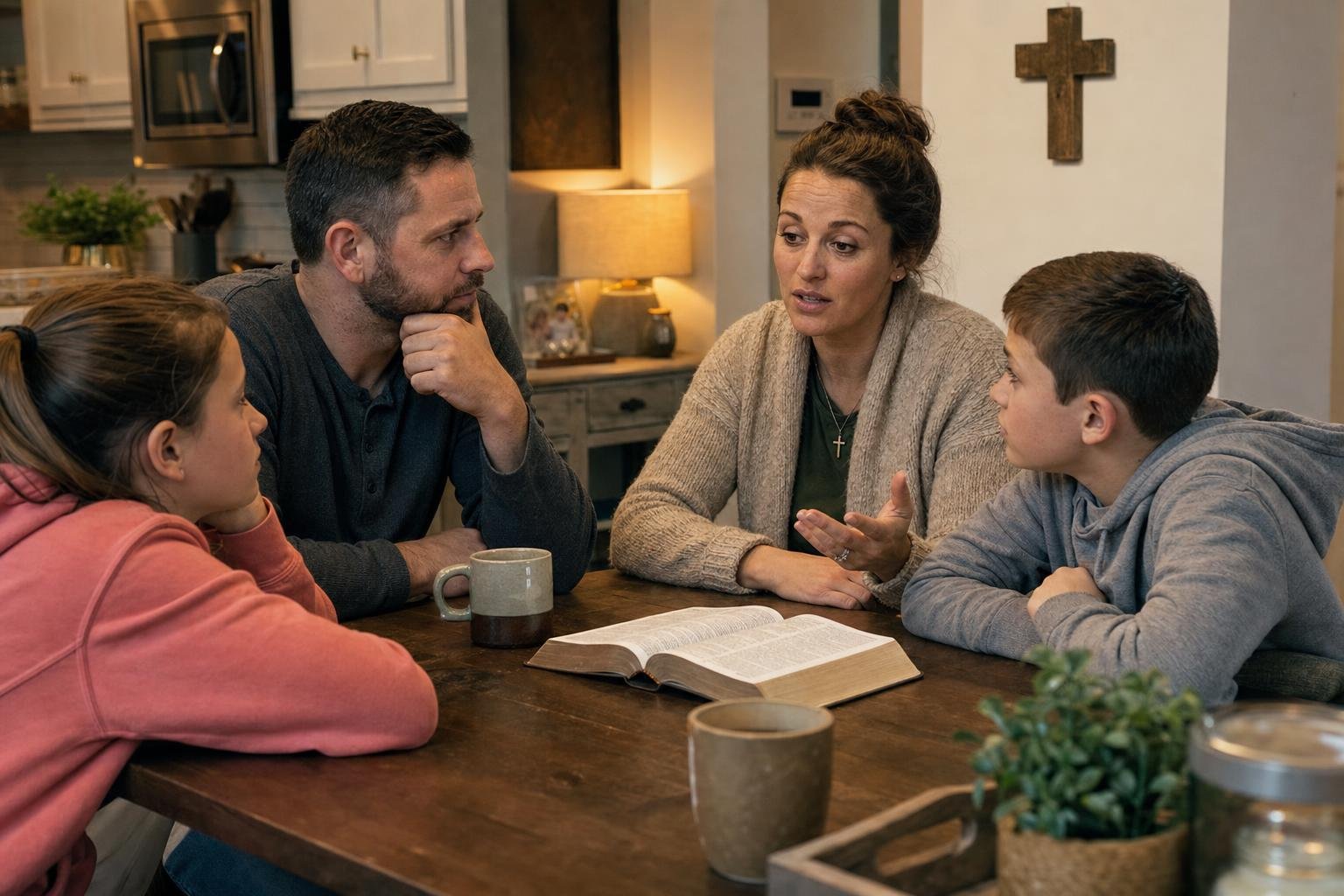
How To Talk With Kids About Dragon magic In Family Movies
A parent-friendly guide to discussing dragon magic in family movies through a Christian lens.
Read article
How To Talk With Kids About Mild fantasy peril In Family Movies
A parent-friendly guide to discussing mild fantasy peril in family movies through a Christian lens.
Read articleMore Reviews



Review Method
How this review was prepared
LionLens reviews are written with subtitle and dialogue evidence where available, official regional ratings data, source research, and final human editorial review before publication.