

Human Reviewed
Parent feedback
34 families found this review helpful
Christian Movie Review
Jumanji: Welcome to the Jungle Christian Movie Review
(2017)Four teenagers are pulled into a video game and transformed into adult avatars with very different strengths and weaknesses. To get home, they have to work together, survive dangerous levels, and finish the game.
This is a lively adventure with teamwork, humor, and a strong message about cooperation and identity. Parents will want to note the frequent peril, some crude language, and a few sexual references and body-related jokes.
The content is manageable for many families, but the language, peril, and worldview conversations are worth a quick parent-child talk.
Content Indicators

Reviewed 18 May 2026
Micah covers action, fantasy, and franchise releases, with close attention to violence, spiritual themes, and moral framing.
Jumanji: Welcome to the Jungle Christian Movie Review (2017)
Guidance: Talk Together
This is a lively adventure with teamwork, humor, and a strong message about cooperation and identity. Parents will want to note the frequent peril, some crude language, and a few sexual references and body-related jokes.
Why This Guidance Level
This is a fun adventure with a positive teamwork message, but it also carries enough language, peril, and suggestive humor to merit a parent conversation. The biggest discernment issues are not graphic violence or explicit sexuality, but the film’s casual speech, body jokes, and the way it ties identity and worth to performance, popularity, and self-made reinvention rather than to God’s design and Christian hope in Christ.
Faith & Worldview Perspective
The film celebrates cooperation, courage, honesty, and learning to value other people’s strengths. It also leans on a self-defined identity message and treats social status and image as important, so parents may want to talk about where real worth and identity come from.
Truths Reflected
- People do better when they work together and stop thinking only of themselves.
- Honesty and courage matter when facing hard choices.
Tensions to Discuss
- Identity is presented as something you choose and perform, rather than something rooted in being made by God and renewed in Christ.
- Popularity and social relevance are treated as meaningful measures of value, which can crowd out a biblical view of human dignity.
Content & Discernment Markers
Occult & Spiritual Content
- Occult material does not stand out here. The game has a magical premise and a fantasy-quest structure, but it functions more like a supernatural adventure than a film about occult practice or spiritual instruction.
Sexuality & Relationships
- There are a few suggestive jokes and body-related conversations, including talk about having a penis, peeing standing up, and comments about flirting and using sexuality to distract men. The humor is not explicit, but it does push into awkward sexual territory that some families will want to discuss.
Identity Themes
- The detention speech and the game’s avatar setup keep returning to identity, self-reflection, and reinvention: “Who you are… and who you want to be.” The film encourages growth, but it also suggests that identity is something you shape for yourself, so parents may want to discuss identity in Christ versus self-made identity.
Violence & Intensity
- The adventure includes repeated danger, animal attacks, explosions, martial-arts fights, and several in-game deaths that are played for both comedy and suspense. A jaguar attack, snake threats, and scenes where characters are down to one life give the movie a steady level of peril.
Language & Humour
- The dialogue includes “what the hell,” “badass,” “dumbass,” “jackass,” “damn,” “s—t,” “hell,” and rude teasing like “Freak House” and “Oy vey.” The language is not constant profanity, but it is frequent enough to notice in a family setting.
Other Content Notes
- The opening detention scenes center on cheating, social embarrassment, and a sharp exchange about popularity and relevance, including Bethany’s concern that someone has not liked her post. That setup gives the movie a clear moral frame, but it also reflects a culture shaped by image and online approval.
Notable Moments
- Cheating exposed: A teacher catches Spencer using Anthony’s paper, and the confrontation sets the story in motion with a clear lesson about honesty and consequences.
""I will not tolerate cheating.""
- Detention identity speech: The principal turns detention into a speech about self-reflection, asking students to think about who they are and who they want to be.
""Who you are… and who you want to be.""
- Teamwork in the game: The game forces the characters to rely on one another’s strengths, which becomes one of the film’s clearest positive messages.
“The characters can’t think only of themselves.”
- Body joke conversation: The avatars lead to a long joke-filled conversation about bodies and sexuality, including awkward questions about anatomy and flirting.
""a situation down there""
Discussion Prompts
- Identity: What does the movie say about who you are, and how is that different from the Bible’s teaching about identity?
- Biblical guidance: Scripture roots identity in being made by God and renewed in Christ, not in popularity, performance, or self-invention.
- Scripture: Genesis 1:27, 2 Corinthians 5:17, Ephesians 2:10
- Honesty: Why does cheating create so much damage in the opening scenes, and what does God call us to do instead?
- Biblical guidance: The film’s setup gives a good opening to talk about truthfulness, responsibility, and making things right when we fail.
- Scripture: Proverbs 12:22, Colossians 3:9, Ephesians 4:25
- Worth and popularity: Why is Bethany so focused on likes and relevance, and where should a Christian look for lasting worth?
- Biblical guidance: A biblical view says our value comes from God’s love and purpose, not from social approval or online attention.
- Scripture: Psalm 139:13-14, Galatians 1:10, 1 Samuel 16:7
- Teamwork: How did the characters need one another to succeed, and what does that teach about serving others?
- Biblical guidance: The movie’s teamwork theme fits well with the Bible’s picture of many parts working together for one body.
- Scripture: 1 Corinthians 12:12-27, Philippians 2:3-4, Ecclesiastes 4:9-10
Common questions about Jumanji: Welcome to the Jungle
- What age is Jumanji: Welcome to the Jungle suitable for?
- Jumanji: Welcome to the Jungle suits children of about 9 and older in most families. The main reason is sexual content. There are a few suggestive jokes and body-related conversations, including talk about having a penis, peeing standing up, and comments about flirting and using sexuality to distract men.
- Is Jumanji: Welcome to the Jungle okay for a 7-year-old?
- Jumanji: Welcome to the Jungle is generally better suited to children of about 9 and up, so a 7-year-old may find parts of it a stretch. There are a few suggestive jokes and body-related conversations, including talk about having a penis, peeing standing up, and comments about flirting and using sexuality to distract men. Families whose children handle sexual content well may still be comfortable watching together.
Age guidance is derived from this review's content findings and the film's official classifications. It is a starting point for your own judgement, not a rule.
Parent comments
Leave a comment on this review
Share a short note on Jumanji: Welcome to the Jungle, or help other parents with discernment.
Submit will ask you to sign in first.
Weekend family picks
Get the short family movie list before the weekend
Example newsletter: 3 movies to watch this weekend with your family, plus one question to ask after the credits.
Sample: 3 movies to watch this weekend with your family
One cinema pick, one streaming pick, one conversation-starter pick.
Related Articles
A few bigger-picture reads for parents who want more context than a single review page can hold.
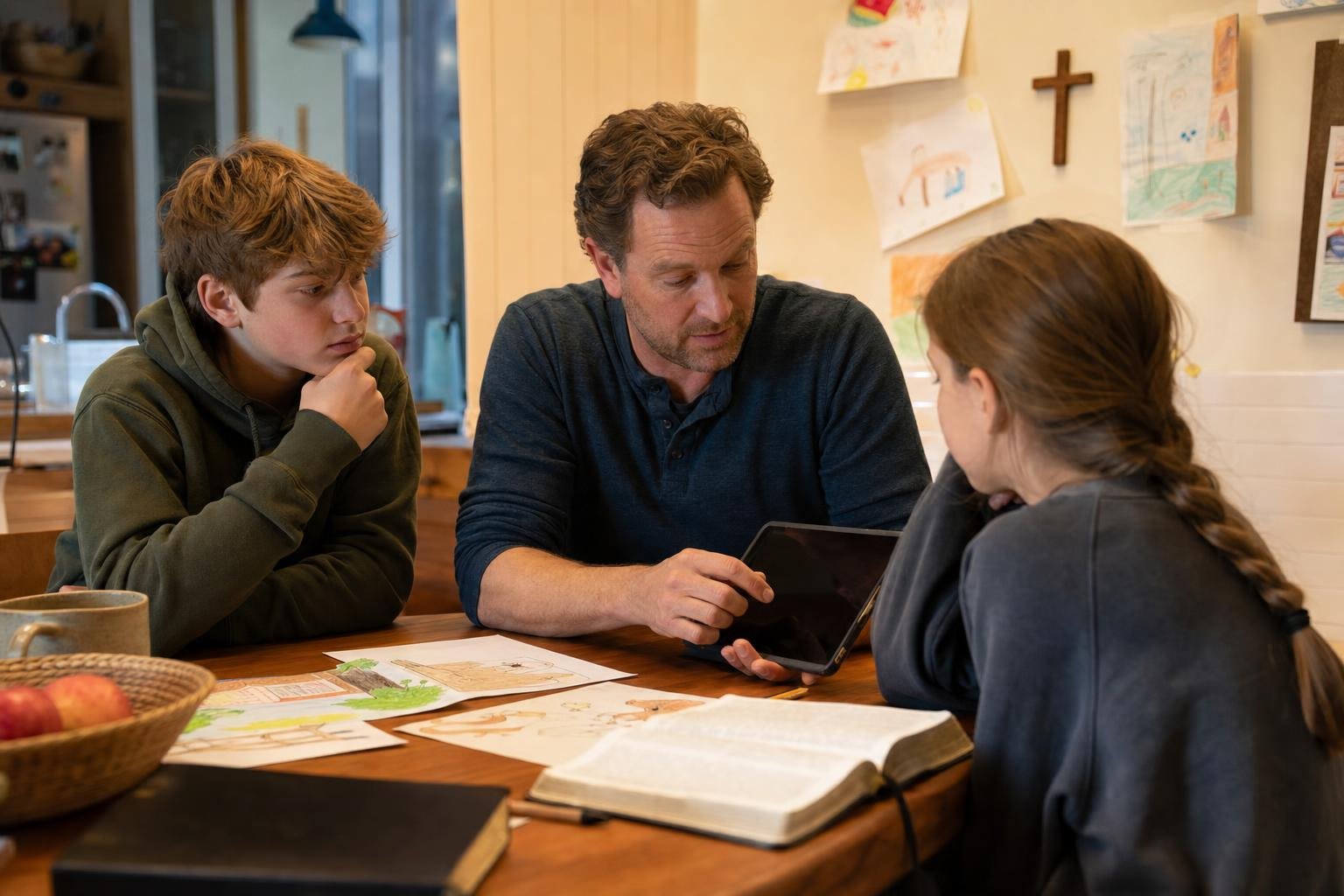
Animal Farm And Talking With Kids About Power, Truth, And Sin
Animal Farm can help older children see how slogans, fear, and corrupted authority distort truth, but parents should frame the story with a biblical view of sin.
Read article
5 Things To Notice In Kids Movies Before The Message Lands
A child can absorb a movie long before they can explain it. These five checkpoints help Christian parents notice what a film is training the heart to love, fear, excuse, or trust.
Read article
Why A Clean Movie Can Still Need A Christian Conversation
Sometimes the hardest films to evaluate are not the obviously rough ones, but the polished and emotionally appealing movies that carry deeper assumptions quietly. This article explains why.
Read articleMore Reviews




Official regional ratings
Local ratings remain available for reference, but LionLens separates those classifications from Christian family discernment.
Review Method
How this review was prepared
LionLens reviews are written with subtitle and dialogue evidence where available, official regional ratings data, source research, and final human editorial review before publication.