

Human Reviewed
Parent feedback
54 families found this review helpful
Christian Movie Review
Journey to the Center of the Earth Christian Movie Review
(2008)This adventure film follows a scientist, his nephew, and a guide as they search for a missing man and descend into a dangerous underground world. The story mixes family loyalty, comic tension, and creature-filled peril with a light romantic thread.
The surface content is mostly mild, with some chase danger, creature attacks, and a little coarse language. Christian parents may also want to talk through the film’s adventurous but largely secular view of discovery, courage, and family purpose.
Use the content rating to gauge the action and the Christian guidance rating to think about the film’s message and tone.
Content Indicators

Reviewed 11 June 2026
Esther handles review quality, clarity, and the practical guidance families need after the credits roll.
Journey to the Center of the Earth Christian Movie Review (2008)
Guidance: Low Concern
The surface content is mostly mild, with some chase danger, creature attacks, and a little coarse language. Christian parents may also want to talk through the film’s adventurous but largely secular view of discovery, courage, and family purpose.
Why This Guidance Level
This film is a fairly standard family adventure with mild language, some chase-and-creature peril, and only light romance. The bigger issue for Christian families is not explicit content but the film’s worldview: it treats human drive, cleverness, and exploration as the center of the story, while faith and dependence on God stay offstage. That makes it a good candidate for conversation rather than a major concern.
Faith & Worldview Perspective
The movie values loyalty, teamwork, courage, and perseverance, and it gives a warm picture of family responsibility. Its worldview is mostly secular, with science, ambition, and adventure carrying the story rather than any reference to God, prayer, or Christian hope in Christ. Parents may want to discuss how good gifts like bravery and discovery fit under God’s authority.
Truths Reflected
- Family loyalty matters and people should keep searching for the lost.
- Courage and teamwork help people endure hard trials.
Tensions to Discuss
- Human achievement and adventure are treated as the main source of meaning, rather than life lived before God.
- The film offers little sense of Christian hope in Christ or dependence on God when danger and loss press in.
Content & Discernment Markers
Occult & Spiritual Content
- Occult material does not stand out here. The story uses a legendary opening into the Earth and a local myth about a hidden passage, but it treats the idea as adventure speculation rather than spiritual practice. Parents may still want to discuss the difference between fantasy legend and truth grounded in God’s world.
Sexuality & Relationships
- There is mild romantic tension between Abel and Emily as they argue about marriage plans. Emily presses him with, “If you don’t want to marry me, say so,” and the film later keeps the romance light with only a couple of sweet kisses.
Identity Themes
- The film leans into identity through vocation and family legacy. Jonathan Brock is described as a scientist living in his father’s shadow, and the expedition becomes a way to prove himself. Parents may want to discuss where identity comes from beyond talent, work, or family reputation.
Violence & Intensity
- The opening has loud fight chatter, grunting, and a rough prize-fight atmosphere, with lines like “The big man is going down for good!” and “You wish to kill him?” Later adventure scenes bring creature attacks, including carnivorous plants, dinosaurs, and flying fish, which raise the tension for younger viewers. Parents may want to discuss how to handle fear and danger with courage.
Language & Humour
- Language stays mild, but parents may notice rough phrases like “wild goose chase,” “godforsaken place,” and the substitute word “schist” used in place of a stronger expletive. The tone is more teasing than coarse, yet the word choice is worth noting for families sensitive to casual profanity.
Other Content Notes
- The film repeatedly frames the journey as a test of endurance and planning, with lines about keeping up appearances, leading an expedition, and following a missing man’s trail. That emphasis on determination and rescue gives the story its emotional center.
Notable Moments
- Missing man search: Mrs. Dennison asks Jonathan Brock to help find her husband, turning the expedition into a rescue mission and giving the story its family-driven purpose.
“Edward disappeared looking for that passage. I want you to help me find him.”
- Marriage tension: Abel and Emily argue about whether he is truly committed to their relationship, adding a small but real romantic strain to the adventure plot.
“If you don’t want to marry me, say so.”
- Creature danger: Later underground sequences bring the film’s scariest material, with animals and creatures attacking humans in fast-moving action scenes.
“Somewhat violent but not gory scenes of carnivorous plants attacking humans, dinosaurs feasting on anything that moves, and flying fish on a rampage.”
Discussion Prompts
- Courage and dependence: What is the difference between brave action and reckless pride in a story like this?
- Biblical guidance: The Bible praises courage, but it also calls us to trust the Lord rather than our own strength.
- Scripture: Joshua 1:9, Proverbs 3:5-6
- Family loyalty: How does the search for a missing loved one show care, and where does that care come from?
- Biblical guidance: Scripture values faithful love and responsibility within families, and it points us toward sacrificial care for others.
- Scripture: Ephesians 6:1-4, 1 Corinthians 13:4-7
- Identity and purpose: What gives a person worth in this movie, and how does that compare with being known by God?
- Biblical guidance: Our deepest identity is not found in achievement, family status, or adventure, but in belonging to Christ.
- Scripture: Galatians 2:20, Colossians 3:23-24
Common questions about Journey to the Center of the Earth
- What age is Journey to the Center of the Earth suitable for?
- Journey to the Center of the Earth suits children of about 8 and older in most families. That follows its official classification. It is rated PG in Australia, the US, New Zealand, the UK and Canada. The opening has loud fight chatter, grunting, and a rough prize-fight atmosphere, with lines like "The big man is going down for good!"
- Is Journey to the Center of the Earth okay for a 6-year-old?
- Journey to the Center of the Earth is generally better suited to children of about 8 and up, so a 6-year-old may find parts of it a stretch. It is rated PG in Australia, the US, New Zealand, the UK and Canada. The opening has loud fight chatter, grunting, and a rough prize-fight atmosphere, with lines like "The big man is going down for good!" Families comfortable watching a little above the classification together may still be fine with it.
Age guidance is derived from this review's content findings and the film's official classifications. It is a starting point for your own judgement, not a rule.
Parent comments
Leave a comment on this review
Share a short note on Journey to the Center of the Earth, or help other parents with discernment.
Submit will ask you to sign in first.
Weekend family picks
Get the short family movie list before the weekend
Example newsletter: 3 movies to watch this weekend with your family, plus one question to ask after the credits.
Sample: 3 movies to watch this weekend with your family
One cinema pick, one streaming pick, one conversation-starter pick.
Related Articles
A few bigger-picture reads for parents who want more context than a single review page can hold.

How To Talk With Kids About Magic, Fate, And Spiritual Themes In Movies
Many family movies use magic, destiny, spirits, or cosmic balance to drive the story. This article helps Christian parents respond without overreacting, while still drawing clear lines back to biblical truth.
Read article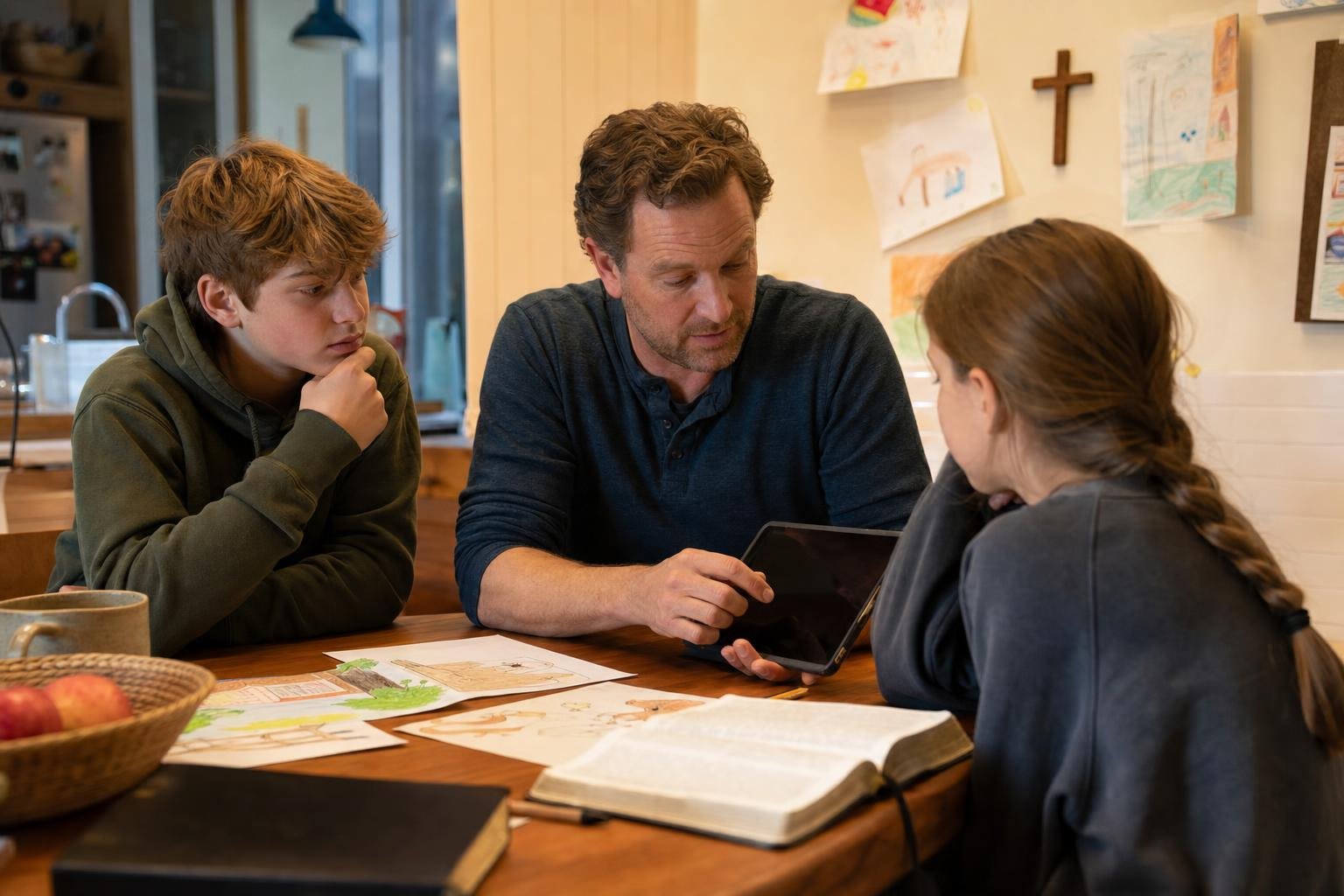
Animal Farm And Talking With Kids About Power, Truth, And Sin
Animal Farm can help older children see how slogans, fear, and corrupted authority distort truth, but parents should frame the story with a biblical view of sin.
Read article
How To Talk After A Scary Scene Without Overreacting
Children do not always process fear while the movie is still playing. This guide helps parents respond calmly after intense or unsettling scenes and turn the moment into wise reassurance instead of panic.
Read articleMore Reviews




Official regional ratings
Local ratings remain available for reference, but LionLens separates those classifications from Christian family discernment.
Review Method
How this review was prepared
LionLens reviews are written with subtitle and dialogue evidence where available, official regional ratings data, source research, and final human editorial review before publication.