
Human Reviewed
Parent feedback
34 families found this review helpful
Christian Movie Review
Hoppers Christian Movie Review
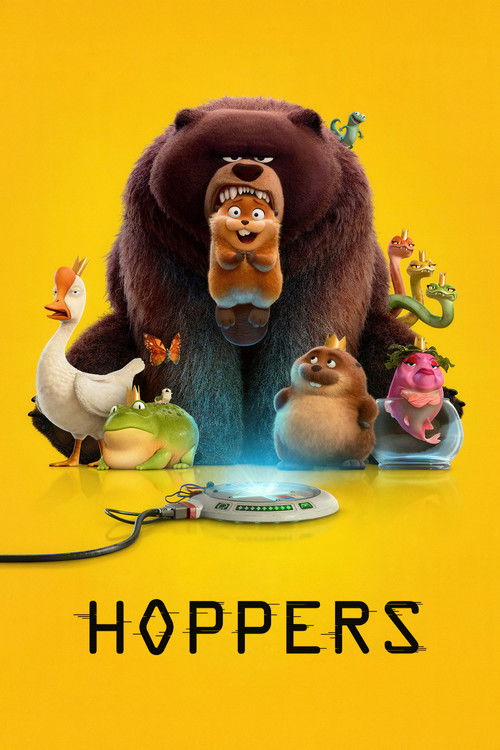
(2026)Scientists have discovered how to 'hop' human consciousness into lifelike robotic animals, allowing people to communicate with animals as animals. Animal lover Mabel seizes an opportunity to use the technology, uncovering mysteries within the animal world beyond anything she could have imagined.
This animated adventure appears broadly family-friendly, with a strong conservation message, grief themes, and a spirited young heroine. Parents may still want to note the repeated defiance of authority, mild rude language, some peril and destructive threat, and a technology premise that raises identity and embodiment questions worth discussing.
Start with the content rating, then use the Christian guidance rating to decide how much conversation your family may need.
Content Indicators

Reviewed 13 March 2026
Esther handles review quality, clarity, and the practical guidance families need after the credits roll.
Hoppers Christian Movie Review (2026)
Guidance: Talk Together
This animated adventure appears broadly family-friendly, with a strong conservation message, grief themes, and a spirited young heroine. Parents may still want to note the repeated defiance of authority, mild rude language, some peril and destructive threat, and a technology premise that raises identity and embodiment questions worth discussing.
Why This Guidance Level
The main concerns here are not graphic content so much as tone and message. The film includes mild peril, destructive threats toward animal habitats, rude language, and a protagonist who repeatedly breaks rules and pushes against authority. It also uses a mind-transfer premise that is not occult in the usual sense, but it does invite conversation about personhood, the body, and what makes someone truly human. For many families, this looks manageable with discussion rather than a major red flag.
Faith & Worldview Perspective
Hoppers seems to affirm care for creation, compassion for vulnerable creatures, perseverance, and honoring a loved one’s memory. Those are meaningful themes Christians can appreciate, since creation belongs to God and people are called to exercise stewardship rather than careless domination. At the same time, The story frames moral urgency through activism and personal passion more than through humility, wisdom, or rightly ordered authority. The mind-hopping premise also blurs questions of identity and embodiment in a way that is imaginative but not fully aligned with a Christian view of human persons as embodied souls made by God. Parents may want to discuss how love for creation can point children beyond nature itself to the Creator and to hope in Jesus Christ.
Truths Reflected
- The film values care for animals and habitats, which can reflect wise stewardship of God’s creation.
- It treats grief, memory, courage, and perseverance as meaningful parts of loving others well.
Tensions to Discuss
- The story may lean toward rule-breaking as a justified path when passion feels urgent, which can conflict with a biblical view of honoring rightful authority and pursuing justice with wisdom.
- Its consciousness-transfer premise can blur a Christian understanding of human identity, because people are not merely minds that can be moved from body to body.
Content & Discernment Markers
Occult & Spiritual Content
- Occult material does not stand out here, but the story’s central idea of a person transporting her mind into a robotic animal introduces a supernatural-feeling identity premise outside a Christian understanding of embodied human life. Parents may want to discuss what makes a person a person, and why our bodies matter before God.
Sexuality & Relationships
- Sexual content is very light. One comic misunderstanding involves a male animal thinking a female animal may be proposing to him, and a human man is reportedly shown in underwear in a nonsexual context.
Identity Themes
- The film’s mind-hopping technology raises identity questions by placing human consciousness into a robotic animal body. That is more sci-fi than ideological, but it still invites conversation about personhood, embodiment, and the difference between human beings and animals.
Violence & Intensity
- A school chase scene includes Mabel running from adults, alarms sounding, teachers yelling, and comic chaos after she hides an animal in her bag. The tone seems more frantic than harsh, but younger viewers may still find it intense.
- Mabel bites someone, and adults directly confront her over it: “You cannot bite people. That is not something I should have to say.” An older character also says, “When I was 12, I punched Suzie Perkins in the face,” as part of a story about anger.
- There is a more serious threat around a beaver dam and planned destruction, including the line, “It’s full of dynamite,” followed by conflict over blowing up a pond area and removing animals’ home. This matters for Christian families because the danger is tied to human disregard for vulnerable creatures and creation care.
- Other reported moments also point to creepy robot imagery, predator-prey moments, a fire evacuation, and animals discussing retaliation against humans. Parents of sensitive children may want to discuss fear, revenge, and mercy afterward.
Language & Humour
- Language appears mild overall, with words and insults such as “stupid,” “dumb,” “sucked,” “jerk,” “loser,” “crazy,” “shut up,” and “liar.” There is also a joking phrase, “flock around and find out,” built as a softened play on a cruder expression.
Other Content Notes
- The story includes grief connected to Mabel’s grandmother and the comfort of a special glade. Her grandmother tells her, “No matter what happens, you’ve always got this glade.” That tenderness may open good family conversation about loss, memory, and where lasting hope is found in Christ.
- Repeated disobedience is a notable behavioral theme. Mabel sneaks animals into school, runs from teachers, ignores instructions, and openly resists officials she sees as harming the glade. Parents may want to discuss the difference between courage and reckless rebellion.
Notable Moments
- School chaos: Mabel hides an animal in her bag, runs from school staff, and triggers alarms during a frantic chase.
“We have rules. They apply to everyone including you.”
- Biting confrontation: Adults address Mabel’s aggression directly after she bites someone.
“You cannot bite people. That is not something I should have to say.”
- Grandmother memory: A quiet flashback ties the glade to comfort, belonging, and grief.
“No matter what happens, you’ve always got this glade.”
- Dam standoff: Mabel confronts officials over destroying a beaver dam and the animals’ home.
“It’s full of dynamite.”
- Activist push: She goes door to door asking neighbors to sign in support of saving the glade.
“Sign here to save a rare and beautiful place that apparently only I care about.”
Discussion Prompts
- Creation care and stewardship: Why do you think protecting the glade matters? How can we care for animals and places God made without treating nature as more important than people?
- Biblical guidance: Scripture teaches that the earth belongs to the Lord and that people are called to steward creation wisely.
- Scripture: Psalm 24:1, Genesis 2:15, Proverbs 12:10
- Anger, courage, and self-control: Mabel cares about something good, but does she always handle her anger well? What is the difference between brave action and sinful outburst?
- Biblical guidance: God calls us to be slow to anger and to practice self-control even when we are upset about real wrongs.
- Scripture: James 1:19-20, Proverbs 16:32, Galatians 5:22-23
- Authority and conscience: When, if ever, is it right to challenge leaders? How can Christians speak against wrong without becoming disrespectful or reckless?
- Biblical guidance: Believers are called to honor authority while also standing for what is right with wisdom, humility, and truth.
- Scripture: Romans 13:1, Acts 5:29, Micah 6:8
- Identity, embodiment, and hope: If someone’s mind is placed into a robotic animal, are they still the same person? What does God say about who we are?
- Biblical guidance: Christian faith sees human beings as made in God’s image, with bodies that matter, and our deepest hope is not escaping embodiment but resurrection life in Jesus Christ.
- Scripture: Genesis 1:27, Psalm 139:13-14, 1 Corinthians 15:42-44
Common questions about Hoppers
- What age is Hoppers suitable for?
- Hoppers suits children of about 6 and older in most families. The main reason is violence and peril. A school chase scene includes Mabel running from adults, alarms sounding, teachers yelling, and comic chaos after she hides an animal in her bag. Younger viewers may still enjoy it alongside a parent, and it raises worldview questions worth talking through afterwards.
- Is Hoppers okay for a 4-year-old?
- Hoppers is generally better suited to children of about 6 and up, so a 4-year-old may find parts of it a stretch. A school chase scene includes Mabel running from adults, alarms sounding, teachers yelling, and comic chaos after she hides an animal in her bag. Families whose children handle violence and peril well may still be comfortable watching together.
Age guidance is derived from this review's content findings and the film's official classifications. It is a starting point for your own judgement, not a rule.
Parent comments
Leave a comment on this review
Share a short note on Hoppers, or help other parents with discernment.
Submit will ask you to sign in first.
Weekend family picks
Get the short family movie list before the weekend
Example newsletter: 3 movies to watch this weekend with your family, plus one question to ask after the credits.
Sample: 3 movies to watch this weekend with your family
One cinema pick, one streaming pick, one conversation-starter pick.
Related Articles
A few bigger-picture reads for parents who want more context than a single review page can hold.

How To Talk With Kids About Magic, Fate, And Spiritual Themes In Movies
Many family movies use magic, destiny, spirits, or cosmic balance to drive the story. This article helps Christian parents respond without overreacting, while still drawing clear lines back to biblical truth.
Read article
What Christian Parents Can Discuss After Ruby Gillman, Teenage Kraken
A practical post-movie conversation guide for Christian parents after watching Ruby Gillman, Teenage Kraken.
Read article
Animal Farm And Talking With Kids About Power, Truth, And Sin
Animal Farm can help older children see how slogans, fear, and corrupted authority distort truth, but parents should frame the story with a biblical view of sin.
Read articleMore Reviews


Official regional ratings
Local ratings remain available for reference, but LionLens separates those classifications from Christian family discernment.
Review Method
How this review was prepared
LionLens reviews are written with subtitle and dialogue evidence where available, official regional ratings data, source research, and final human editorial review before publication.