
Human Reviewed
Parent feedback
29 families found this review helpful
Christian Movie Review
Godmothered Christian Movie Review
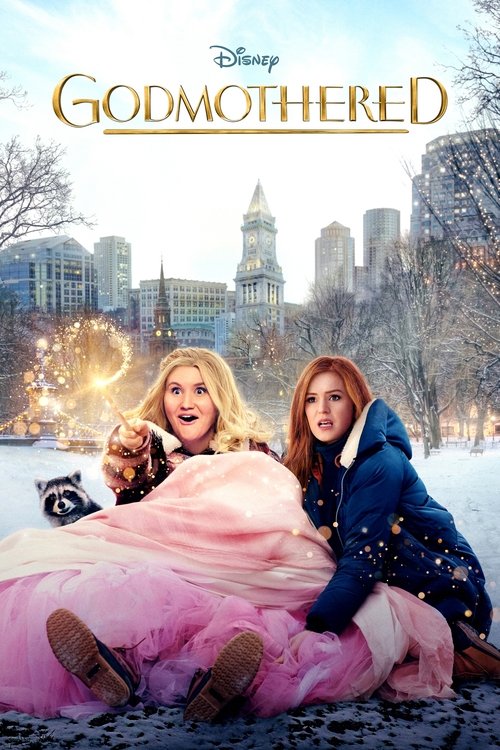
(2020)A young and unskilled fairy godmother that ventures out on her own to prove her worth by tracking down a young girl whose request for help was ignored. What she discovers is that the girl has now become a grown woman in need of something very different than a "prince charming."
Godmothered is a light fantasy comedy with mild slapstick and very little sexual material, but its fairy-magic setting and its reworking of "true love" and "happily ever after" give families several worldview points to talk through. For many Christian homes, the bigger issue is not harsh content but the film's magical framework and its ideas about where hope and fulfillment come from.
Start with the content rating, then use the Christian guidance rating to decide how much conversation your family may need.
Content Indicators

Reviewed 26 November 2025
Esther handles review quality, clarity, and the practical guidance families need after the credits roll.
Godmothered Christian Movie Review (2020)
Guidance: Talk Together
Godmothered is a light fantasy comedy with mild slapstick and very little sexual material, but its fairy-magic setting and its reworking of “true love” and “happily ever after” give families several worldview points to talk through. For many Christian homes, the bigger issue is not harsh content but the film’s magical framework and its ideas about where hope and fulfillment come from.
Why This Guidance Level
This lands in a middle guidance range because the surface content is fairly light, but the movie is built around fairy godmothers, wands, conjuring, magical portals, and a worldview that treats supernatural help and self-defined happiness as normal. The main discernment question for Christian families is less about intensity and more about how the film reshapes love, fulfillment, and hope apart from Jesus Christ.
Faith & Worldview Perspective
The film plays with classic fairy-tale ideas and questions whether the old formula of a gown, true love, and “happily ever after” still works. That gives it some thoughtful emotional ground, but it also places magic and fairy intervention at the center of change. The story seems interested in redefining fulfillment in more modern terms, which can open useful conversations about how real hope is not found in romance, personal reinvention, or enchanted solutions, but in God’s design and ultimately in Christ. Parents may want to discuss the difference between imaginative fantasy and trusting spiritual power outside God.
Truths Reflected
- The movie recognizes that romance alone does not solve every problem.
- It values perseverance and caring for people who are hurting or overlooked.
Tensions to Discuss
- The story normalizes magic, wands, conjuring, and fairy intervention as benevolent spiritual power, which may conflict with a Christian view of seeking power and help from God alone.
- Its vision of “happily ever after” is reshaped around personal fulfillment rather than clearly grounding hope in God’s truth and Christian hope in Christ.
Content & Discernment Markers
Occult & Spiritual Content
- Magic is central to the movie’s world from the opening scenes: the Motherland is described as a “magical place” where Fairy Godmothers live and train. Students are told to “raise your wands,” and a lesson teaches that “a glittery gown turns a frown upside down” after it is conjured. This is playful fantasy, but it still presents supernatural power outside God as normal and helpful. Parents may want to discuss how fantasy magic differs from the real spiritual hope Christians have in Jesus Christ.
- The plot depends on fairy assignments, magical portals, and the threat that a superior could “take away your magic.” That keeps the supernatural framework active rather than incidental.
Sexuality & Relationships
- The fairy-godmother formula centers on finding “true love,” and a child’s letter asks for help getting the “cutest boy” in school to notice her. The material is light and non-explicit, but it frames romantic attention as a key wish to be granted.
Identity Themes
- A major theme is challenging the old fairy-tale formula and asking whether “happily ever after” means something different now. That can be constructive in some ways, but it also encourages children to think about who gets to define love and happiness. Parents may want to discuss whether our deepest good is self-defined or received from God.
Violence & Intensity
- Peril is mostly comic and low-stakes. Eleanor crashes, falls, yelps, and bumps into things, with lines like “Whoa! Ouch!… Ow. Oof!” and a later scream-and-thud moment followed by “I’m okay.” This is family-comedy slapstick rather than frightening violence.
Language & Humour
- Language appears mild overall. The humor includes fairy-tale wordplay and mild exclamations such as “oh my godmother,” “mother of fudge,” and “son of a butterscotch,” along with a few light put-downs noted in parent guidance. Most families who are comfortable with standard PG banter are unlikely to find the speech harsh, though some may still want to note the casual God-language parody.
Other Content Notes
- The movie leans heavily on whimsical fantasy comedy and school-for-fairies humor. Its tone is light, but the repeated use of enchantment, formulas, and magical problem-solving may matter more to Christian families than the film’s mild surface content.
Notable Moments
- Motherland opening: The opening establishes a magical realm where Fairy Godmothers are trained and magic is treated as ordinary and good.
“Once upon a time, there was a magical place called the Motherland, where Fairy Godmothers lived and learned all they needed to know about godmothering.”
- Fairy formula lesson: A classroom scene lays out the movie’s fairy-tale formula of magical transformation, romance, and “happily ever after.”
“A glittery gown turns a frown upside down… Find their true love… Happily ever after.”
- Questioning the formula: The film openly challenges whether the traditional fairy-tale model still works, setting up its broader message about redefining fulfillment.
“If it works, then why is everything around here falling apart?”
- Comic physical mishaps: Eleanor’s clumsy attempts to pursue her mission include repeated bumps and falls played for laughs.
“Whoa! Ouch! (GRUNTS) Ow. Oof!”
Discussion Prompts
- Where does real hope come from?: The movie talks about “happily ever after.” What do you think actually gives lasting hope when life is hard?
- Biblical guidance: Christians can enjoy stories, but our deepest hope is not in romance, magic, or perfect circumstances. Our lasting hope is in God and in Jesus Christ.
- Scripture: Psalm 146:3-5, Romans 15:13
- Magic and spiritual power: How is the movie’s fairy magic different from praying to God? Why does that difference matter?
- Biblical guidance: Scripture points us to seek help, wisdom, and power from the Lord rather than from supernatural sources outside Him.
- Scripture: Deuteronomy 18:10-12, James 1:5
- Love and fulfillment: The story connects happiness with “true love.” Is romance the main thing a person needs to be whole?
- Biblical guidance: Human love is a gift, but no relationship can replace the security and identity we receive from God.
- Scripture: Matthew 22:37-39, Colossians 2:10
- Perseverance and calling: Eleanor keeps going when others doubt her. When is persistence good, and when should we stop and seek wisdom?
- Biblical guidance: Perseverance is valuable, but Christian perseverance should be guided by truth, humility, and obedience to God.
- Scripture: Galatians 6:9, James 1:5
Common questions about Godmothered
- What age is Godmothered suitable for?
- Godmothered suits children of about 8 and older in most families. That follows its official classification. It is rated PG in the US, New Zealand and Canada. Younger viewers may still enjoy it alongside a parent, and it raises worldview questions worth talking through afterwards.
- Is Godmothered okay for a 6-year-old?
- Godmothered is generally better suited to children of about 8 and up, so a 6-year-old may find parts of it a stretch. It is rated PG in the US, New Zealand and Canada. Families comfortable watching a little above the classification together may still be fine with it.
Age guidance is derived from this review's content findings and the film's official classifications. It is a starting point for your own judgement, not a rule.
Parent comments
Leave a comment on this review
Share a short note on Godmothered, or help other parents with discernment.
Submit will ask you to sign in first.
Weekend family picks
Get the short family movie list before the weekend
Example newsletter: 3 movies to watch this weekend with your family, plus one question to ask after the credits.
Sample: 3 movies to watch this weekend with your family
One cinema pick, one streaming pick, one conversation-starter pick.
Related Articles
A few bigger-picture reads for parents who want more context than a single review page can hold.

Disney And Pixar Films For Christian Families: Why They Still Need Discernment
Disney and Pixar films often feel safer than they really are. This guide helps Christian parents notice the spiritual assumptions, emotional messages, and identity themes that can slip past a quick first impression.
Read article
How To Talk With Kids About Dragon magic In Family Movies
A parent-friendly guide to discussing dragon magic in family movies through a Christian lens.
Read article
How To Talk With Kids About Mild fantasy peril In Family Movies
A parent-friendly guide to discussing mild fantasy peril in family movies through a Christian lens.
Read articleMore Reviews



Official regional ratings
Local ratings remain available for reference, but LionLens separates those classifications from Christian family discernment.
Review Method
How this review was prepared
LionLens reviews are written with subtitle and dialogue evidence where available, official regional ratings data, source research, and final human editorial review before publication.