
Human Reviewed
Parent feedback
56 families found this review helpful
Christian Movie Review
Fantasia Christian Movie Review
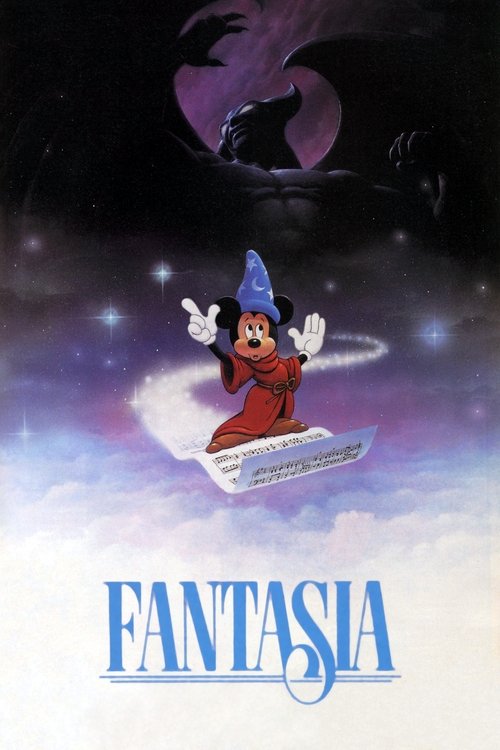
(1940)Fantasia is a landmark animated concert film that pairs classical music with a series of imaginative visual segments. The film moves from abstract imagery to mythological scenes, comic fantasy, prehistoric life, ballet-inspired animal comedy, and a closing contrast between dark spiritual imagery and "Ave Maria."
This is artistically rich and often gentle, but it also includes sorcery, mythological sensuality, frightening supernatural imagery, and a science-framed origin sequence. For many Christian families, the main questions are less about harsh content and more about spiritual imagery and worldview discussion.
Use the content rating for surface intensity and the Christian guidance rating for worldview and spiritual themes.
Content Indicators

Reviewed 10 May 2026
Micah covers action, fantasy, and franchise releases, with close attention to violence, spiritual themes, and moral framing.
Fantasia Christian Movie Review (1940)
Guidance: Talk Together
This is artistically rich and often gentle, but it also includes sorcery, mythological sensuality, frightening supernatural imagery, and a science-framed origin sequence. For many Christian families, the main questions are less about harsh content and more about spiritual imagery and worldview discussion.
Why This Guidance Level
Fantasia is not a harsh film, but it carries enough spiritual imagery, mythological sensuality, scary fantasy, and worldview material about origins to merit active family discussion. The content itself is mostly mild, yet the ideas underneath it give Christian parents more to process than a typical light children’s title.
Faith & Worldview Perspective
Fantasia celebrates beauty, creativity, order, and the emotional power of music, which can reflect God’s gift of artistry and the goodness of creation. At the same time, it presents sorcery as playful fantasy, uses pagan mythology for charm and comedy, and frames one sequence around a scientific story of life’s growth over billions of years rather than creation by God. The closing movement from darkness toward sacred music offers a meaningful picture of evil and holiness, though Christian hope is grounded not merely in contrast or atmosphere but in Jesus Christ. Parents may want to discuss where the film’s images are simply artistic and where they touch real questions of truth.
Truths Reflected
- Beauty and creativity can stir wonder and point beyond ourselves.
- There is a real contrast between darkness and the sacred.
Tensions to Discuss
- Sorcery and supernatural power are presented as entertaining fantasy rather than something Scripture treats seriously.
- The origins sequence centers a naturalistic account of life’s development, which may conflict with a biblical understanding of creation.
Content & Discernment Markers
Occult & Spiritual Content
- The film openly introduces “a legend about a sorcerer who had an apprentice,” and the apprentice is described as practicing “some of the boss’s best magic tricks” before learning control. This makes sorcery a central imaginative element in one of the film’s best-known segments. Parents may want to discuss why Scripture treats magical power differently than a fantasy cartoon does.
- The closing program is introduced as “a picture of the struggle… between the profane and the sacred,” pairing “A Night on Bald Mountain” with “Ave Maria.” That spiritual contrast gives the finale unusual weight for a family animation and may invite conversation about evil, holiness, and hope in Christ.
Sexuality & Relationships
- The “Pastoral” sequence uses a mythological setting with nymphs, centaurs, cherubs, courtship, and partial animated nudity. The tone is light and classical rather than explicit, but Christian families may still want to note how pagan sensuality is normalized as playful beauty.
Identity Themes
- Identity themes do not stand out as a major concern here. The film is more focused on imagination, music, mythology, and spectacle than on modern identity messaging.
Violence & Intensity
- In “The Sorcerer’s Apprentice,” Mickey uses magic he cannot control, and the sequence builds into chaotic peril as his actions spiral beyond him. The danger is stylized and fantastical, but the loss of control is intense enough to matter for younger viewers.
- The “Rite of Spring” segment is framed as “the story of the growth of life on earth” and includes prehistoric upheaval and survival imagery. The tone is more serious than the lighter segments and may prompt discussion about fear, death, and what the film says about origins.
- The final “Night on Bald Mountain” section carries dark, ominous spiritual menace. Even without graphic detail, the mood and imagery can feel heavy for children who are sensitive to frightening scenes.
Language & Humour
- Language is very mild. The spoken material is mostly formal introductions and light humor, including lines like “Gee, thanks” and playful banter with the soundtrack. Parents looking for profanity or crude jokes are unlikely to find much concern here.
Other Content Notes
- The introduction to “The Rite of Spring” says the artists visualized it as “the story of the growth of life on earth” and “a coldly accurate reproduction, of what science thinks” happened in the planet’s early history. This may conflict with a biblical view of creation and is worth discussing directly with children.
- The “Pastoral” sequence includes wine-drinking and comic drunkenness with Bacchus in a mythological setting. It is brief and playful, but it still presents intoxication as part of the humor.
Notable Moments
- Sorcerer’s Apprentice setup: The narrator introduces the apprentice story and makes clear that the young character uses magic before he is ready to handle it.
“A legend about a sorcerer who had an apprentice.”
- Origins framing: The film explicitly frames one segment as a scientific pageant of early earth and the growth of life.
“As the story of the growth of life on earth.”
- Sacred vs profane finale: The closing segment is introduced in spiritual terms, contrasting darkness with sacred music.
“Musically and dramatically, we have here a picture of the struggle… between the profane and the sacred.”
Discussion Prompts
- Power and sorcery: Why do you think the apprentice wanted power before he had wisdom, and what happens when someone wants control without obedience?
- Biblical guidance: Scripture warns against seeking power apart from God and calls us to humility and wisdom.
- Scripture: Deuteronomy 18:10-12, James 3:13, Proverbs 16:18
- Creation and origins: How does the film describe the beginning of life, and how is that different from what the Bible teaches about God as Creator?
- Biblical guidance: Christians can appreciate artistic imagination while still grounding truth in God’s Word about creation.
- Scripture: Genesis 1:1, Psalm 19:1, Colossians 1:16-17
- Darkness and the sacred: What feelings did the final contrast between dark imagery and “Ave Maria” create, and how does Jesus Christ meet evil with greater authority and hope?
- Biblical guidance: The Bible teaches that light overcomes darkness fully in Christ, not merely in mood or symbolism.
- Scripture: John 1:5, Colossians 2:15, Revelation 21:23-27
- Beauty and worship: Can beautiful music and art point us toward God, and how can we enjoy beauty without treating art itself as ultimate?
- Biblical guidance: Beauty is a gift from God, but worship belongs to Him alone.
- Scripture: Philippians 4:8, Psalm 96:1-4, Romans 1:25
Common questions about Fantasia
- What age is Fantasia suitable for?
- Fantasia suits children of about 9 and older in most families. The main reason is sexual content. The "Pastoral" sequence uses a mythological setting with nymphs, centaurs, cherubs, courtship, and partial animated nudity. Younger viewers may still enjoy it alongside a parent, and it raises worldview questions worth talking through afterwards.
- Is Fantasia okay for a 7-year-old?
- Fantasia is generally better suited to children of about 9 and up, so a 7-year-old may find parts of it a stretch. The "Pastoral" sequence uses a mythological setting with nymphs, centaurs, cherubs, courtship, and partial animated nudity. Families whose children handle sexual content well may still be comfortable watching together.
Age guidance is derived from this review's content findings and the film's official classifications. It is a starting point for your own judgement, not a rule.
Parent comments
Leave a comment on this review
Share a short note on Fantasia, or help other parents with discernment.
Submit will ask you to sign in first.
Weekend family picks
Get the short family movie list before the weekend
Example newsletter: 3 movies to watch this weekend with your family, plus one question to ask after the credits.
Sample: 3 movies to watch this weekend with your family
One cinema pick, one streaming pick, one conversation-starter pick.
Related Articles
A few bigger-picture reads for parents who want more context than a single review page can hold.

How To Talk With Kids About Magic, Fate, And Spiritual Themes In Movies
Many family movies use magic, destiny, spirits, or cosmic balance to drive the story. This article helps Christian parents respond without overreacting, while still drawing clear lines back to biblical truth.
Read article
How To Talk With Kids About Dragon magic In Family Movies
A parent-friendly guide to discussing dragon magic in family movies through a Christian lens.
Read article
How To Talk With Kids About Mild fantasy peril In Family Movies
A parent-friendly guide to discussing mild fantasy peril in family movies through a Christian lens.
Read articleMore Reviews

Official regional ratings
Local ratings remain available for reference, but LionLens separates those classifications from Christian family discernment.
Review Method
How this review was prepared
LionLens reviews are written with subtitle and dialogue evidence where available, official regional ratings data, source research, and final human editorial review before publication.