
Human Reviewed
Parent feedback
76 families found this review helpful
Christian Movie Review
Enchanted Christian Movie Review
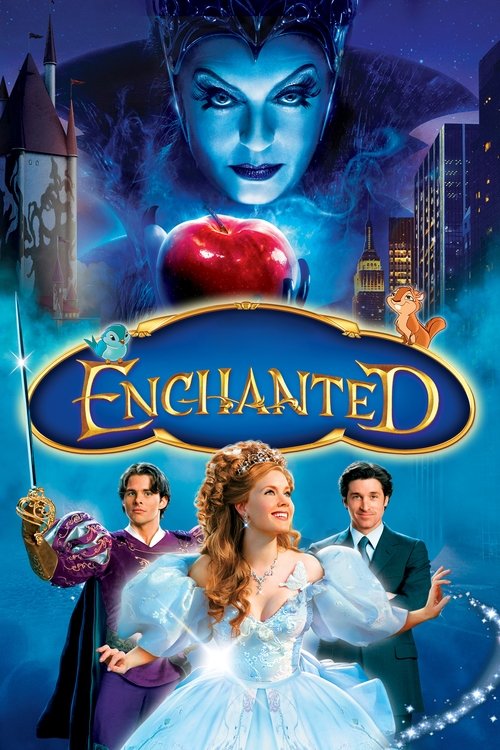
(2007)A fairy-tale princess is swept from an animated kingdom into modern-day New York City, where her storybook expectations collide with ordinary life. The film mixes live-action comedy, romance, and fantasy as she navigates confusion, friendship, and a very different view of love.
This is a light family fantasy with mild peril, a few kisses, and some mild innuendo. Christian families may also want to talk about the film’s romantic idealism and its message that true love and personal fulfillment come through human romance.
Use the content rating for the mild peril and romance, and the Christian guidance rating for the film’s view of love and destiny.
Content Indicators

Reviewed 20 May 2026
Rachel focuses on animated films, family viewing habits, and helping parents spot worldview themes quickly.
Enchanted Christian Movie Review (2007)
Guidance: Talk Together
This is a light family fantasy with mild peril, a few kisses, and some mild innuendo. Christian families may also want to talk about the film’s romantic idealism and its message that true love and personal fulfillment come through human romance.
Why This Guidance Level
Enchanted is gentle enough for many families, but it is not just a simple fairy tale. The movie includes mild peril, a dragon battle, a few kisses, and some innuendo, while its bigger issue is the way it frames romantic destiny and “true love” as the answer to life’s deepest needs. That makes it a good candidate for parent-child conversation rather than a no-thought family pick.
Faith & Worldview Perspective
The film celebrates kindness, courage, and the power of hope, and it clearly pokes fun at cynicism. Its main worldview tension is that it treats romantic fulfillment as the central path to happiness, while Christian families may want to point children toward the deeper security and identity found in Christ rather than in a perfect human partner.
Truths Reflected
- Kindness and optimism can change a room.
- Love should be self-giving rather than selfish.
Tensions to Discuss
- The movie elevates romantic destiny as if it can satisfy the heart in a way only Christ can.
- It leans on fairy-tale ideas of soul-mate fulfillment instead of a broader biblical view of marriage, purpose, and identity.
Content & Discernment Markers
Occult & Spiritual Content
- The story uses fairy-tale magic, a wishing well, and a spell-like transfer from Andalasia to New York, but occult material does not stand out as a major concern. Parents may want to discuss the difference between harmless fantasy magic and real spiritual truth.
Sexuality & Relationships
- Romance drives the story, with repeated talk of “true love’s kiss,” marriage, and being “married in the morning.” The affection stays chaste, but the film gives a lot of attention to romantic destiny and a few kisses, so parents may want to talk about how love is portrayed.
- There is mild innuendo around lips and kissing, including the song line, “For lips are the only things that touch,” which is playful rather than explicit but still worth noting for younger viewers.
Identity Themes
- Giselle’s confusion in New York highlights identity, belonging, and displacement. She says, “I’ve never been this far away from home before,” and keeps asking for the castle, which gives the film a gentle but real theme of being uprooted and trying to understand where you belong. Parents may want to discuss where true belonging comes from.
Violence & Intensity
- The film includes fairy-tale danger, a troll attack, a threatening queen, and a climactic dragon battle. The action is stylized and not graphic, but the dragon and chase scenes add enough tension that sensitive children may feel uneasy.
Language & Humour
- Language is mostly comic and mild, with words like “mookses,” “fat mook’s face,” “hallucinating,” and “Jeez” used for humor or irritation. The speech is not coarse, but the sharp teasing and comic insults are worth a quick parent note.
Other Content Notes
- A brief bar moment includes an apple martini and a character getting drunk, but the scene is short and not a major focus.
Notable Moments
- True love song: Giselle sings about dreaming of a perfect romance, and the film repeatedly frames love as a fairy-tale destiny. This is charming, but it also sets up a strong romantic ideal that parents may want to unpack.
““I’ve been dreaming of a true love’s kiss.””
- Wishing well scene: On her wedding day, Giselle is drawn to a wishing well and disappears into the real world, shifting the story from fairy tale to city comedy. The moment is whimsical, but it also begins the film’s contrast between fantasy expectations and ordinary life.
““A wish on your wedding day. That’s the most magical of all.””
- New York confusion: Giselle wanders the city asking strangers for directions to the castle and admits she is scared and far from home. The scene is funny, but it also highlights her vulnerability and the film’s theme of belonging.
““I’ve never been this far away from home before.””
- Dragon climax: The queen’s final transformation into a dragon raises the tension sharply and gives the movie its biggest scare. The action stays fantasy-style, but younger children may find it intense.
Discussion Prompts
- Romantic fulfillment: What does the movie say will make a person truly happy, and do you think that matches real life?
- Biblical guidance: Scripture teaches that our deepest satisfaction comes from the Lord, not from a perfect romance. Marriage is a gift, but it is not a savior.
- Scripture: Psalm 16:11, Matthew 6:33, Colossians 1:16-17
- Kindness and character: Why do Giselle’s kindness and optimism stand out so much in the movie?
- Biblical guidance: The Bible values gentleness, kindness, and a hopeful spirit, but it roots those traits in truth and wisdom, not just cheerful feelings.
- Scripture: Galatians 5:22-23, Philippians 4:8, Proverbs 15:1
- Belonging and identity: When Giselle feels lost in New York, what does the movie suggest about where she belongs?
- Biblical guidance: Christ gives believers a deeper identity and home than any earthly place or relationship can provide.
- Scripture: Ephesians 2:19, 1 Peter 2:11, John 14:1-3
Common questions about Enchanted
- What age is Enchanted suitable for?
- Enchanted suits children of about 8 and older in most families. That follows its official classification. It is rated PG in Australia, the US, New Zealand and the UK, and G in Canada. The film includes fairy-tale danger, a troll attack, a threatening queen, and a climactic dragon battle.
- Is Enchanted okay for a 6-year-old?
- Enchanted is generally better suited to children of about 8 and up, so a 6-year-old may find parts of it a stretch. It is rated PG in Australia, the US, New Zealand and the UK, and G in Canada. The film includes fairy-tale danger, a troll attack, a threatening queen, and a climactic dragon battle. Families comfortable watching a little above the classification together may still be fine with it.
Age guidance is derived from this review's content findings and the film's official classifications. It is a starting point for your own judgement, not a rule.
Parent comments
Leave a comment on this review
Share a short note on Enchanted, or help other parents with discernment.
Submit will ask you to sign in first.
Weekend family picks
Get the short family movie list before the weekend
Example newsletter: 3 movies to watch this weekend with your family, plus one question to ask after the credits.
Sample: 3 movies to watch this weekend with your family
One cinema pick, one streaming pick, one conversation-starter pick.
Related Articles
A few bigger-picture reads for parents who want more context than a single review page can hold.
Animal Farm And Talking With Kids About Power, Truth, And Sin
Animal Farm can help older children see how slogans, fear, and corrupted authority distort truth, but parents should frame the story with a biblical view of sin.
Read article
5 Things To Notice In Kids Movies Before The Message Lands
A child can absorb a movie long before they can explain it. These five checkpoints help Christian parents notice what a film is training the heart to love, fear, excuse, or trust.
Read article
Why A Clean Movie Can Still Need A Christian Conversation
Sometimes the hardest films to evaluate are not the obviously rough ones, but the polished and emotionally appealing movies that carry deeper assumptions quietly. This article explains why.
Read articleMore Reviews


Official regional ratings
Local ratings remain available for reference, but LionLens separates those classifications from Christian family discernment.
Review Method
How this review was prepared
LionLens reviews are written with subtitle and dialogue evidence where available, official regional ratings data, source research, and final human editorial review before publication.