

Human Reviewed
Parent feedback
77 families found this review helpful
Christian Movie Review
Dora and the Lost City of Gold Christian Movie Review
(2019)Dora, a girl who has spent most of her life exploring the jungle with her parents, now must navigate her most dangerous adventure yet: high school. Always the explorer, Dora quickly finds herself leading Boots (her best friend, a monkey), Diego, and a rag tag group of teens on an adventure to save her parents and solve the impossible mystery behind a lost Inca civilization.
This upbeat family adventure leans heavily into curiosity, courage, and strong family bonds. Most concerns come from jungle peril, a few tense moments, and worldview ideas about self-belief and identity that are worth talking through with children.
Start with the content rating, then use the Christian guidance rating to decide how much conversation your family may need.
Content Indicators

Reviewed 26 April 2026
Micah covers action, fantasy, and franchise releases, with close attention to violence, spiritual themes, and moral framing.
Dora and the Lost City of Gold Christian Movie Review (2019)
Guidance: Talk Together
This upbeat family adventure leans heavily into curiosity, courage, and strong family bonds. Most concerns come from jungle peril, a few tense moments, and worldview ideas about self-belief and identity that are worth talking through with children.
Why This Guidance Level
The film stays in the family-adventure lane, but it includes repeated danger, kidnapping and threat, and a few heavier moments of fear and separation. Its strongest discussion point is not surface content so much as message: the story celebrates courage and exploration, yet it also leans on “believe in yourself” language that Christian families may want to place under the larger truth of trusting God and finding hope in Jesus Christ rather than in self-confidence alone.
Faith & Worldview Perspective
The movie warmly affirms family love, courage, teamwork, and the idea that discovery should serve understanding rather than greed. It also presents parents as caring and involved, which is a real strength. The main tension is that Dora’s confidence is often framed in self-focused terms like “If you just believe in yourself, anything is possible” and “Just be yourself,” which can sound harmless but may need grounding in a Christian view of identity, wisdom, and dependence on God. Parents may want to discuss how confidence is healthiest when it rests in God’s truth and care, not merely in ourselves.
Truths Reflected
- Family members express love, protection, and sacrificial care for one another.
- The story treats greed as wrong and values discovery, stewardship, and cooperation.
Tensions to Discuss
- Self-belief is presented as a guiding answer, which may conflict with the Christian call to trust the Lord rather than ourselves.
- Personal identity is framed mainly as self-expression; Christian parents may want to point children to identity rooted in God’s design and hope in Christ.
Content & Discernment Markers
Occult & Spiritual Content
- Occult material does not stand out here. The story uses lost-city adventure and ancient-culture mystery rather than spiritual practice, invocation, or supernatural teaching.
Sexuality & Relationships
- Romantic content is light for most of the film’s tone, with only mild teen-interest material noted in broader reviews. It is not a central focus for family discernment here.
Identity Themes
- Dora is repeatedly told to “be yourself” as she leaves the jungle for the city and tries to fit in with peers. That can be a helpful encouragement against peer pressure, but it also invites a conversation about finding identity in Christ rather than in personality alone. Parents may want to ask what makes someone truly secure.
- The film positively includes bilingual family life and cultural heritage through phrases like “Gracias,” “¡Delicioso!,” “Te quiero,” and family terms such as “prima” and “primo.” This adds warmth and belonging rather than ideological pressure.
Violence & Intensity
- Adventure danger is a regular part of the story. Dora is chased by “a herd of angry pygmy elephants,” faces a cave-in with “A rockfall! This cave wasn’t here before,” and is later described in outside summaries as encountering kidnapping, guns, traps, and close calls. The tone remains family-oriented, but the peril is frequent enough to matter for younger or sensitive viewers.
- One emotional danger moment lands more seriously when Dora’s parents tell her, “Honey, you scared us to death today,” after she is nearly lost and needs rescue. This scene matters because it ties the adventure to real parental fear and consequences. Parents may want to discuss wise courage versus reckless confidence.
Language & Humour
- Language appears mild overall. Reported phrases include “pain in the butt,” “stupid,” “weirdo,” “be normal,” “shut up,” “freaking,” “brats,” “what the flip,” and “oh my God” as an exclamation. The concern is more teasing and disrespect than strong profanity.
Other Content Notes
- A sad separation thread runs through the opening as Diego moves away and Dora says, “I’m going to miss you, Diego,” with the reply, “I’m going to miss you too, cousin.” Later, Dora is sent to the city while her parents leave on an expedition. This emotional strain may connect with children who fear change or being left behind.
- The film clearly rejects greed when Dora’s family says, “We’re explorers, we’re not treasure hunters” and “the discovery of new places… that’s the treasure.” This is a strong moral note about motives, stewardship, and valuing people and truth over wealth.
Notable Moments
- Explorers not treasure hunters: Dora’s family explains that their goal is discovery and documentation, not greed.
“We want to document Parapata for archeological purposes. See, we’re explorers, we’re not treasure hunters.”
- Diego moves away: A tender goodbye shows the sadness of family change and separation.
“I’m going to miss you, Diego. I’m going to miss you too, cousin.”
- Parents send Dora to the city: Dora’s parents decide she needs to grow beyond the jungle and learn to relate to others her age.
“Go to the city. Make friends.”
- Self-belief message: A key line captures the film’s recurring confidence theme.
“If you just believe in yourself, anything is possible.”
Discussion Prompts
- Confidence and trust: When Dora says, “If you just believe in yourself, anything is possible,” what sounds helpful about that, and what might be missing?
- Biblical guidance: Scripture teaches that confidence is safest when it rests in the Lord, not in our own strength. Christian hope is grounded in God’s faithfulness and in Jesus Christ, not in self-belief alone.
- Scripture: Proverbs 3:5-6, Philippians 4:13, John 15:5
- Identity and belonging: What does it mean to “be yourself” in a good way, and how is that different from letting other people or your feelings define you?
- Biblical guidance: Children can be reminded that their deepest identity is not popularity or personality, but being made by God and, for believers, belonging to Christ.
- Scripture: Psalm 139:13-14, 2 Corinthians 5:17, Galatians 2:20
- Exploration versus greed: Why is it important that Dora’s family says they are explorers, not treasure hunters?
- Biblical guidance: The film opens a good conversation about motives, stewardship, and valuing truth over riches.
- Scripture: Matthew 6:19-21, 1 Timothy 6:10, Colossians 3:23-24
- Courage and wisdom: What is the difference between brave action and reckless action in the story?
- Biblical guidance: Biblical courage is not pretending danger is small; it is acting faithfully with wisdom, trusting God in the middle of fear.
- Scripture: Joshua 1:9, Ephesians 5:15-17, James 1:5
Common questions about Dora and the Lost City of Gold
- What age is Dora and the Lost City of Gold suitable for?
- Dora and the Lost City of Gold suits children of about 8 and older in most families. That follows its official classification. It is rated PG in Australia, the US, New Zealand, the UK and Canada. Adventure danger is a regular part of the story.
- Is Dora and the Lost City of Gold okay for a 6-year-old?
- Dora and the Lost City of Gold is generally better suited to children of about 8 and up, so a 6-year-old may find parts of it a stretch. It is rated PG in Australia, the US, New Zealand, the UK and Canada. Adventure danger is a regular part of the story. Families comfortable watching a little above the classification together may still be fine with it.
Age guidance is derived from this review's content findings and the film's official classifications. It is a starting point for your own judgement, not a rule.
Parent comments
Leave a comment on this review
Share a short note on Dora and the Lost City of Gold, or help other parents with discernment.
Submit will ask you to sign in first.
Weekend family picks
Get the short family movie list before the weekend
Example newsletter: 3 movies to watch this weekend with your family, plus one question to ask after the credits.
Sample: 3 movies to watch this weekend with your family
One cinema pick, one streaming pick, one conversation-starter pick.
Related Articles
A few bigger-picture reads for parents who want more context than a single review page can hold.

How To Talk With Kids About Magic, Fate, And Spiritual Themes In Movies
Many family movies use magic, destiny, spirits, or cosmic balance to drive the story. This article helps Christian parents respond without overreacting, while still drawing clear lines back to biblical truth.
Read article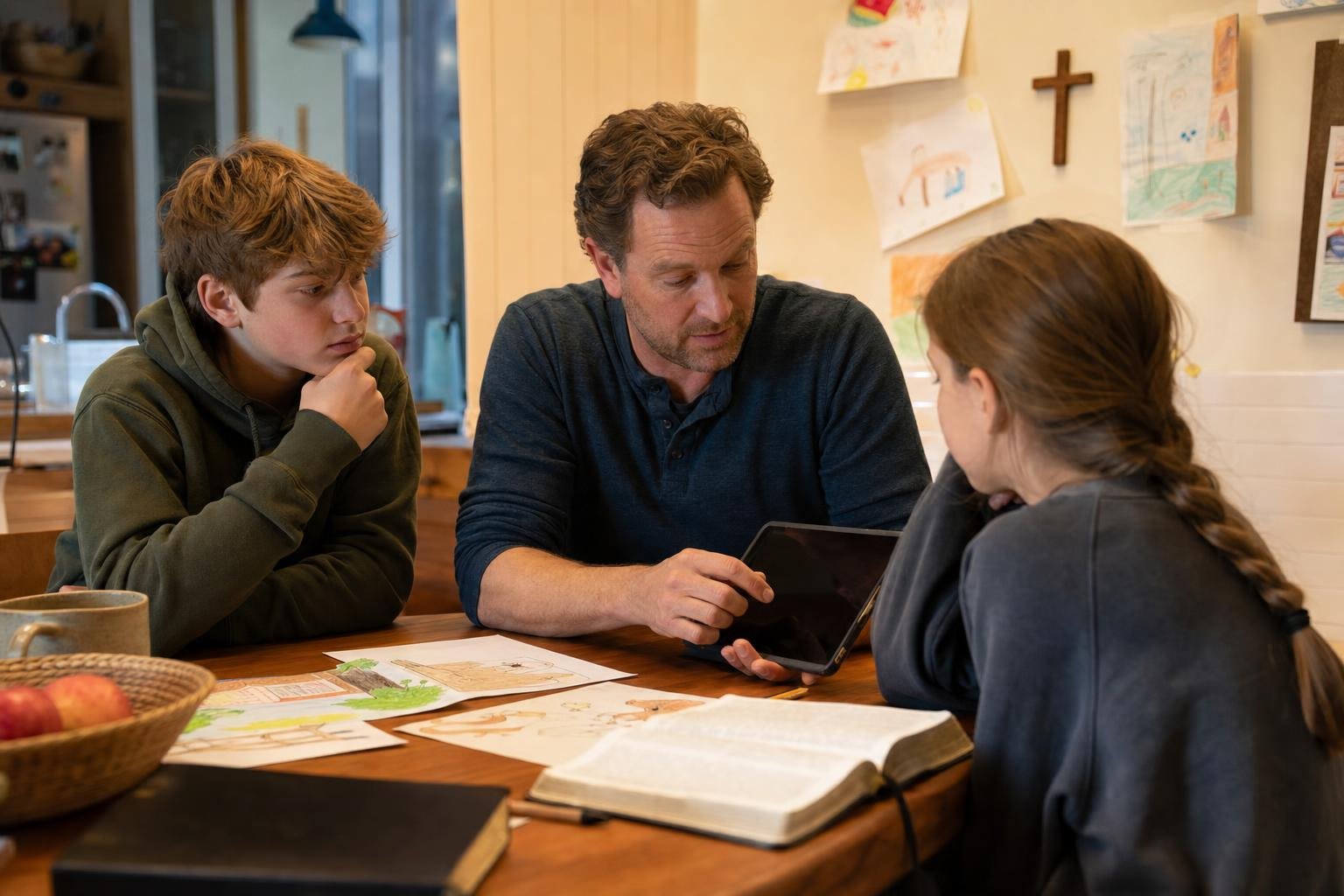
Animal Farm And Talking With Kids About Power, Truth, And Sin
Animal Farm can help older children see how slogans, fear, and corrupted authority distort truth, but parents should frame the story with a biblical view of sin.
Read article
How To Talk After A Scary Scene Without Overreacting
Children do not always process fear while the movie is still playing. This guide helps parents respond calmly after intense or unsettling scenes and turn the moment into wise reassurance instead of panic.
Read articleMore Reviews




Official regional ratings
Local ratings remain available for reference, but LionLens separates those classifications from Christian family discernment.
Review Method
How this review was prepared
LionLens reviews are written with subtitle and dialogue evidence where available, official regional ratings data, source research, and final human editorial review before publication.