

Human Reviewed
Parent feedback
26 families found this review helpful
Christian Movie Review
Dolittle Christian Movie Review
(2020)After losing his wife seven years earlier, the eccentric Dr. John Dolittle, famed doctor and veterinarian of Queen Victoria’s England, hermits himself away behind the high walls of Dolittle Manor with only his menagerie of exotic animals for company. But when the young queen falls gravely ill, a reluctant Dolittle is forced to set sail on an epic adventure to a mythical island in search of a cure, regaining his wit and courage as he crosses old adversaries and discovers wondrous creatures.
Dolittle is a light fantasy adventure with warm themes of compassion, grief, and helping the vulnerable. For many families, the main points to weigh are animal injury and peril, a few mild rude jokes and expressions, and the film’s human-centered moral outlook rather than any overt spiritual message.
Start with the content rating, then use the Christian guidance rating to decide how much conversation your family may need.
Content Indicators

Reviewed 24 November 2025
Esther handles review quality, clarity, and the practical guidance families need after the credits roll.
Dolittle Christian Movie Review (2020)
Guidance: Talk Together
Dolittle is a light fantasy adventure with warm themes of compassion, grief, and helping the vulnerable. For many families, the main points to weigh are animal injury and peril, a few mild rude jokes and expressions, and the film’s human-centered moral outlook rather than any overt spiritual message.
Why This Guidance Level
This film stays in the family-adventure range, but it includes repeated scenes of hunting, an accidentally shot squirrel, medical urgency, grief over a spouse’s death, and some mild rude humor. The larger concern is less about surface content and more about using the story to talk about compassion, fear, and where true healing and hope are found in Jesus Christ rather than in self-recovery alone.
Faith & Worldview Perspective
The film strongly affirms mercy toward weak creatures, sacrificial help, friendship, and moving through grief by serving others. Those are meaningful echoes of biblical compassion. At the same time, its moral center is mostly therapeutic and humanistic: healing comes through community, courage, and kindness, but not through repentance, prayer, or hope in Christ. Christian families may want to discuss how love for creation is good, yet ultimate restoration comes from Jesus Christ, not simply from finding purpose again.
Truths Reflected
- Compassion for vulnerable creatures reflects God’s care for His creation.
- Grief can isolate people, and loving service can help draw them back into community.
Tensions to Discuss
- The story points to healing through helping others, but it does not point to the deeper hope and restoration found in Jesus Christ.
- Human cruelty toward animals is treated clearly as wrong, but moral change is framed mainly as personal empathy rather than response to God’s truth.
Content & Discernment Markers
Occult & Spiritual Content
- Occult material does not stand out here. The fantasy element centers on a doctor who can speak with animals, which functions more like storybook imagination than spiritual practice. Parents may still want to remind children that fantasy abilities are not the same as real spiritual truth.
Sexuality & Relationships
- Romantic content is very light. Dolittle’s love for his late wife is part of the backstory, and the relationship is presented with affection and loss rather than sensuality.
Identity Themes
- A young boy resists pressure from older family members to hunt, saying, “Do I have to, Uncle?” and then being told, “You can’t keep missing on purpose.” The moment matters because it shows a child pushed toward behavior he knows is wrong. Parents may want to discuss courage and conscience.
Violence & Intensity
- Early scenes involve hunting with guns as adults urge a boy to shoot ducks: “Shoulder your gun,” followed by repeated cries of “Shoot, shoot, shoot.” The sequence is played as adventure tension, but the pressure to harm animals may trouble sensitive children.
- A squirrel is accidentally shot, and the injury becomes an urgent rescue scene. The boy admits, “I shot him,” and asks for help as the animal is described as “very hurt.” The medical treatment is not presented as horror, but the distress and injury are central to the scene.
- There is mild threat and anxious chaos around the manor, including traps, fear of strangers, and emergency-style dialogue such as “We got a code red.” The tone stays broadly comic rather than intense.
Language & Humour
- Language is generally mild, but there are a few expressions parents may notice, including “oh my God” as an exclamation and some rude humor involving animal bodies, gas, and a “doo-doo” joke. The humor is juvenile rather than harsh.
Other Content Notes
- Grief is a major emotional thread. The opening explains that “Lily died at sea,” and Dolittle becomes withdrawn and shut off from people. This sadness shapes the story and may open a helpful conversation about loss and where comfort is found.
- Fear and avoidance are treated sympathetically. Dolittle hides from people and reacts with panic when drawn back into responsibility. Parents may want to discuss the difference between wise caution and letting fear rule the heart.
Notable Moments
- Lily’s death: The opening backstory explains Dolittle’s deep grief after losing his wife, which sets the emotional tone for his isolation.
“Lily died at sea.”
- Hunting pressure: A boy is pushed by adults to shoot during a hunt even though he is reluctant.
“Do I have to, Uncle?… You can’t keep missing on purpose.”
- Shot squirrel: The boy confesses that he accidentally shot a squirrel, leading to the film’s main rescue sequence.
“I shot him.”
- Emergency surgery: Dolittle returns to action by treating the wounded squirrel while the animals rally around him.
“Right-o, let’s save this squirrel, shall we?”
Discussion Prompts
- Compassion for the vulnerable: Why was it right for the characters to stop and help an injured animal, even when it was inconvenient?
- Biblical guidance: God calls people to show mercy and to care for the weak and suffering.
- Scripture: Proverbs 12:10, Luke 10:33-37
- Grief and healing: How did grief change Dolittle, and what are healthy ways to respond when someone is hurting deeply?
- Biblical guidance: The Bible takes sorrow seriously and points us to God as the one who comforts the brokenhearted. Christian hope is not just moving on; it is hope in Christ.
- Scripture: Psalm 34:18, 2 Corinthians 1:3-4, 1 Thessalonians 4:13-14
- Pressure and conscience: What should a child do when adults push him toward something he believes is wrong?
- Biblical guidance: We should obey rightful authority, but we must also honor conscience and choose what is good before God.
- Scripture: Acts 5:29, James 4:17, Ephesians 6:1
- Fear versus courage: When does caution become fear that controls us, and how can we face people or problems with courage?
- Biblical guidance: Scripture teaches that fear should not rule us; we can act with love, wisdom, and courage because God is with His people.
- Scripture: 2 Timothy 1:7, Joshua 1:9, 1 John 4:18
Common questions about Dolittle
- What age is Dolittle suitable for?
- Dolittle suits children of about 8 and older in most families. That follows its official classification. It is rated PG in Australia, the US, New Zealand, the UK and Canada. Early scenes involve hunting with guns as adults urge a boy to shoot ducks: "Shoulder your gun," followed by repeated cries of "Shoot, shoot, shoot."
- Is Dolittle okay for a 6-year-old?
- Dolittle is generally better suited to children of about 8 and up, so a 6-year-old may find parts of it a stretch. It is rated PG in Australia, the US, New Zealand, the UK and Canada. Early scenes involve hunting with guns as adults urge a boy to shoot ducks: "Shoulder your gun," followed by repeated cries of "Shoot, shoot, shoot." Families comfortable watching a little above the classification together may still be fine with it.
Age guidance is derived from this review's content findings and the film's official classifications. It is a starting point for your own judgement, not a rule.
Parent comments
Leave a comment on this review
Share a short note on Dolittle, or help other parents with discernment.
Submit will ask you to sign in first.
Weekend family picks
Get the short family movie list before the weekend
Example newsletter: 3 movies to watch this weekend with your family, plus one question to ask after the credits.
Sample: 3 movies to watch this weekend with your family
One cinema pick, one streaming pick, one conversation-starter pick.
Related Articles
A few bigger-picture reads for parents who want more context than a single review page can hold.

How To Talk With Kids About Magic, Fate, And Spiritual Themes In Movies
Many family movies use magic, destiny, spirits, or cosmic balance to drive the story. This article helps Christian parents respond without overreacting, while still drawing clear lines back to biblical truth.
Read article
Animal Farm And Talking With Kids About Power, Truth, And Sin
Animal Farm can help older children see how slogans, fear, and corrupted authority distort truth, but parents should frame the story with a biblical view of sin.
Read article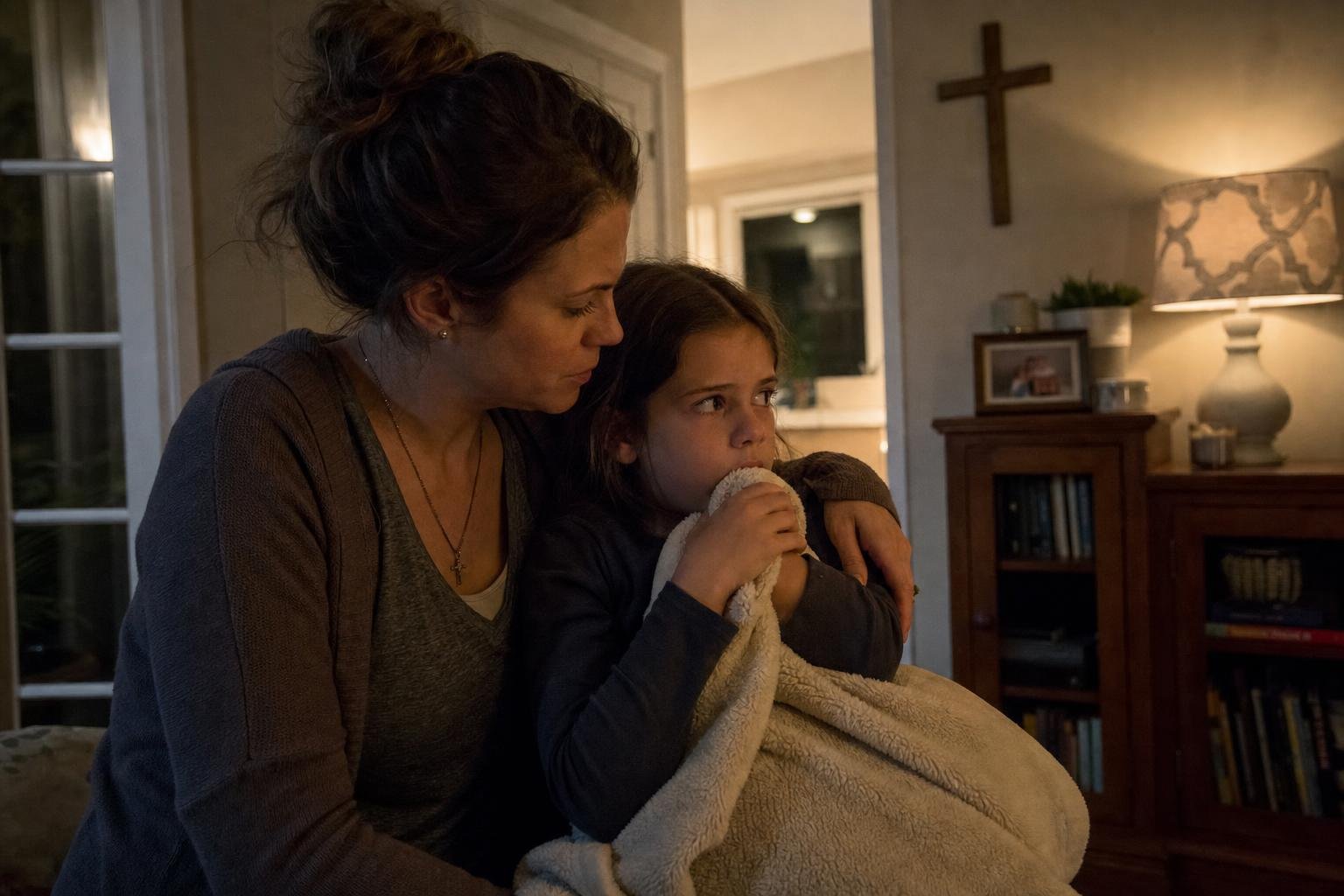
How To Talk After A Scary Scene Without Overreacting
Children do not always process fear while the movie is still playing. This guide helps parents respond calmly after intense or unsettling scenes and turn the moment into wise reassurance instead of panic.
Read articleMore Reviews


Official regional ratings
Local ratings remain available for reference, but LionLens separates those classifications from Christian family discernment.
Review Method
How this review was prepared
LionLens reviews are written with subtitle and dialogue evidence where available, official regional ratings data, source research, and final human editorial review before publication.