Human Reviewed
Parent feedback
54 families found this review helpful
Christian Movie Review
Despicable Me: Minion Mayhem Christian Movie Review
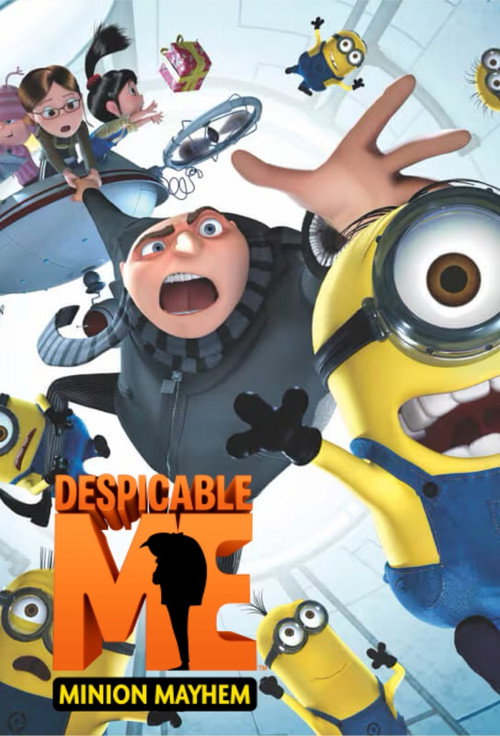
(2012)This animated Despicable Me adventure follows Gru and his daughters through a comic sci-fi mishap involving a machine that turns ordinary people into Minions. The story blends family affection, slapstick chaos, and a rescue mission tied to Agnes's adoption anniversary gift.
Surface content looks fairly light, with cartoon peril and comic villainy rather than heavy material. The bigger conversation point for Christian families is how the story plays with villainy, identity change, and family love in a humorous way.
Use the content rating for intensity and the guidance rating for the conversations the story may invite.
Content Indicators

Reviewed 2 February 2026
Rachel focuses on animated films, family viewing habits, and helping parents spot worldview themes quickly.
Despicable Me: Minion Mayhem Christian Movie Review (2012)
Guidance: Talk Together
Surface content looks fairly light, with cartoon peril and comic villainy rather than heavy material. The bigger conversation point for Christian families is how the story plays with villainy, identity change, and family love in a humorous way.
Why This Guidance Level
This lands in the middle guidance range because the surface content is light, but the story gives parents several worthwhile points to discuss. The comic treatment of villainy and the transformation of people into Minions are not severe concerns on their own, yet they do shape how children may think about identity, moral change, and what makes someone truly good.
Faith & Worldview Perspective
The story values family affection, belonging, and care for children, which are meaningful strengths. At the same time, it wraps those strengths inside a playful antihero framework where a villain remains charming and central. That creates a mixed moral picture: love for family is affirmed, but goodness can feel detached from repentance or truth. Parents may want to discuss how real change is deeper than a funny makeover and how Christian hope in Jesus Christ points to transformed hearts, not just altered behavior or identity.
Truths Reflected
- Family love and belonging matter.
- Adopted children are fully part of a family and worthy of celebration.
Tensions to Discuss
- Villainy is treated as humorous and endearing, which may blur the seriousness of wrongdoing and why sin needs more than charm to be overcome.
- Forced transformation is played for laughs, but a Christian view of personhood values each person as made by God, not something to be remade for convenience or spectacle.
Content & Discernment Markers
Occult & Spiritual Content
- Occult material does not stand out here. The unusual elements are science-fiction inventions and comic transformation rather than magic, spiritual practice, or supernatural teaching.
Sexuality & Relationships
- Sexual content is not a notable feature. The emotional focus is on family bonds, parenting, and Agnes’s adoption anniversary gift rather than romance or suggestive material.
Identity Themes
- A central plot device is the ‘Minion Gun,’ which turns ordinary people into Minions. Because the change is forced and played for comedy, parents may want to discuss why identity is not something others should control and how each person bears God-given worth.
- Agnes’s adoption anniversary gift gives the story a warm reminder that family is built by love and commitment, not only biology. This can be a good opening to talk about belonging, care, and God’s heart for family.
Violence & Intensity
- The action centers on comic peril in Gru’s laboratory, with characters pushed into a rescue mission after the Minion transformation mishap. The danger sounds more chaotic and slapstick than painful or graphic, though younger children may still react to the fast-moving lab trouble.
- Gru is introduced as a villain who invents a weapon, but the threat is framed in broad family-comedy style rather than realistic violence. Parents may want to discuss why harmful inventions are still wrong even when the tone is silly.
Language & Humour
- No notable profanity or coarse speech stands out in the film. The humor is driven more by Minion chaos, comic villainy, and family banter than by sharp language.
Other Content Notes
- The story’s comic antihero setup presents Gru as both ‘one of the world’s greatest villains’ and a father. That blend can be funny, but it may also soften the moral weight of wrongdoing. Parents may want to discuss the difference between being lovable and being righteous.
Notable Moments
- Minion Gun introduced: Gru unveils a machine capable of turning ordinary humans into Minions, setting up the story’s main comic complication.
- Daughters given responsibility: Gru places Margo, Edith, and Agnes in a position of responsibility, highlighting the family dynamic at the center of the story.
- Adoption gift rescue: Gru, his daughters, and the transformed riders head into the laboratory to recover Agnes’s one-year adoption anniversary gift.
Discussion Prompts
- Identity and personhood: How did the story treat people being turned into Minions? Why does it matter that people are more than something to change or use?
- Biblical guidance: Scripture teaches that people are made in God’s image and should be treated with dignity, not reduced to tools or experiments.
- Scripture: Genesis 1:27, Psalm 139:13-14
- Villainy and moral change: What makes Gru funny or likable, and does being likable make someone’s actions good?
- Biblical guidance: The Bible calls us to love what is good and turn from evil. Real change is not just charm or cleverness but a heart turned toward what is right.
- Scripture: Isaiah 5:20, Romans 12:9
- Family, adoption, and belonging: Why was Agnes’s adoption anniversary gift important? What does that say about belonging in a family?
- Biblical guidance: The film’s affection for adoption can point to the beauty of chosen love and care. Christians can connect this to God’s love in adopting His children through Jesus Christ.
- Scripture: Ephesians 1:5, Romans 8:15
- Power and responsibility: What should someone do if they have the power to invent or control something important?
- Biblical guidance: Power should be used with wisdom, love, and responsibility, not for selfish or harmful purposes.
- Scripture: Micah 6:8, Philippians 2:3-4
Common questions about Despicable Me: Minion Mayhem
- What age is Despicable Me: Minion Mayhem suitable for?
- Despicable Me: Minion Mayhem suits all ages, including young children.
- Can young children watch Despicable Me: Minion Mayhem?
- Yes. Despicable Me: Minion Mayhem is gentle enough for young children, with nothing in the content that needs an older audience.
Age guidance is derived from this review's content findings and the film's official classifications. It is a starting point for your own judgement, not a rule.
Parent comments
Leave a comment on this review
Share a short note on Despicable Me: Minion Mayhem, or help other parents with discernment.
Submit will ask you to sign in first.
Weekend family picks
Get the short family movie list before the weekend
Example newsletter: 3 movies to watch this weekend with your family, plus one question to ask after the credits.
Sample: 3 movies to watch this weekend with your family
One cinema pick, one streaming pick, one conversation-starter pick.
Related Articles
A few bigger-picture reads for parents who want more context than a single review page can hold.
3 Family Movies To Watch With The Kids This Weekend
Three family movie options with quick Christian discernment notes, review links, and simple conversation prompts for parents.
Read article
3 Family Movies To Watch With The Kids This Weekend
Three family movie options with quick Christian discernment notes, review links, and simple conversation prompts for parents.
Read article
3 Family Movies To Watch With The Kids This Weekend
Three family movie options with quick Christian discernment notes, review links, and simple conversation prompts for parents.
Read articleMore Reviews


Review Method
How this review was prepared
LionLens reviews are written with subtitle and dialogue evidence where available, official regional ratings data, source research, and final human editorial review before publication.