Human Reviewed
Parent feedback
38 families found this review helpful
Christian Movie Review
Anastasia Christian Movie Review
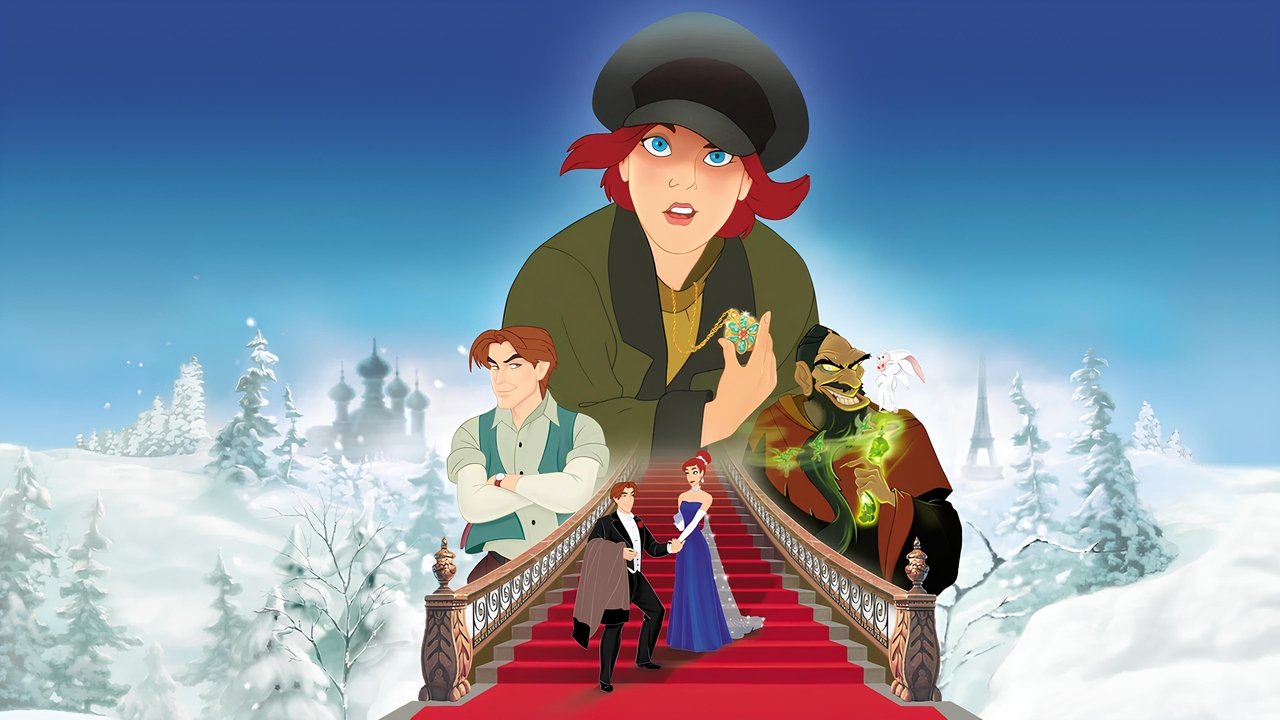
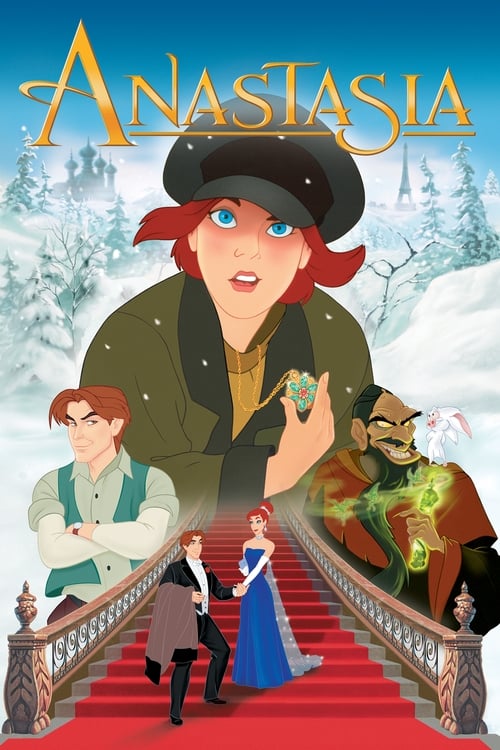
(1997)Anastasia is an animated musical fairy tale that follows a young woman searching for her identity and her lost family after the Russian Revolution. The story mixes romance, comic con men, and a supernatural villain in a stylized retelling of history.
This is a family-friendly adventure with moderate peril, a frightening villain, and a few tense scenes around death and escape. Christian families may also want to talk through the film’s fairy-tale treatment of history, its use of curses and mystical evil, and the way deception is treated in the plot.
Use the content rating for the scary scenes and the Christian guidance rating for the film’s worldview and moral framing.
Content Indicators

Reviewed 16 May 2026
Esther handles review quality, clarity, and the practical guidance families need after the credits roll.
Anastasia Christian Movie Review (1997)
Guidance: Talk Together
This is a family-friendly adventure with moderate peril, a frightening villain, and a few tense scenes around death and escape. Christian families may also want to talk through the film’s fairy-tale treatment of history, its use of curses and mystical evil, and the way deception is treated in the plot.
Why This Guidance Level
Anastasia is broadly gentle in surface content, but it is not weightless. The opening includes a frightening curse, a deadly escape, and a villain who drives much of the tension, while the story also leans on deception, mistaken identity, and a romantic fairy-tale framing of history. That combination keeps it in the range where many Christian families will want a brief conversation afterward, especially about truth, hope, and how real redemption is different from magic or legend.
Faith & Worldview Perspective
The film celebrates family, courage, perseverance, and the hope of being known and welcomed home. It also wraps those themes in a fairy-tale version of history, where evil is fought through curses, fate, and dramatic destiny rather than through a distinctly Christian account of truth, repentance, or hope in Christ.
Truths Reflected
- Longing for home and family is deeply human.
- Perseverance and courage matter in hard circumstances.
Tensions to Discuss
- The story treats supernatural evil and victory through a fairy-tale lens instead of a biblical one centered on God’s sovereignty and hope in Christ.
- The con scheme and identity deception are played for charm, which can soften the seriousness of dishonesty.
Content & Discernment Markers
Occult & Spiritual Content
- Rasputin is presented as a dangerous, curse-casting villain who speaks of “unholy powers” and says, “By the unholy powers vested in me, I banish you with a curse.” The film uses supernatural evil as a major story engine, so parents may want to discuss how Christian hope in Christ differs from magic, curses, and fate.
Sexuality & Relationships
- Romance stays mild and age-appropriate. The story builds toward an affectionate relationship, but nothing sexual stands out, and the focus remains on companionship and emotional connection.
Identity Themes
- Anya’s search for who she is drives the film. She asks, “How is it you don’t have a clue to who you were before you came to us,” and clings to the idea that “Whoever gave me this necklace must have loved me.” Parents may want to discuss identity as something rooted in truth, not just memory or social status.
Violence & Intensity
- The opening is the heaviest part of the film, with a palace attack, a frantic escape, and lines like “Don’t let go!” and “You’ll never escape me, child. Never!” The danger is stylized, but the threat of death and destruction is real within the story.
Language & Humour
- Language is light overall, with some teasing and comic put-downs rather than strong profanity. The most noticeable phrases are things like “thorn in my side” and the joking insults in the Saint Petersburg scenes.
Other Content Notes
- The con men openly plan to fake Anastasia’s identity for money: “We’ll find a girl to play the part and teach her what to say” and “The biggest con in history!” That makes deception a playful part of the plot, so it is worth a quick family conversation about honesty.
Notable Moments
- Opening curse: Rasputin turns from holy-man pretender to supernatural villain, cursing the Romanovs and threatening death. The scene sets a dark tone before the story shifts into adventure.
“By the unholy powers vested in me, I banish you with a curse.”
- Palace escape: The family flees through chaos as Anastasia is pulled away from her grandmother. The repeated cries to hold on make the scene tense and emotionally sad.
“Don’t let go!”
- Identity search: Anya wrestles with who she is and where she belongs, which gives the film its emotional center.
“Whoever gave me this necklace must have loved me.”
- Con artist plan: Dimitri and Vlad decide to pass off a girl as Anastasia for profit, turning dishonesty into a comic scheme.
“We’ll find a girl to play the part and teach her what to say.”
Discussion Prompts
- Identity and belonging: What do you think gives a person their true identity: memory, family history, or something deeper?
- Biblical guidance: Scripture teaches that our deepest identity is found in belonging to God, not in status or lost memories.
- Scripture: Psalm 139:13-16, 2 Corinthians 5:17
- Truth and deception: Why does the con scheme in the movie feel funny, and why is dishonesty still serious?
- Biblical guidance: The Bible calls God’s people to speak truthfully and avoid using lies for gain, even when the lie seems harmless.
- Scripture: Ephesians 4:25, Proverbs 12:22
- Hope in hardship: What helps Anastasia keep going when she feels lost, and how is Christian hope in Christ different from wishful thinking?
- Biblical guidance: Christian hope is anchored in Jesus Christ, who is faithful even when life feels confusing or painful.
- Scripture: Romans 15:13, Hebrews 6:19
- Fear and spiritual evil: How does the movie portray evil, and what is different about the Bible’s picture of God’s power over darkness?
- Biblical guidance: The Bible presents Jesus Christ as stronger than darkness, curses, and fear.
- Scripture: Colossians 2:15, 1 John 4:4
Common questions about Anastasia
- What age is Anastasia suitable for?
- Anastasia suits children of about 6 and older in most families. The main reason is language. Language is light overall, with some teasing and comic put-downs rather than strong profanity.
- Is Anastasia okay for a 4-year-old?
- Anastasia is generally better suited to children of about 6 and up, so a 4-year-old may find parts of it a stretch. Language is light overall, with some teasing and comic put-downs rather than strong profanity. Families whose children handle language well may still be comfortable watching together.
Age guidance is derived from this review's content findings and the film's official classifications. It is a starting point for your own judgement, not a rule.
Parent comments
Leave a comment on this review
Share a short note on Anastasia, or help other parents with discernment.
Submit will ask you to sign in first.
Weekend family picks
Get the short family movie list before the weekend
Example newsletter: 3 movies to watch this weekend with your family, plus one question to ask after the credits.
Sample: 3 movies to watch this weekend with your family
One cinema pick, one streaming pick, one conversation-starter pick.
Related Articles
A few bigger-picture reads for parents who want more context than a single review page can hold.

How To Talk With Kids About Magic, Fate, And Spiritual Themes In Movies
Many family movies use magic, destiny, spirits, or cosmic balance to drive the story. This article helps Christian parents respond without overreacting, while still drawing clear lines back to biblical truth.
Read article
What Christian Parents Can Discuss After Ruby Gillman, Teenage Kraken
A practical post-movie conversation guide for Christian parents after watching Ruby Gillman, Teenage Kraken.
Read article
Animal Farm And Talking With Kids About Power, Truth, And Sin
Animal Farm can help older children see how slogans, fear, and corrupted authority distort truth, but parents should frame the story with a biblical view of sin.
Read articleMore Reviews


Official regional ratings
Local ratings remain available for reference, but LionLens separates those classifications from Christian family discernment.
Review Method
How this review was prepared
LionLens reviews are written with subtitle and dialogue evidence where available, official regional ratings data, source research, and final human editorial review before publication.