
Human Reviewed
Parent feedback
33 families found this review helpful
Christian Movie Review
Alice Through the Looking Glass Christian Movie Review
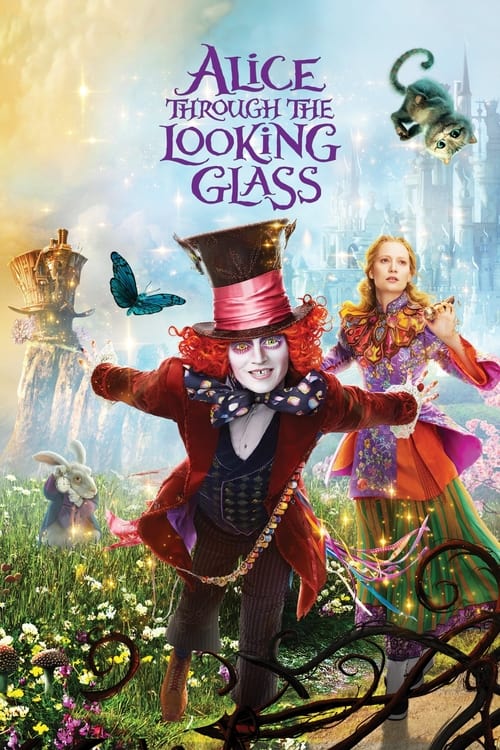
(2016)Alice returns to Wonderland and is drawn into a race against time to help the Mad Hatter and repair a painful family history. The film mixes fantasy adventure, emotional conflict, and a strong focus on Alice’s determination to prove herself.
This is a PG fantasy sequel with mild peril, some sharp insults, and a steady emphasis on self-determination. Christian families may want to discuss its messages about identity, authority, and the film’s confidence in human willpower.
Use the PG rating as a sign of light surface content, then weigh the stronger worldview themes separately.
Content Indicators

Reviewed 30 May 2026
Micah covers action, fantasy, and franchise releases, with close attention to violence, spiritual themes, and moral framing.
Alice Through the Looking Glass Christian Movie Review (2016)
Guidance: Talk Together
This is a PG fantasy sequel with mild peril, some sharp insults, and a steady emphasis on self-determination. Christian families may want to discuss its messages about identity, authority, and the film’s confidence in human willpower.
Why This Guidance Level
This film sits in a moderate-discernment zone because the surface content is fairly light, but the worldview layer is more active than the PG rating alone suggests. The peril is brief and stylized, and the language stays mild, yet the story strongly centers self-determination, time as a hostile force, and the idea that belief in oneself makes the impossible possible. That gives Christian parents a few meaningful conversation points without making the film a major concern.
Faith & Worldview Perspective
The film celebrates courage, loyalty, and perseverance, and it gives real emotional weight to family love and loss. At the same time, it leans hard on personal willpower and self-definition, so parents may want to discuss how Christian hope rests not in mastering reality but in trusting God, who gives identity and purpose in Christ.
Truths Reflected
- Family loyalty and sacrificial love matter
- Courage and perseverance can be good virtues
Tensions to Discuss
- The film frames human belief and self-determination as the path to the impossible rather than dependence on God
- Identity is treated as something one asserts from within, which can sit uneasily with receiving identity from the Lord
Content & Discernment Markers
Occult & Spiritual Content
- Wonderland’s fantasy logic includes time-bending, strange transformations, and surreal characters, but occult practice does not stand out as a major feature. Parents may want to discuss the difference between playful fantasy and spiritual truth, especially since the film treats impossible feats as a matter of belief rather than God’s power.
Sexuality & Relationships
- Romance stays in the background. The main relationship tension is social and emotional, including Alice being reminded that Hamish married someone else and that her earlier rejection still hangs over the family business scene.
Identity Themes
- Alice is told she cannot be a ship captain or business leader because she is a woman, and the film clearly frames her resistance as admirable. The story also presses the question, “Then who will I be?” which makes this a good place to talk with children about identity rooted in God rather than in achievement or social approval.
Violence & Intensity
- The opening ship sequence has real danger as pirates corner the crew, the vessel nears shallow water, and the captain shouts, “Hold on, everyone! It’s too shallow.” The scene is tense but not graphic, and the peril stays in the adventure register rather than becoming brutal.
Language & Humour
- The dialogue includes mild insults and dismissive phrases such as “imbecile,” “idiot,” “stupid,” “bloody,” “vile,” and “ignorant peasant.” Parents may also notice playful wordplay like “Curiouser and curiouser,” which is harmless but sits alongside the sharper put-downs.
Other Content Notes
- The boardroom and family scenes carry strong emotional conflict, especially when Alice protests, “It’s not just a ship. It’s Father’s ship,” and her mother answers, “Everything I do is for you, Alice.” Parents may want to discuss how grief, duty, and family loyalty can be handled without losing truth or patience.
- Time is personified as a villain, with characters saying, “Time is a cruel master. Time is a thief. And a villain.” That gives the film a darker reflective tone than its bright fantasy setting might suggest.
Notable Moments
- Ship nearly wrecks: Alice’s captaincy is tested when pirates corner the ship and the crew shouts over the danger of running aground. The moment is exciting and tense, but it stays within family-adventure limits.
“Hold on, everyone! It’s too shallow.”
- Boardroom rejection: Alice is denied work because she is female, and the board offers her a clerking job instead of the leadership role she wants. This is the film’s clearest gender-conflict scene and a key place for family discussion.
“No other company is in the business of hiring female clerks. Let alone ship’s captains.”
- Time as villain: The film gives time a moral personality, turning it into a force that steals and harms. That adds a reflective, almost philosophical tone to the adventure.
“Time is a cruel master. Time is a thief. And a villain.”
- Impossible things: The movie’s central motto ties success to belief in oneself, which is inspiring on the surface but also raises a worldview question for Christian families.
“The only way to achieve the impossible is to believe it is possible.”
Discussion Prompts
- Identity and calling: What does the movie say makes Alice who she is, and how is that different from the way God gives identity?
- Biblical guidance: Scripture teaches that our worth and identity come from belonging to the Lord, not from proving ourselves through achievement.
- Scripture: Ephesians 2:10, 1 Peter 2:9
- Courage and dependence: When the film says belief makes the impossible possible, what is helpful about that idea, and what is missing from a Christian view of courage?
- Biblical guidance: The Bible encourages courage, but it roots hope in God’s power and faithfulness, not in self-confidence alone.
- Scripture: Proverbs 3:5-6, Philippians 4:13
- Family conflict and forgiveness: How do Alice and her mother speak to each other when they are hurt, and what would patience and forgiveness look like in that moment?
- Biblical guidance: Christian families are called to speak truth with grace, forgive one another, and bear with each other in love.
- Scripture: Colossians 3:12-14, Ephesians 4:29
- Time, loss, and hope: Why does the film talk about time as a thief, and where does Christian hope in Christ answer that fear?
- Biblical guidance: The Bible acknowledges loss and passing time, but it points to resurrection hope and the lasting life found in Jesus Christ.
- Scripture: 2 Corinthians 4:16-18, John 11:25-26
Common questions about Alice Through the Looking Glass
- What age is Alice Through the Looking Glass suitable for?
- Alice Through the Looking Glass suits children of about 8 and older in most families. That follows its official classification. It is rated PG in Australia, the US, New Zealand, the UK and Canada. The dialogue includes mild insults and dismissive phrases such as “imbecile,” “idiot,” “stupid,” “bloody,” “vile,” and “ignorant peasant.”
- Is Alice Through the Looking Glass okay for a 6-year-old?
- Alice Through the Looking Glass is generally better suited to children of about 8 and up, so a 6-year-old may find parts of it a stretch. It is rated PG in Australia, the US, New Zealand, the UK and Canada. The dialogue includes mild insults and dismissive phrases such as “imbecile,” “idiot,” “stupid,” “bloody,” “vile,” and “ignorant peasant.” Families comfortable watching a little above the classification together may still be fine with it.
Age guidance is derived from this review's content findings and the film's official classifications. It is a starting point for your own judgement, not a rule.
Parent comments
Leave a comment on this review
Share a short note on Alice Through the Looking Glass, or help other parents with discernment.
Submit will ask you to sign in first.
Weekend family picks
Get the short family movie list before the weekend
Example newsletter: 3 movies to watch this weekend with your family, plus one question to ask after the credits.
Sample: 3 movies to watch this weekend with your family
One cinema pick, one streaming pick, one conversation-starter pick.
Related Articles
A few bigger-picture reads for parents who want more context than a single review page can hold.

How To Talk With Kids About Magic, Fate, And Spiritual Themes In Movies
Many family movies use magic, destiny, spirits, or cosmic balance to drive the story. This article helps Christian parents respond without overreacting, while still drawing clear lines back to biblical truth.
Read article
What Christian Parents Can Discuss After Ruby Gillman, Teenage Kraken
A practical post-movie conversation guide for Christian parents after watching Ruby Gillman, Teenage Kraken.
Read article
Animal Farm And Talking With Kids About Power, Truth, And Sin
Animal Farm can help older children see how slogans, fear, and corrupted authority distort truth, but parents should frame the story with a biblical view of sin.
Read articleMore Reviews




Official regional ratings
Local ratings remain available for reference, but LionLens separates those classifications from Christian family discernment.
Review Method
How this review was prepared
LionLens reviews are written with subtitle and dialogue evidence where available, official regional ratings data, source research, and final human editorial review before publication.