
Human Reviewed
Parent feedback
38 families found this review helpful
Christian Movie Review
Alexander and the Terrible, Horrible, No Good, Very Bad Road Trip Christian Movie Review
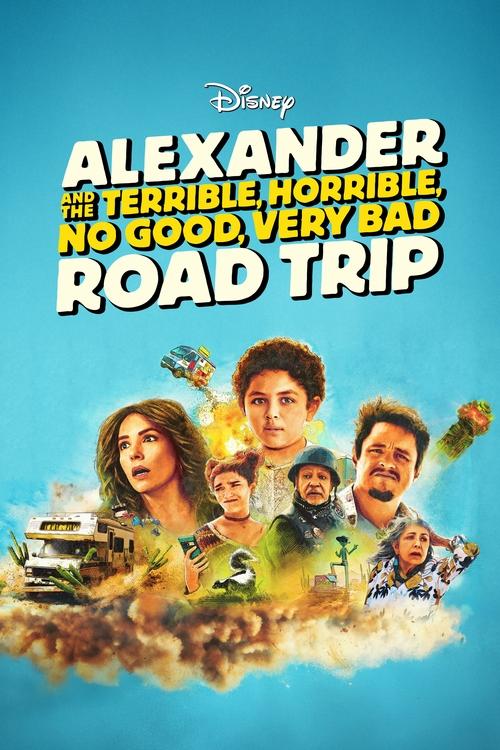
(2025)This family road-trip comedy follows Alexander and his family as a planned vacation turns into a string of mishaps, arguments, and travel disasters. The story mixes humor, family tension, and adventure with a recurring thread about bad luck and a cursed object.
This is a lively PG family comedy with repeated accident peril, mild language, and a supernatural curse thread. For many Christian families, the bigger issue is not harsh content but the film's framing of luck, worry, and family conflict, which can open useful conversations.
Use the content rating for what children will hear and see, and the Christian guidance rating for what the story may encourage them to believe or admire.
Content Indicators

Reviewed 27 July 2026
Esther handles review quality, clarity, and the practical guidance families need after the credits roll.
Alexander and the Terrible, Horrible, No Good, Very Bad Road Trip Christian Movie Review (2025)
Guidance: Talk Together
This is a lively PG family comedy with repeated accident peril, mild language, and a supernatural curse thread. For many Christian families, the bigger issue is not harsh content but the film’s framing of luck, worry, and family conflict, which can open useful conversations.
Why This Guidance Level
This lands in the middle because the surface content is still fairly typical for a PG family comedy, but the repeated crash peril and the curse-and-bad-luck framing give parents more to process than the title alone suggests. The movie also offers worthwhile discussion points about anxiety, blame, family speech, and trusting God rather than fear.
Faith & Worldview Perspective
The story reflects real family love under stress and shows how worry can shape a child’s view of the world. At the same time, it leans on luck, curses, and doom-thinking in ways that can blur the Christian truth that our lives are not ruled by fate but by God. Parents may want to discuss how Christian hope in Jesus Christ answers fear more deeply than superstition or positive thinking.
Truths Reflected
- Family members can frustrate one another and still belong to one another in love.
- Anxiety and constant worry do not bring peace or control.
Tensions to Discuss
- The curse and bad-luck setup can suggest that unseen forces, rather than God’s providence, govern events.
- Family conflict often comes out through blame and sharp speech, which may need contrast with biblical patterns of grace and self-control.
Content & Discernment Markers
Occult & Spiritual Content
- A cursed object drives part of the story’s trouble, and Alexander interprets events through bad luck and looming disaster. This is played for family-comedy adventure more than horror, but Christian parents may want to discuss the difference between superstition and trusting God’s care in Christ.
- A boy believes in a curse and envisions witches during the story’s supernatural thread. The material does not stand out as occult instruction, but it does normalize a curse-based explanation for events.
Sexuality & Relationships
- Relationship content is very light. Teen conversation about “promposal week” is present, but there is no meaningful sexual material in the film’s main focus.
Identity Themes
- The movie centers on a family story rather than identity activism. Cultural heritage is part of the family’s life, but it is not framed as a point of ideological pressure.
Violence & Intensity
- The film includes repeated road-trip accident peril. Early on, a family member says, “I didn’t see the fire hydrant. It just kinda jumped out at us,” after damage to the car prompts conflict at home.
- Dialogue recalls past dangerous behavior: “Remember when he almost blew up Grandpa’s house?” followed by, “Still can’t go near gas grills. They give me the shakes.” The line is comic, but it points to explosive peril in the family’s history.
- The broader trip includes multiple crashes and escalating vehicle danger, including children in risky situations. Parents of younger or anxious viewers may want to talk through how the movie uses peril for laughs.
Language & Humour
- Mild language includes “oh my God” and “oh my gosh” during stressful moments. Christian families sensitive to casual use of God’s name may want to address reverence in speech.
- There are also mild insults and coarse words such as “crappy,” “stupid,” “dummy,” “weird,” and “brat,” mostly in family banter or frustration rather than aggressive profanity.
Other Content Notes
- Family conflict is frequent. Lines like “You’re grounded… probably forever,” “Don’t yell at your mom!” and “I need a vacation from this family” show a home full of love but also impatience, blame, and exasperation. Parents may want to discuss how Christians speak when they are frustrated.
- Alexander’s anxiety is a major thread. He says, “I have the worst luck of anybody that has ever lived” and later warns that “something bad is coming our way.” This gives families a practical opening to talk about fear, worry, and prayer.
Notable Moments
- Alexander’s fear of bad luck: Alexander frames his life through worry and terrible luck from the opening stretch of the story.
“I have the worst luck of anybody that has ever lived.”
- Family blame after the accident: A damaged car and a hit fire hydrant trigger blame-shifting and frustration inside the family.
“I didn’t see the fire hydrant. It just kinda jumped out at us.”
- Past explosive peril: The family jokes about an earlier dangerous incident involving Grandpa’s house and gas grills.
“Remember when he almost blew up Grandpa’s house?”
- Road-trip dread: Alexander openly fears the family vacation and expects disaster.
“This is the most dangerous road trip ever.”
Discussion Prompts
- Worry, fear, and God’s care: Alexander expects everything to go wrong. When you feel that way, what helps you remember that God is with you?
- Biblical guidance: Scripture calls us to bring our anxieties to God instead of letting fear rule us.
- Scripture: Philippians 4:6-7, Matthew 6:25-34, 1 Peter 5:7
- Luck, curses, and providence: What is the difference between believing in bad luck and trusting that God is sovereign even when life feels chaotic?
- Biblical guidance: Christians do not place their hope in luck or superstition but in the Lord’s rule and care.
- Scripture: Proverbs 16:33, Isaiah 41:10, Colossians 1:16-17
- Family speech under stress: How do the family members talk to each other when they are upset, and how would Jesus call us to speak differently?
- Biblical guidance: Our words should be truthful, gentle, and shaped by grace, especially at home.
- Scripture: Ephesians 4:29, Proverbs 15:1, Colossians 4:6
- Blame and responsibility: When something goes wrong, why is it easier to blame someone else than to take responsibility?
- Biblical guidance: God calls us to honesty, humility, and repentance rather than excuse-making.
- Scripture: James 5:16, Proverbs 28:13, Galatians 6:5
Common questions about Alexander and the Terrible, Horrible, No Good, Very Bad Road Trip
- What age is Alexander and the Terrible, Horrible, No Good, Very Bad Road Trip suitable for?
- Alexander and the Terrible, Horrible, No Good, Very Bad Road Trip suits children of about 9 and older in most families. The main reason is violence and peril. The film includes repeated road-trip accident peril. Younger viewers may still enjoy it alongside a parent, and it raises worldview questions worth talking through afterwards.
- Is Alexander and the Terrible, Horrible, No Good, Very Bad Road Trip okay for a 7-year-old?
- Alexander and the Terrible, Horrible, No Good, Very Bad Road Trip is generally better suited to children of about 9 and up, so a 7-year-old may find parts of it a stretch. The film includes repeated road-trip accident peril. Families whose children handle violence and peril well may still be comfortable watching together.
Age guidance is derived from this review's content findings and the film's official classifications. It is a starting point for your own judgement, not a rule.
Parent comments
Leave a comment on this review
Share a short note on Alexander and the Terrible, Horrible, No Good, Very Bad Road Trip, or help other parents with discernment.
Submit will ask you to sign in first.
Weekend family picks
Get the short family movie list before the weekend
Example newsletter: 3 movies to watch this weekend with your family, plus one question to ask after the credits.
Sample: 3 movies to watch this weekend with your family
One cinema pick, one streaming pick, one conversation-starter pick.
Related Articles
A few bigger-picture reads for parents who want more context than a single review page can hold.

How To Talk With Kids About Magic, Fate, And Spiritual Themes In Movies
Many family movies use magic, destiny, spirits, or cosmic balance to drive the story. This article helps Christian parents respond without overreacting, while still drawing clear lines back to biblical truth.
Read article
How To Talk With Kids About Dragon magic In Family Movies
A parent-friendly guide to discussing dragon magic in family movies through a Christian lens.
Read article
How To Talk With Kids About Mild fantasy peril In Family Movies
A parent-friendly guide to discussing mild fantasy peril in family movies through a Christian lens.
Read articleMore Reviews




Official regional ratings
Local ratings remain available for reference, but LionLens separates those classifications from Christian family discernment.
Review Method
How this review was prepared
LionLens reviews are written with subtitle and dialogue evidence where available, official regional ratings data, source research, and final human editorial review before publication.