
Human Reviewed
Parent feedback
68 families found this review helpful
Christian Movie Review
A Wrinkle in Time Christian Movie Review
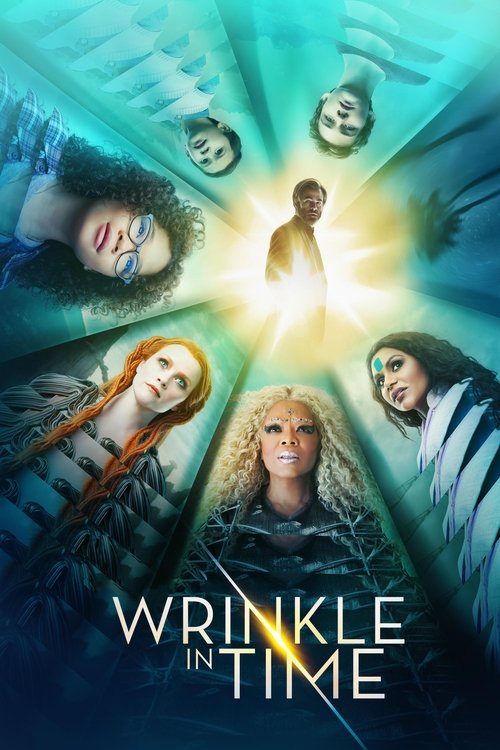
(2018)A young girl and her brother are drawn into a fantastical search for their missing father, traveling through strange worlds with the help of three mysterious guides and a friend from school. The story mixes family drama, fantasy peril, and a strong emphasis on love, courage, and resisting darkness.
This is a family fantasy with mild PG-level peril, bullying, and a few frightening moments. Christian families may want to talk through its spiritual language about light, darkness, and inner power, since the film’s message is more mystical than explicitly Christian.
Use the content rating for the scary/fantasy scenes and the Christian guidance rating for the film’s spiritual message.
Content Indicators

Reviewed 10 June 2026
Rachel focuses on animated films, family viewing habits, and helping parents spot worldview themes quickly.
A Wrinkle in Time Christian Movie Review (2018)
Guidance: Talk Together
This is a family fantasy with mild PG-level peril, bullying, and a few frightening moments. Christian families may want to talk through its spiritual language about light, darkness, and inner power, since the film’s message is more mystical than explicitly Christian.
Why This Guidance Level
This film sits in a middle zone for Christian families. The content is mostly PG-level fantasy peril, bullying, and a few frightening scenes, but the bigger issue is the worldview: the story speaks often about light, darkness, and inner strength in a way that feels spiritual without being anchored in Christ. Families who are comfortable with fantasy adventure may still want to pause and talk afterward about what the film says love can do, and how that compares with Christian hope in Jesus.
Faith & Worldview Perspective
The movie celebrates love, family, courage, and the dignity of a child who feels overlooked. It also presents a spiritual battle in broad mystical terms, where light and personal resolve carry the weight that Christian families may expect to belong to God’s grace and the hope found in Christ.
Truths Reflected
- Love and family bonds matter deeply
- Courage and perseverance can help children face fear
Tensions to Discuss
- The film frames victory over darkness through vague cosmic spirituality rather than through God’s truth and the hope found in Jesus Christ
- It treats inner power and self-belief as central answers, which can blur the difference between human strength and dependence on God
Content & Discernment Markers
Occult & Spiritual Content
- The film’s spiritual language centers on mysterious guides, tesseracts, good thoughts, and a battle between light and darkness. Mrs. Whatsit and the others speak in a mystical register, and the story treats unseen forces as part of the adventure. Parents may want to discuss how this differs from prayer, God’s authority, and Christian hope in Christ.
Sexuality & Relationships
- Romantic content stays light. There are a few marital kisses, some hand-holding, and a warm hug between young teens, but nothing that drives the film.
Identity Themes
- Meg is repeatedly told she is a mess, odd, or aggressive, yet the film pushes back by stressing that she has more potential than others see. The story encourages children to value themselves and their gifts, though it also leans hard on self-definition and inner strength. Parents may want to discuss identity as something received from God, not just discovered within ourselves.
Violence & Intensity
- The film includes school conflict, a girl hitting a classmate in the face with a ball after cruel comments, and fantasy danger where children are dragged by darkness, nearly fall to their deaths, or are hurt through telekinesis. The peril is stylized but real enough to unsettle younger viewers.
Language & Humour
- Language is mild overall, but parents will notice sharp schoolyard cruelty and a few blunt phrases such as “Shut up,” “mess,” “crazy,” and “I see why your dad left.” The words matter more for their emotional sting than for profanity.
Other Content Notes
- The film strongly emphasizes love, belonging, and family reunion, especially in lines like “Love is always there” and “we’ll all love each other.” Those are warm themes, but they sit alongside a story about absence, grief, and a father who has been gone for years.
Notable Moments
- Love and belonging: The film pauses to affirm that love remains present even when it is not felt, and that family can still be held together across loss.
“Love is always there. Even if you don’t feel it… it’s always there for you.”
- School cruelty: Meg is mocked for her family situation and emotional struggles, and the scene shows how quickly hurtful speech can deepen shame and anger.
“I see why your dad left.”
- Mystical guidance: The strange visitors introduce the film’s spiritual framework, speaking about good thoughts, frequency, and a hidden cosmic struggle.
“Think good thoughts.”
Discussion Prompts
- Love and hope: What does the movie say love can do when people feel lost or afraid?
- Biblical guidance: The film’s warmth about love is worth affirming, while also remembering that Christian hope is rooted in God’s love shown in Jesus Christ, not just in positive feelings.
- Scripture: Romans 8:38-39, 1 Corinthians 13:4-7
- Light and darkness: How does the movie describe fighting darkness, and how is that different from the way the Bible talks about God’s light?
- Biblical guidance: The story uses mystical language about light and inner power; parents can point children toward Christ as the true light who overcomes darkness.
- Scripture: John 1:5, John 8:12, Ephesians 5:8
- Words that wound: Why do the cruel comments in the school scenes hurt so much, and how should Christians speak to people who are struggling?
- Biblical guidance: The film shows the damage of mocking and shame, which fits the Bible’s call to use words that build up rather than tear down.
- Scripture: Ephesians 4:29, James 3:9-10
- Identity and worth: What gives Meg value in the story, and where should a Christian look for identity and worth?
- Biblical guidance: The movie leans on self-belief, but Scripture teaches that our worth is given by God and secured in Christ.
- Scripture: Psalm 139:13-14, 2 Corinthians 5:17
Common questions about A Wrinkle in Time
- What age is A Wrinkle in Time suitable for?
- A Wrinkle in Time suits children of about 8 and older in most families. That follows its official classification. It is rated PG in Australia, the US, New Zealand, the UK and Canada. The film includes school conflict, a girl hitting a classmate in the face with a ball after cruel comments, and fantasy danger where children are dragged by darkness, nearly fall to their deaths, or are hurt through telekinesis. Younger viewers may still enjoy it alongside a parent, and it raises worldview questions worth talking through afterwards.
- Is A Wrinkle in Time okay for a 6-year-old?
- A Wrinkle in Time is generally better suited to children of about 8 and up, so a 6-year-old may find parts of it a stretch. It is rated PG in Australia, the US, New Zealand, the UK and Canada. The film includes school conflict, a girl hitting a classmate in the face with a ball after cruel comments, and fantasy danger where children are dragged by darkness, nearly fall to their deaths, or are hurt through telekinesis. Families comfortable watching a little above the classification together may still be fine with it.
Age guidance is derived from this review's content findings and the film's official classifications. It is a starting point for your own judgement, not a rule.
Parent comments
Leave a comment on this review
Share a short note on A Wrinkle in Time, or help other parents with discernment.
Submit will ask you to sign in first.
Weekend family picks
Get the short family movie list before the weekend
Example newsletter: 3 movies to watch this weekend with your family, plus one question to ask after the credits.
Sample: 3 movies to watch this weekend with your family
One cinema pick, one streaming pick, one conversation-starter pick.
Related Articles
A few bigger-picture reads for parents who want more context than a single review page can hold.

How To Talk With Kids About Magic, Fate, And Spiritual Themes In Movies
Many family movies use magic, destiny, spirits, or cosmic balance to drive the story. This article helps Christian parents respond without overreacting, while still drawing clear lines back to biblical truth.
Read article
How To Talk With Kids About Dragon magic In Family Movies
A parent-friendly guide to discussing dragon magic in family movies through a Christian lens.
Read article
How To Talk With Kids About Mild fantasy peril In Family Movies
A parent-friendly guide to discussing mild fantasy peril in family movies through a Christian lens.
Read articleMore Reviews




Official regional ratings
Local ratings remain available for reference, but LionLens separates those classifications from Christian family discernment.
Review Method
How this review was prepared
LionLens reviews are written with subtitle and dialogue evidence where available, official regional ratings data, source research, and final human editorial review before publication.