
The issue is often tone, not explicit content
Many Christian parents are trained to watch for swearing, violence or sexual content, but it is just as important to notice the tone a program normalises. A children’s show can be technically clean and still train children to treat sarcasm, mockery and put-downs as funny, clever or even admirable.
That matters because children do not only learn from what characters do. They also learn from what the story rewards. If a child is always the “funny one” when he rolls his eyes, snaps back or humiliates someone, that behaviour starts to look ordinary. Over time, a culture of disrespect can feel harmless simply because it comes wrapped in humour.
Why this matters for Christian families
The Bible takes words seriously because words shape people. James warns us about the tongue, and Proverbs is full of reminders that speech can build up or tear down. Christian parenting is not about raising children who never laugh. It is about helping them learn what kind of laughter is good, and what kind of humour slowly hardens the heart.
Children often assume that if something is funny, it must be harmless. But jokes can train habits. They can teach a child to dismiss authority, belittle siblings, or turn friendship into one-upmanship. In a home shaped by Christ, we want our children to learn that strength does not need cruelty, and wit does not require contempt.
What to watch for in kids’ entertainment
Is disrespect treated as charm?
Sometimes the most popular character is the one who always has the sharpest comeback. If the story consistently treats rudeness as confidence, children may begin to copy the attitude without noticing.
Is kindness mocked as weakness?
Some programs make the considerate character look foolish, soft or easily fooled. That can quietly reshape a child’s view of what maturity looks like. In Scripture, gentleness is not weakness. It is strength under control.
Is humiliation played for laughs?
There is a difference between light teasing among friends and jokes built on embarrassment. If a show repeatedly uses shame as entertainment, it is worth asking what sort of relationships it is forming in your child’s imagination.
A practical Christian response
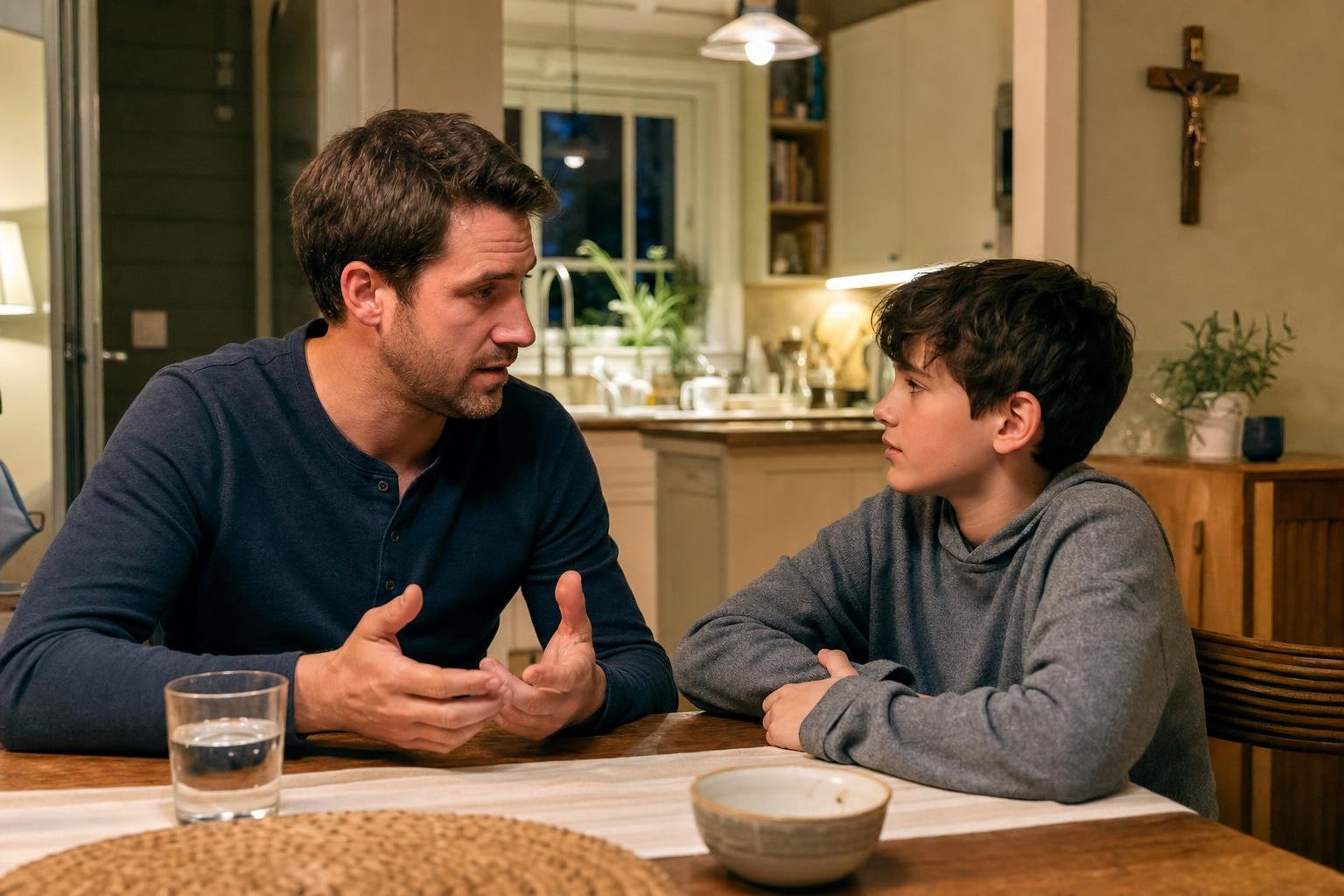
You do not need to become a constant commentator or turn every viewing into a lecture. Often the best response is calm, brief and specific.
A simple question after a scene can open a helpful conversation: “Was that funny because it was clever, or because it was unkind?” That question helps a child separate sharp writing from loving speech.
You can also name what good humour looks like. In our homes, we can celebrate jokes that are playful without being cruel, and humour that includes people rather than cutting them down. If a show relies too heavily on sneering or disrespect, it may be time to choose something better.
This is also a chance to shape family culture. Children learn respect by seeing it. When parents speak kindly to one another, apologise quickly, and avoid sarcasm as a default, children receive a stronger lesson than any sermonette about manners.
LionLens often helps families think carefully about these sorts of patterns, but the principle is simple: discern not only what children are shown, but what they are being trained to admire.
Helping children think biblically about humour
Talk about the difference between teasing and contempt
Teasing among friends can be light-hearted, but contempt seeks to put someone down. Children need help spotting that difference.
Praise respectful speech at home
Notice when your child uses words well. A quick “That was thoughtful” or “You spoke with kindness there” reinforces the habit you want.
Choose stories with better models
Look for shows where humour does not depend on humiliation. Good children’s media can still be funny without teaching disrespect.
Three simple questions or actions
- Ask, “What kind of person does this story make the funny one seem to be?”
- Point out one line that was witty but unkind, and discuss it briefly.
- Make one family decision this week to choose media where humour and respect can live together.