
What To Do When Siblings React Very Differently To The Same Movie
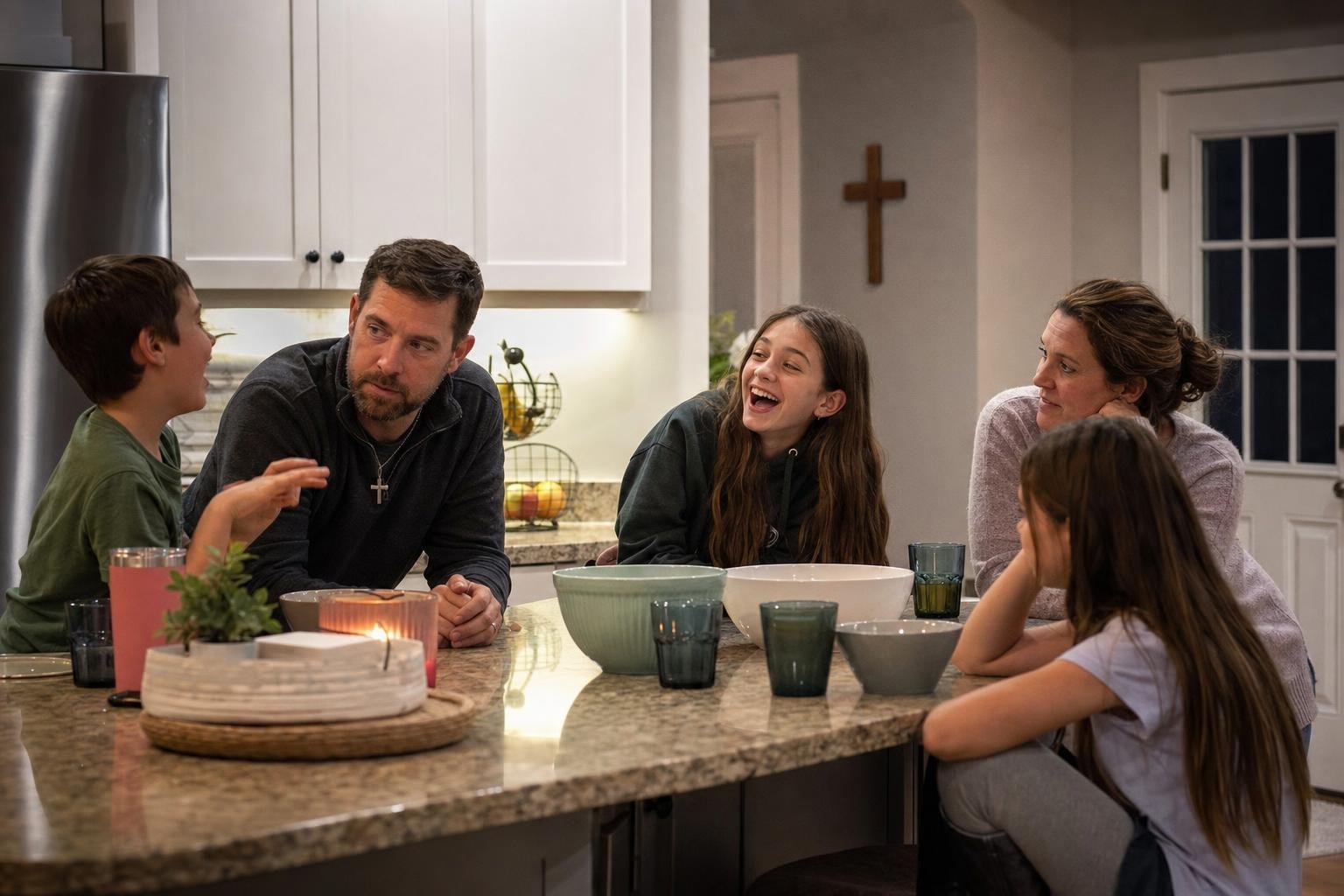
A family movie night can feel like a small test of parenting. One child is roaring with laughter, another is suddenly withdrawn, and a third wants to quote the whole film at breakfast. It can be tempting to assume the quiet child is being oversensitive, or that the confident one has got the healthier reaction. But that is not always the case.
Different responses often reveal that children are noticing different things. One may be unsettled by fear. Another may be troubled by shame, cruelty, or disrespect. A third may simply be more relaxed in that sort of story. In a Christian home, the goal is not to produce identical reactions. It is to help each child respond wisely, honestly, and with growing discernment.
Why the same scene can land so differently
Children do not come to a film with the same temperament, age, experience, or conscience. A child who has struggled with anxiety may be more affected by suspense. A child who is sensitive to teasing may be more upset by mockery. A child who has recently lost a grandparent may react strongly to a death scene that seemed harmless to their sibling.
That does not mean one child is wrong and the other right. It means they are different.
Parents sometimes forget this and compare children against each other. But discernment is not a competition. A child who shrugs off a film may be resilient, or they may simply have missed the deeper issue. A child who becomes distressed may be overworked by fear, or they may have spotted something that deserves a conversation.
Two mistakes to avoid
Do not dismiss the sensitive child
It is easy to say, “It’s only a movie,” especially when other children seem fine. But if a child is uneasy, there is usually a reason. Their reaction may be telling you that a particular theme, image, or tone has hit a nerve.
A Christian parent does not need to validate every fear as if it were wise or accurate. But neither should we brush it aside. We want to help our children become thoughtful, not hardened.
Try asking simple questions like:
- “What part bothered you most?”
- “Was it the violence, the sadness, or the way people treated each other?”
- “Did it remind you of anything?”
Those questions can help a child name what they felt and begin to process it with you.
Do not make the most relaxed child the standard
If one sibling wants to watch the film again immediately, it does not follow that the film was equally suitable for everyone. Some children enjoy more intensity than others. Some are less bothered by danger or conflict. Some are simply older and better able to separate fiction from reality.
The point is not to shame the child who coped well. It is to avoid assuming that tolerance equals wisdom. A child may enjoy a film and still absorb unhelpful ideas about beauty, power, revenge, sexuality, or mockery.
Christian parents are called to shepherd children, not merely to expose them to whatever they can handle.
What to do after the movie
Start with curiosity, not correction
If children respond differently, resist the urge to announce a verdict straight away. First listen. Ask what they noticed, what they liked, what they did not like, and why. You may discover that the children were responding to entirely different parts of the same story.
That kind of conversation can be surprisingly fruitful. A child who was laughing may have picked up on the humour, while a quieter sibling may have been wrestling with the moral tone. Both observations matter.
Help them put words to their response
You are not only managing behaviour. You are helping children understand their own hearts. Was the film frightening, sad, confusing, or exciting? Did it stir anger, pity, boredom, or curiosity? Children often know they feel “bad” or “weird” without knowing why.
Naming the feeling is useful, but so is asking what caused it. Sometimes a child is not mainly reacting to the movie itself, but to what it brought to mind. That is a good moment for patient listening.
Bring the conversation back to wisdom and truth
A Christian response to media is not merely about whether a film is “bad” or “okay”. It is about asking what is true, what is lovely, what is harmful, and what sort of people we are becoming as we watch.
You might say, “That scene made light of something serious,” or “I can see why that frightened you,” or “The story showed courage, but it also treated cruelty as entertainment.” This helps children learn that entertainment is not morally neutral.
LionLens readers will know this is where family discernment often becomes most valuable: not in banning everything, but in thinking carefully about what each child needs.
Keep the goal in view
The aim is not to raise children who never feel unsettled. It is to raise children who can think clearly, speak honestly, and bring what they feel to the Lord. Christian parenting should make room for different temperaments while still holding to shared standards.
That means a child who is easily upset needs comfort and guidance, not embarrassment. It also means a child who seems unmoved needs checking too, especially if they are becoming desensitised or overly fascinated by things they should learn to grieve.
Above all, remember that your children are not identical. The same movie can reveal different vulnerabilities, different strengths, and different questions of the heart. Faithful parenting pays attention to all of that.
A few practical next steps
- Talk after the film, even briefly, and let each child speak without being corrected immediately.
- Notice patterns over time. If one child is regularly troubled by certain themes, that is useful information.
- Choose future films with the actual children in mind, not the child who copes best.
- Use these moments to point children to Christ, who is gentle with the weak and wise with the strong.
Three questions or actions for parents
- Which child reacted most strongly, and what might that reaction be telling me?
- Did I treat one child’s response as the “normal” one without really listening to the others?
- How can I use the next movie night to help my children practise discernment, not just entertainment?